Havana Bad Day: Raul Castro Indictment Makes Cuba Home of the Bay of Pigs Flying
The federal indictment of former Cuban leader Raúl Castro is being framed by the White House as long-awaited justice for the 1996 shootdown of two Brothers to the Rescue aircraft that killed four men — but for veteran investigative journalist specializing in Latin America, Bill Conroy, former FBI asset in Havana, Robert Eringer, and legendary CIA pilot Robert Tosh Plumlee, who flew missions into Cuba before and after Castro came to power, the real story is what comes next for Cuba.
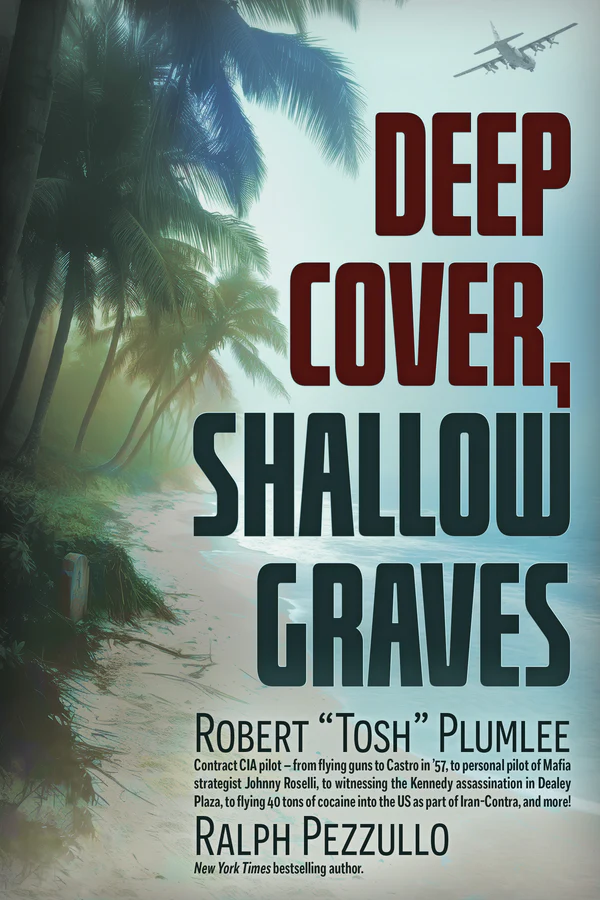
CLICK HERE FOR MORE INFORMATION ABOUT DEEP COVER SHALLOW GRAVES
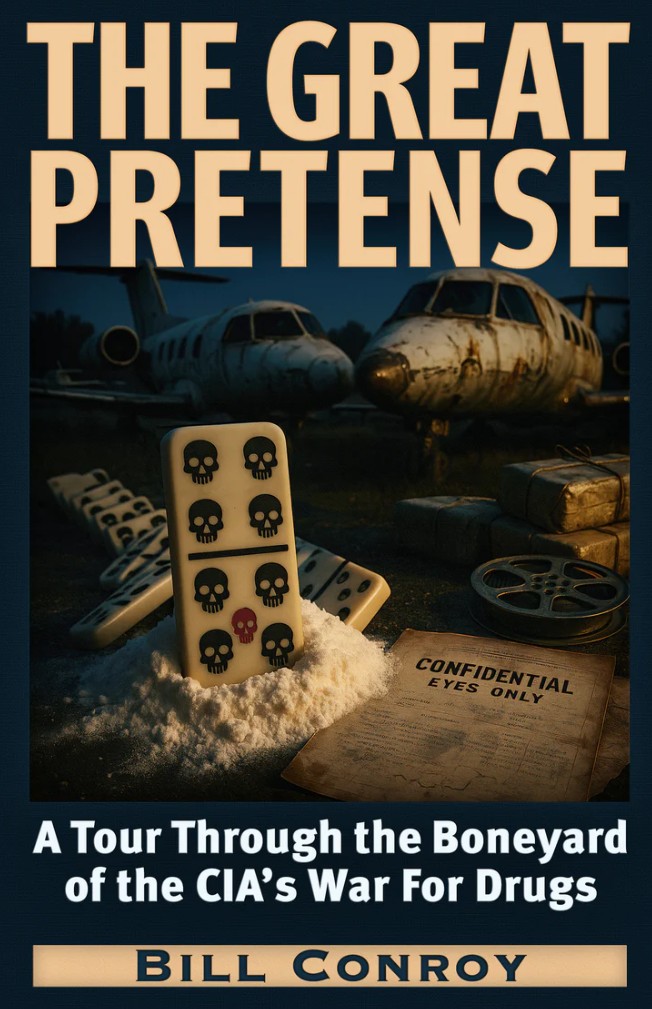
CLICK HERE FOR MORE INFORMATION ABOUT THE GREAT PRETENSE
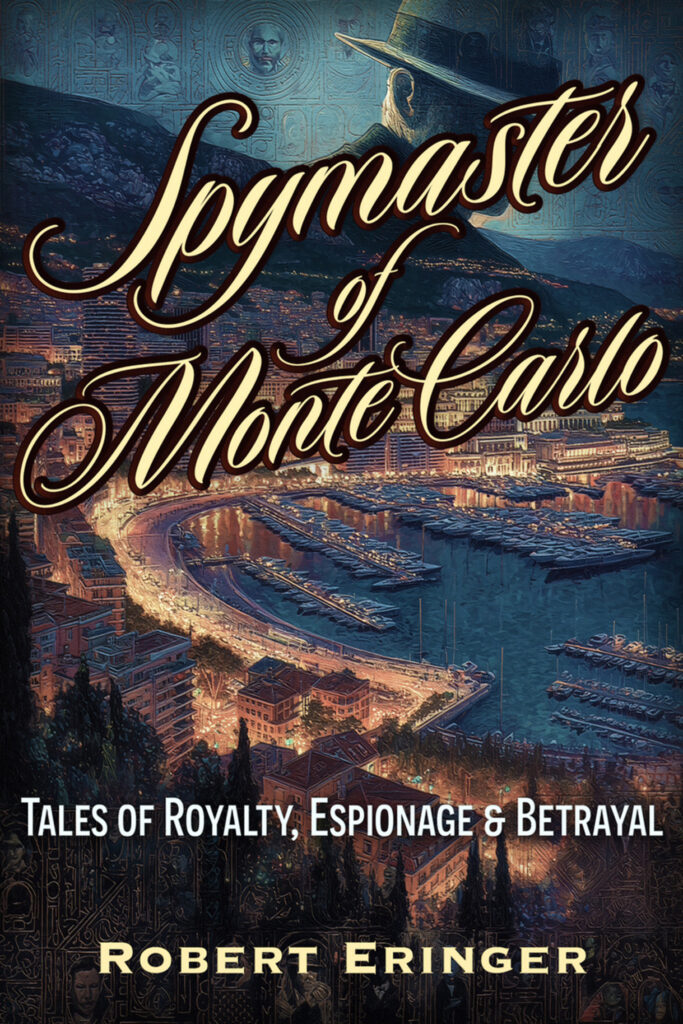
CLICK HERE FOR MORE INFORMATION ABOUT SPYMASTER OF MONTE CARLO
- Indictment raises fears of renewed U.S.-Cuba confrontation
- Former CIA pilot recalls Castro’s violent rise firsthand
- Intelligence veterans question true motives behind Raul Castro charges
- Regime change could spark chaos, instability, or mass migration
- Cuba’s future may hinge on civilian reaction, not Washington plans
Conroy says the indictment was “telegraphed” well in advance by the Trump administration and the Department of Justice and argues that the 94-year-old Castro himself may be less important than the broader geopolitical objective behind the charges. “Raul’s not the primary target,” Conroy says. “He’s the pretext. The real issue is whether this becomes the opening move for forced regime change.”
The panel can discuss whether Washington is reviving old Cold War playbooks — economic collapse, diplomatic isolation, covert pressure, and psychological operations — in hopes the Cuban regime fractures from within. Conroy notes that historically, U.S. intelligence agencies have sometimes preferred buying off regime insiders over direct military intervention. “Offer cash and a plane,” he says. “Cheaper than an invasion.”
Eringer, who conducted intelligence work tied to Cuba for the FBI, believes the indictment sends a direct warning from CIA Director John Ratcliffe to Havana’s leadership. “This is leverage,” Eringer says. “A blunt message to Cuba to stop serving as a safe haven for adversaries of the United States.” He argues the move fits squarely within a revived interpretation of the Monroe Doctrine, with Washington signaling it will no longer tolerate hostile foreign influence operating ninety miles from Florida.
Adding rare historical perspective is Plumlee, one of the last surviving CIA-connected pilots directly involved in the Cuban conflict. Plumlee flew weapons to Cuban rebels during the revolution that brought Fidel Castro to power, then later supported anti-Castro operations connected to the Bay of Pigs Invasion. He was famously photographed riding a tank in Cuba during Castro’s rise. Plumlee can speak firsthand about how quickly revolutionary movements can spiral beyond anyone’s control — and why “regime change” does not automatically mean democracy or stability.
Together, Conroy, Eringer, and Plumlee offer a rare combination of investigative reporting, intelligence experience, and boots-on-the-ground Cold War history to explain whether the indictment of Raúl Castro is symbolic justice — or the beginning of a new chapter in the long conflict between Washington and Havana.
Relevant Article(s):
Trump Downplays Need for More Cuba Pressure After Castro Charge – Bloomberg
Cuba’s Raúl Castro indicted in US over 1996 fatal downing of two planes – BBC News
OPTIONAL Q&A:
- What does the indictment of Raúl Castro signal about the Trump administration’s broader strategy toward Cuba?
- Is this genuinely justice for past crimes, or a pretext for regime change?
- How likely is it that Cuba’s leadership fractures under U.S. pressure?
- Could this indictment trigger unrest or instability among Cuba’s civilian population?
- What role is the CIA playing behind the scenes in shaping Cuba policy today?
- How does the current situation compare to covert U.S. operations during the Cold War and Bay of Pigs era?
- Could foreign adversaries like China, Russia, or Iran become more involved if Cuba destabilizes?
- What lessons from Fidel Castro’s rise to power should Americans remember as Washington pressures Havana again?
ABOUT BILL CONROY…
Bill Conroy, M.A. in Mass Communications/Journalism (Marquette University), is a veteran journalist with 40 years of experience working as a staff reporter, editor-in-chief, and freelance correspondent at print and online publications across the United States and in Mexico. His journalism has been cited in more than 35 books to date. Conroy also is the author of the nonfiction books The Great Pretense: A Tour Through the Boneyard of the CIA’s War for Drugs; Dispatches from the House of Death: A Juarez Cartel informant, a DEA whistleblower, mass murder and a coverup on the edge of the Empire; and Borderline Security: A Chronicle of Reprisal, Cronyism and Corruption in the U.S. Customs Service.
ABOUT ROBERT “TOSH” PLUMLEE…
Robert “Tosh” Plumlee is a former CIA contract pilot who joined a JFK Assassination abort team on that infamous day in Dealey Plaza, November 22, 1963. He participated in covert aviation operations connected to U.S. intelligence agencies beginning in the early 1950s.
According to his account, he flew missions throughout the Caribbean and Latin America involving weapons transfers, intelligence logistics, and clandestine operations targeting Cuba.
Plumlee has provided statements to investigators examining intelligence activities and the Kennedy assassination over several decades.
ABOUT RALPH PEZZULLO…
Pezzullo is a New York Times bestselling author, and award-winning playwright and screenwriter. He is also the host of the popular podcast “Heroes Behind Headlines,” which is ranked in the top 1% off all podcasts worldwide.
Born in New York City, he grew up in Mexico, Vietnam, Bolivia, Colombia, Guatemala, Uruguay and Nicaragua as the son of a US diplomat. His over 30 books published include New York Times bestsellers Jawbreaker (with former CIA operative Gary Berntsen), Inside SEAL Team Six (with Don Mann), Most Evil, Zero Footprint, Left of Boom and Ghost. His latest books, both released in 2025, are The Great Chinese Art Heist and Stolen Elections: Takedown of Democracies Worldwide.
ABOUT ROBERT ERINGER…
Beginning in 1993, Eringer operated undercover for FBI Counterintelligence in Moscow, Havana, and beyond. In 2002, Prince Albert of Monaco appointed Robert Eringer as his intelligence adviser. He went on to create the principality’s first intelligence service. He currently lives in Montecito, California. Eringer has spent nearly five decades in the intelligence and investigative game. He began as an undercover journalist for Fleet Street and served as a foreign correspondent for The Toronto Star and The Toledo Blade. Infiltrating the Ku Klux Klan was just the start.
TO SCHEDULE AN INTERVIEW, CALL OR TEXT 512-966-0983 OR EMAIL BOOKINGS@SPECIALGUESTS.COM