
Cancer Cartels: Oncology Off Course when Cures Meet Commerce in a Chemo Economy
A longtime biochemical researcher and scientist, Dr. David Rasnick is outspoken critic of mainstream oncology, and he brings a sharply contrarian perspective to one of the most heavily funded areas of modern medicine: cancer treatment. In response to recent reporting on emerging pancreatic cancer therapies such as daraxonrasib, Rasnick argues that the prevailing drug-centered model of oncology is fundamentally misdirected—and economically self-reinforcing.
- Chemotherapy and drugs harm patients and fail to address root causes
- Cancer stems from chromosomal imbalance, ignored by mainstream oncology models
- Drugs like daraxonrasib mainly profit pharmaceutical companies, not patients
- Treatment mirrors COVID protocols, over-reliant on standardized drug interventions
- True cancer causes are ignored while expensive treatments dominate medical system
In his view, treatments like chemotherapy and next-generation targeted drugs are not curative solutions but interventions that often fail to address what he believes are the underlying drivers. He contends that the dominant framework of care has become overly dependent on pharmaceutical escalation, where each new generation of drugs is positioned as progress, even as overall outcomes remain limited for many advanced forms. Daraxonrasib, a KRAS-targeting experimental therapy highlighted in recent reporting, is viewed by Rasnick not as a breakthrough, but as part of a broader cycle in which treatment innovation is tightly linked to industry incentives.
Rasnick is explicit in questioning who benefits most from this model. His answer is not patients, he argues, but the companies developing and marketing high-cost oncology drugs. He frames this as a structural issue: a system in which the financial rewards of drug development may outpace incentives to fundamentally rethink disease causation.
Central to his critique is his belief that the disease is not simply a random genetic misfire but is rooted in deeper biological dysfunction, which he describes in terms of chromosomal imbalance. From this perspective, he argues that focusing exclusively on pharmaceutical suppression of tumors misses a more foundational question about why malignant processes begin in the first place. That, he says, is the part of the conversation that is often sidelined in mainstream research and media coverage.
Rasnick also draws parallels to other high-profile medical crises, suggesting that during COVID-19, treatment protocols were too quickly standardized around pharmaceutical and hospital-based interventions without sufficient exploration of alternative explanations or approaches. While controversial, he uses this comparison to highlight what he sees as a recurring pattern in modern medicine: treatment pathways becoming institutionalized before broader causal debates are settled.
His core message is that understanding cancer causation is the “half of the battle” that receives insufficient attention in a system driven by treatment innovation. Whether one agrees or disagrees with his conclusions, Rasnick’s critique forces a broader discussion about how medical priorities are set, how research funding is allocated, and how much weight should be given to dissenting scientific perspectives.
Dr. Rasnick is available for interviews to expand on his critique of current oncology paradigms and to discuss what he believes is a fundamentally different way of understanding cancer biology and treatment strategy.
Relevant Article(s):
Daraxonrasib vs. pancreatic cancer: Experimental pill helped people live longer | AP News
OPTIONAL Q&A:
- What evidence leads you to conclude that chemotherapy does more harm than good for cancer patients?
- How do you respond to studies showing that drugs like daraxonrasib can extend survival in certain pancreatic cancer patients?
- You argue cancer is caused by chromosomal imbalance—can you explain what that means in practical biological terms?
- Why do you believe mainstream oncology continues to focus on drug development rather than addressing root causes?
- What do you say to patients who report remission or improved quality of life after standard chemotherapy?
- You’ve suggested pharmaceutical companies benefit more than patients from current cancer treatments—can you explain that claim?
- How does your critique of cancer treatment compare to your view of how COVID-19 patients were treated in hospitals?
- If not chemotherapy or targeted drugs, what should cancer treatment look like under your model of causation and care?
ABOUT DAVID RASNICK…
David Rasnick has a PhD in chemistry from the Georgia Institute of Technology. In 1996, he joined Peter Duesberg at the University of California at Berkeley, where they proved the hundred-year old theory that unbalanced chromosomes cause cancer. He was a named contributing editor to explosive book by Robert F. Kennedy, JR. The Real Anthony Fauci.
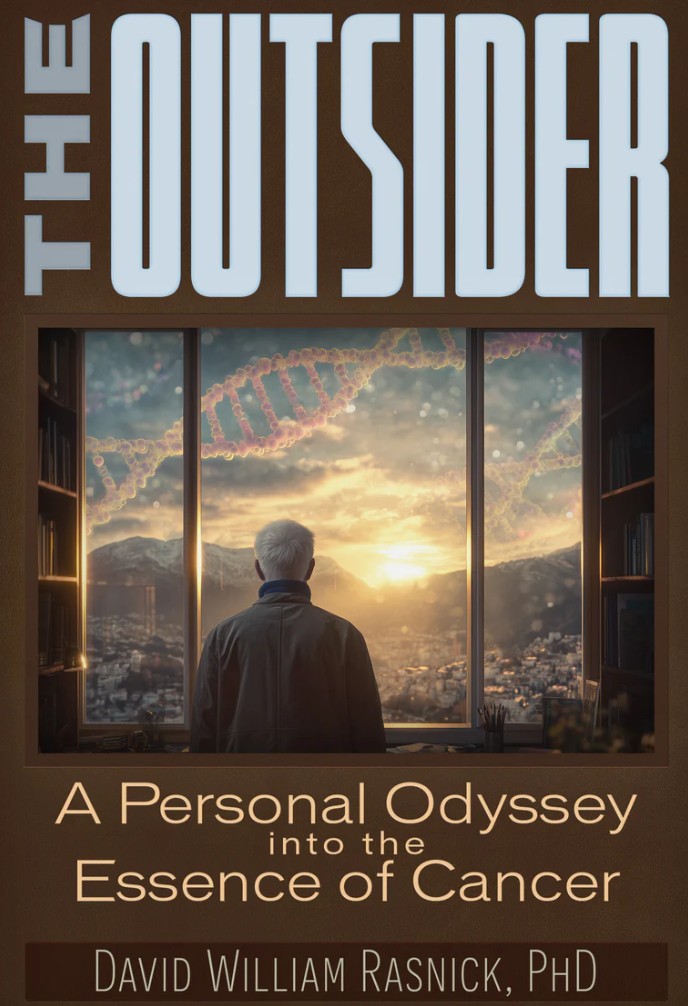
For nearly two decades, Rasnick developed inhibitors of enzymes responsible for the tissue destruction caused by arthritis, emphysema, parasites, and cancer. His 2012 book, The Chromosomal Imbalance Theory of Cancer: Autocatalyzed Progression of Aneuploidy is Carcinogenesis, is for cancer researchers. His new book, The Outsider’s Advantage: A Personal Odyssey into the Essence of Cancer, tells the same story but in plain language and in the context of his decades-long journey as an outsider.
TO SCHEDULE AN INTERVIEW, CALL OR TEXT 512-966-0983 OR EMAIL BOOKINGS@SPECIALGUESTS.COM