
UFOh No! Openness Advances Accountability Even as Transparency Meets Epstein Distraction Claims
As Washington signals a possible declassification of long-sealed UFO and UAP files, the debate is no longer about extraterrestrials — it’s about power, secrecy, and who controls the truth. Few people are better positioned to explain what this moment actually represents than Robert Eringer, the man who constructed the intelligence apparatus of Monaco for Prince Albert II. He has spent years operating inside systems built on silence, leverage, and classified compromise.
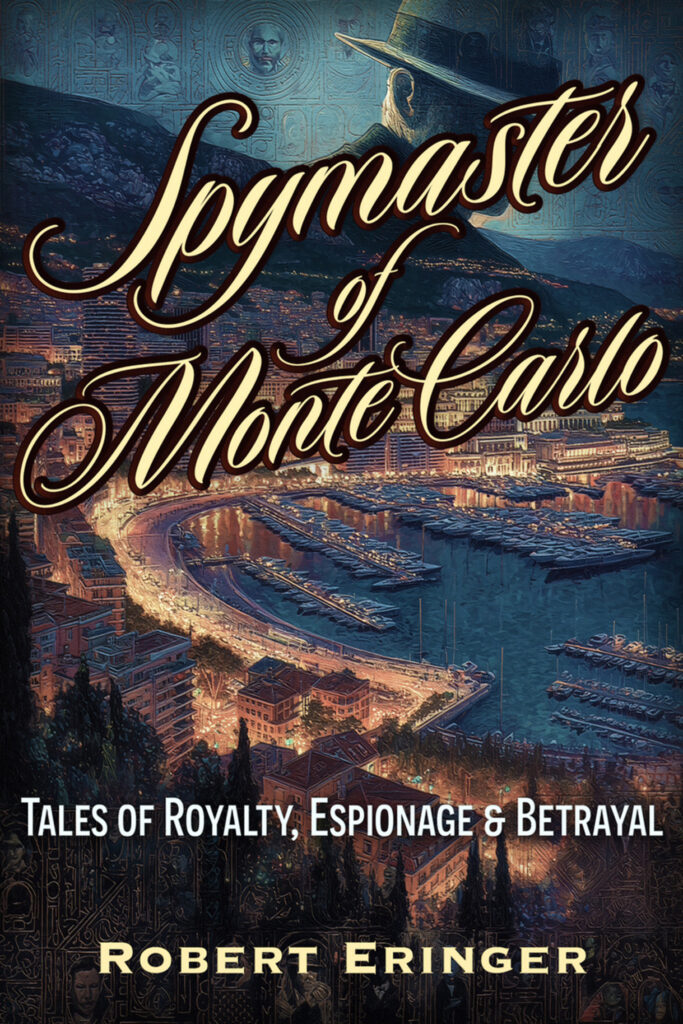
Order the new book by Robert Eringer, The Spymaster of Monte Carlo
Eringer approaches the disclosure question with disciplined skepticism. He does not argue that every unexplained aerial incident points to aliens, nor does he dismiss the topic as a distraction by default. Instead, he focuses on what excessive secrecy does to governments and societies. In his experience, classification rarely exists solely to protect the public. More often, it protects institutions, reputations, and leverage over powerful individuals. When information is hoarded, it becomes currency — and that currency inevitably corrupts.
Some critics suggest renewed talk of UFO disclosure, including comments from Donald Trump, may be intended to divert attention from the still-unresolved Epstein files. Eringer does not claim to know whether that linkage is intentional. What he does insist upon is intellectual consistency. If Americans demand transparency regarding Epstein, intelligence abuses, and political kompromat, they cannot selectively oppose disclosure elsewhere simply because the subject feels uncomfortable or unconventional.
From Eringer’s vantage point, secrecy is not neutral. As head of intelligence in Monaco, he witnessed firsthand how classified material and compromising information distort behavior, entrap elites, and quietly shape outcomes far from public scrutiny. Systems built on secrecy don’t just withhold facts — they manufacture vulnerability. Over time, this erodes trust in institutions and fuels conspiracy culture precisely because the public senses it is being managed rather than informed.
Eringer argues that genuine declassification is not about spectacle or shock. It requires structured, accountable disclosure: what is known, what remains unexplained, and what is still legitimately classified — without reflexive redactions designed to avoid embarrassment. The goal is not belief, but credibility.
Whether the subject is Epstein, intelligence failures, or unidentified phenomena, Eringer’s core message is consistent and grounded: sunlight is almost always preferable to silence. Governments do not lose authority by telling the truth — they lose it by deciding citizens cannot be trusted with it.
Relevant Article(s):
OPTIONAL Q&A:
- How does your experience running intelligence operations shape your view of the current push to declassify UFO and UAP files?
- Is secrecy around unidentified phenomena primarily about national security, or about protecting institutions and reputations?
- Some argue UFO disclosure is a distraction from scandals like Epstein — is that a false choice, or a legitimate concern?
- From your experience, how does classified kompromat alter the behavior of elites behind the scenes?
- What happens to public trust when governments over-classify information for decades?
- Do you believe selective transparency fuels conspiracy culture more than full disclosure would?
- What would responsible, credible declassification actually look like in practice?
- At what point does withholding information become a form of manipulation rather than protection?
ABOUT ROBERT ERINGER…
In 2002, Prince Albert of Monaco appointed Robert Eringer as his intelligence adviser. He went on to create the principality’s first intelligence service. He currently lives in Montecito, California. Eringer has spent nearly five decades in the intelligence and investigative game. He began as an undercover journalist for Fleet Street and served as a foreign correspondent for The Toronto Star and The Toledo Blade. Infiltrating the Ku Klux Klan was just the start. From 1993, he operated undercover for FBI Counterintelligence in Moscow, Havana, and beyond.
TO SCHEDULE AN INTERVIEW, CALL OR TEXT 512-966-0983 OR EMAIL BOOKINGS@SPECIALGUESTS.COM
UFO, UFO

