
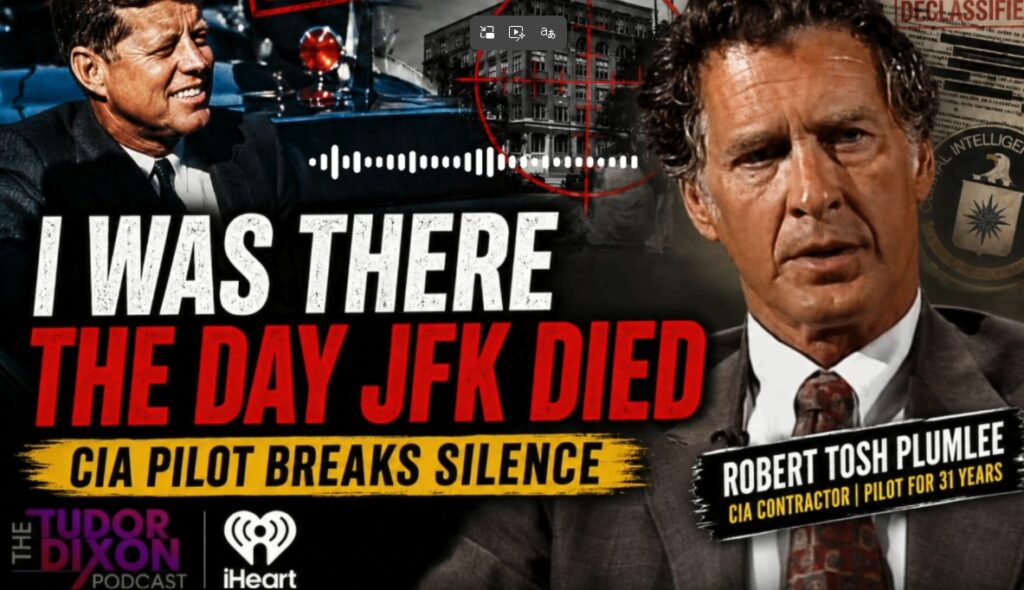
In a wide-ranging interview with Tudor Dixon, author Robert Tosh Plumlee discussed the themes and topics explored in his book, Deep Cover, Shallow Graves. The conversation covered the book’s examination of covert operations, intelligence activities, historical controversies, and the challenges of uncovering information connected to events that have remained the subject of public interest for decades.
Plumlee Reference to Eugene Dinkin Issuing Warning
**At about the 19:00 mark, Plumlee refers to an individual from Europe but doesn’t name him. That individual was Corporal Eugene Dinkin”
Throughout the interview, Plumlee provided background on his experiences and the research that contributed to the book. He described how Deep Cover, Shallow Graves brings together personal accounts, historical records, and observations about intelligence operations and government activities. The discussion explored the complexities of working in environments where secrecy, national security concerns, and political interests often intersect.
Dixon and Plumlee examined the broader historical context surrounding many of the events discussed in the book. The conversation highlighted how intelligence operations have played a role in shaping significant moments in modern history and how information connected to those operations can remain difficult to verify or fully understand. Plumlee emphasized the importance of examining historical records and encouraging continued research into controversial subjects.
The interview also touched on the challenges faced by researchers, journalists, and authors who investigate topics involving classified information, covert programs, and government agencies. Plumlee discussed the difficulties associated with piecing together historical narratives when key documents remain unavailable or when witness accounts differ. The conversation focused on the value of pursuing evidence and maintaining an interest in unresolved questions from the past.
Another major theme of the discussion involved public fascination with hidden histories and unexplained events. Dixon and Plumlee explored why stories involving intelligence operations, political intrigue, and government secrecy continue to attract attention from readers and researchers. The book’s subject matter was presented as part of a broader effort to encourage examination of historical events from multiple perspectives.
The interview addressed the role of personal experience in shaping historical interpretation. Plumlee discussed how firsthand involvement in significant events can influence an individual’s understanding of history and how personal narratives can contribute to broader public discussions. At the same time, the conversation acknowledged the importance of comparing individual accounts with available documentation and research.
Dixon and Plumlee also discussed the process of writing and publishing a book that examines controversial topics. Plumlee explained how the project sought to bring together years of research, investigation, and personal reflection. The conversation highlighted the challenges of presenting complex material to readers while maintaining clarity and context.
A recurring focus throughout the interview was the continuing public interest in government transparency and accountability. The discussion explored how historical investigations can contribute to ongoing debates about access to information, public trust, and the preservation of historical records. Plumlee emphasized the importance of keeping historical questions open to examination as new information becomes available.
The interview concluded with a broader discussion of the book’s purpose and intended audience. Deep Cover, Shallow Graves was presented as a work aimed at readers interested in intelligence history, political controversies, investigative research, and unresolved historical questions. Dixon and Plumlee reflected on the enduring appeal of examining hidden aspects of history and the importance of encouraging thoughtful discussion about events that continue to generate debate.
Overall, the conversation provided an overview of the themes explored in Deep Cover, Shallow Graves while examining larger questions about intelligence operations, historical inquiry, government secrecy, and the search for understanding in complex historical events. The interview offered listeners insight into the ideas behind the book and the issues that continue to drive public interest in some of the most debated subjects of modern history.