
Via Your News Talk America with Jake Smith (Guest host, Gen. Blaine Holt).
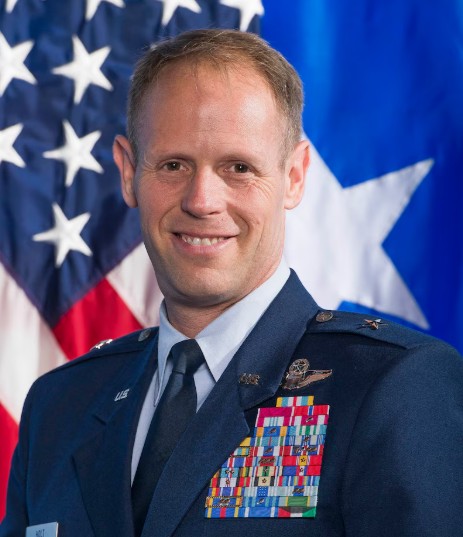
Click image to listen. Interview begins at the 46:15 mark:

You can also listen via Apple Podcast but if you’re not logged in to your account, you won’t be able to listen because it’s considered to be an “explicit episode.” Again, interview begins at the 46:15 mark.


Brig. Gen. Blaine Holt sat down with Robert Tosh Plumlee for a wide-ranging discussion focused on Plumlee’s extraordinary experiences as a pilot operating in some of the most secretive and controversial corners of American history. The conversation centered on Plumlee’s book, Deep Cover, Shallow Graves, which recounts his years flying missions that placed him at the intersection of intelligence operations, covert activities, international intrigue, and some of the most debated events of the Cold War era.
Throughout the interview, Plumlee reflected on the unusual path that led him into aviation and eventually into work that brought him into contact with individuals and organizations connected to intelligence gathering and clandestine operations. Rather than presenting a simple memoir, the discussion explored the complexities of operating in environments where official explanations, geopolitical realities, and covert agendas often overlapped.
A major theme of the conversation was the distinction between public narratives and the hidden world of intelligence activities. Plumlee described the challenges faced by pilots and operators working in situations where missions were compartmentalized and information was tightly controlled. The discussion examined how individuals involved in such operations frequently understood only part of the larger picture, leaving them to piece together events years later.
Holt and Plumlee Common Experiences
Holt and Plumlee also discussed the historical context surrounding many of the events described in the book. Their conversation touched on Cold War tensions, anti-communist operations, international smuggling networks, intelligence agencies, and the complicated relationships that sometimes existed between governments, private actors, and covert operatives. Rather than focusing exclusively on any single event, the interview painted a broader picture of a period when global competition often produced activities that remained hidden from public view.
The interview explored the personal toll that life in covert operations can take. Plumlee spoke about the difficulties of balancing secrecy with family life, the risks associated with flying dangerous missions, and the long-term impact of carrying knowledge that could not always be openly discussed. The conversation highlighted how individuals involved in intelligence-related activities often faced uncertainty, conflicting loyalties, and questions that remained unresolved for decades.
Another significant topic was the process of documenting and preserving history. Plumlee explained to Holt why he felt compelled to write Deep Cover, Shallow Graves and share his experiences with readers. The discussion addressed the challenges of reconstructing events from memory, corroborating information, and presenting controversial subjects in a way that encourages further examination. Holt and Plumlee considered how personal accounts contribute to the historical record, even when some details remain disputed or difficult to verify.
The conversation with Holt also examined the role of investigative research and independent inquiry in uncovering information about historical events. Plumlee discussed encounters with journalists, researchers, government officials, and other witnesses over the years. These interactions, he suggested, helped shape his understanding of events that had remained clouded by secrecy and competing interpretations.
As the interview progressed, attention turned to broader questions about government transparency, accountability, and public trust. Holt and Plumlee reflected on how classified activities can affect public understanding of major historical developments. They discussed the tension between national security concerns and the public’s desire for greater insight into decisions and operations conducted behind closed doors.
The discussion frequently returned to aviation, with Plumlee recounting experiences from his flying career and describing the unique demands placed on pilots operating under unusual circumstances. These stories provided context for the larger themes explored throughout the interview and illustrated how aviation often served as a critical component of intelligence and logistical operations.
While much of the conversation focused on historical events, both men also considered the continuing relevance of these topics. They discussed how questions surrounding intelligence operations, covert action, and government secrecy remain subjects of public interest today. The interview encouraged listeners to examine history critically and to recognize that many important events involve layers of complexity that are not immediately apparent.
Overall, the interview served as an exploration of Robert Tosh Plumlee’s life, experiences, and perspective as presented in Deep Cover, Shallow Graves. Through discussions of aviation, intelligence activities, historical controversies, and personal reflection, the conversation offered listeners an opportunity to consider the hidden dimensions of history and the individuals who claim to have operated within them.
Listeners interested in hearing the full interview on Apple Podcasts should be aware that Apple has classified the program as an “explicit episode.” As a result, users may need to be logged into their Apple account in order to access and play the episode through Apple Podcasts. Apple’s podcast listings indicate that content marked as explicit may require account sign-in before playback is permitted.