
Hormuz Fuse: Strait becoming a Tinderbox as Iran Allows Chinese Ships Through as U.S. Sinking Out other Vessels There
The Strait of Hormuz — the narrow maritime chokepoint through which roughly one-fifth of the world’s oil supply normally flows — is rapidly becoming the most dangerous flashpoint in the expanding war involving Iran. Tehran has effectively shut down large portions of the waterway, threatening or striking vessels and causing commercial traffic to collapse. At the same time, Iran has reportedly been signaling that ships linked to China may be allowed to transit more safely than vessels tied to the United States or its allies, creating a dangerous new geopolitical dynamic in one of the world’s most critical shipping lanes.
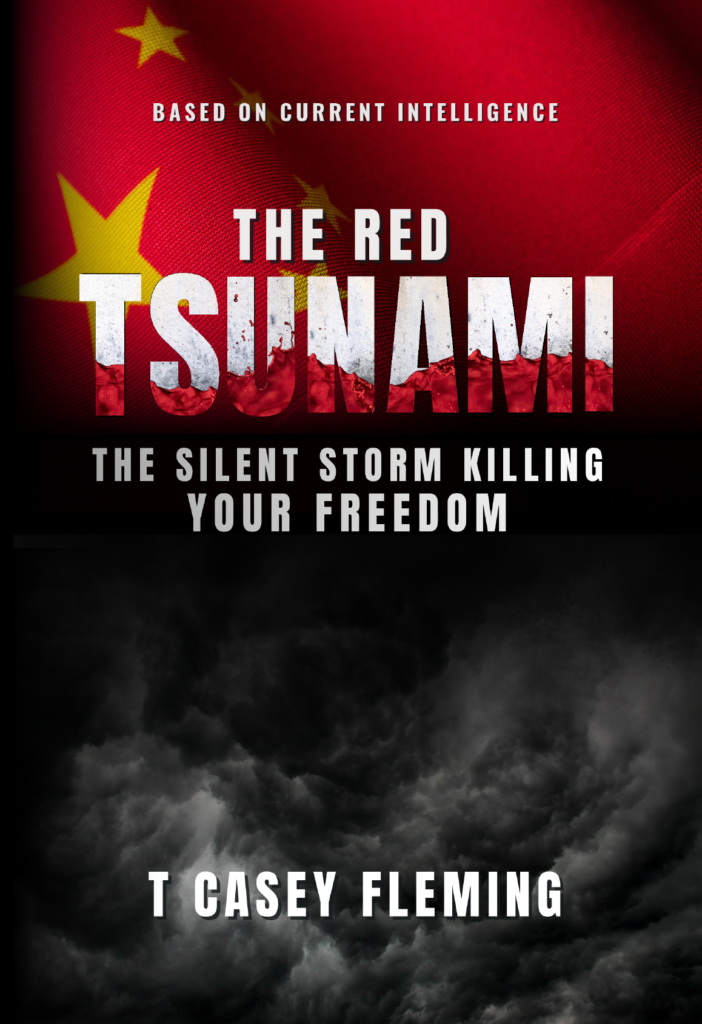
Casey Fleming is the CEO of Black Ops Partners and author of THE #1 Best Selling Book in National and International Security and he and is not in the business of conjecture. Order The Red Tsunami: The Silent Storm Killing Your Freedom
- Iran is turning the Strait of Hormuz into a China-only corridor.
- If CCP ships pass while others are blocked, the U.S. faces a dangerous choice.
- American forces are already destroying vessels in the strait.
- China is Iran’s economic lifeline and strategic backer.
- One strike on a CCP-linked ship could trigger a wider war.
National security expert Casey Fleming has been warning for months that the crisis surrounding Iran cannot be viewed in isolation. In his analysis, the conflict is inseparable from the strategic ambitions of the Chinese Communist Party. What is unfolding in the Strait of Hormuz, he argues, is not just a regional conflict — it is a test of how Beijing intends to leverage proxy states and geopolitical choke points to challenge the United States and reshape global power.
Recent reporting suggests China has been actively pressing Tehran to ensure continued passage for Chinese-linked energy shipments through the strait, which is vital to Beijing’s oil supply. At the same time, ships in the region have begun broadcasting Chinese ownership or crew affiliations in their tracking signals in an apparent effort to avoid being targeted as tensions escalate.
Meanwhile, the United States is escalating its own military response to prevent Iran from turning the strait into a weapon. U.S. forces have already destroyed Iranian vessels suspected of laying mines in the waterway, part of a broader effort to keep the critical maritime corridor open to global commerce.
Fleming says this convergence of events creates an extraordinarily volatile scenario. If Iran effectively allows Chinese shipping to move through the strait while threatening or blocking others, Washington will face an unavoidable strategic dilemma: whether to tolerate a CCP-protected shipping lane through one of the world’s most important waterways or take action that could risk direct confrontation.
The stakes are enormous. Ships are already being struck, maritime traffic has nearly collapsed, and military forces are operating in close proximity across the Gulf. One miscalculation — particularly involving a vessel tied to China — could trigger a far broader conflict.
Fleming argues the Strait of Hormuz is now a frontline in a much larger struggle between the United States and the Chinese Communist Party. What happens there in the coming days could determine whether the Iran conflict remains regional — or escalates into something far more dangerous.
Relevant Article(s):
OPTIONAL Q&A
- What does Iran allowing Chinese-linked ships safe passage through the Strait of Hormuz reveal about the growing strategic alignment between Tehran and Beijing?
- If Iran is effectively blocking Western shipping while Chinese vessels move freely, does that turn the Strait of Hormuz into a geopolitical tool for the Chinese Communist Party?
- The United States has long pledged to keep the strait open to global commerce. What options does Washington have if CCP-linked ships are operating under Iranian protection?
- We are already seeing ships struck or destroyed in the region. How close are we to a direct kinetic confrontation involving U.S. forces in the strait?
- What happens if U.S. weapons systems strike a vessel connected to China — intentionally or accidentally? Could that trigger a wider conflict?
- Is what we’re seeing in Hormuz part of a broader CCP strategy to leverage regional conflicts and maritime chokepoints against the United States?
- How important is Iranian oil to China’s economy, and does that explain Beijing’s willingness to deepen its partnership with Tehran despite the risks?
- Are we witnessing the early stages of a larger global confrontation where proxy conflicts — like the one now unfolding around Iran — become the primary battleground between great powers?
“The Red Tsunami-The Silent Storm Killing Your Freedom”
#1 on Amazon – new release
T. Casey Fleming
CEO of Counterintelligence firm BlackOps Partners
Most global chaos today is part of a master plan
(Minneapolis, Iran, Venezuela, Greenland, WEF, Russia, China, more)
Counterintelligence executive pulls back the facade by connecting the hidden dots
#1 on Amazon – the new release: “The Red Tsunami-The Silent Storm Killing Your Freedom”
Book: www.TheRedTsunami.com
Company: www.blackopspartners.com
“The Red Tsunami-The Silent Storm Killing Your Freedom”
#1 on Amazon – new release
T. Casey Fleming
ABOUT CASEY FLEMING…
Casey Fleming is an internationally recognized keynote speaker and author on national security, intelligence, and strategic risk.
As Chief Executive Officer of BlackOps Partners Corporation, Mr. Fleming is at the forefront of evolving strategic risk affecting global leaders. His leadership has enabled organizations to proactively identify hidden risks and uncover new opportunities within their operations and supply networks.
His extensive contributions extend beyond technology and strategy. His insights in unrestricted war and cognitive war have been regularly featured in conferences, media interviews, prominent publications, documentaries, and as a TEDx speaker. Notable recognition includes Cybersecurity Professional of the Year from the Cybersecurity Excellence Awards and the Directorship 100 Governance Award from the National Association of Corporate Directors.
Mr. Fleming’s expertise is sought after by a diverse range of institutions, including the private sector, domestic and foreign governments, and academia. He offers guidance to the Fortune 500, Congress, the Pentagon, the Department of Justice (DOJ), the Federal Bureau of Investigation (FBI), the National Counterintelligence Security Center (NCSC), the Cybersecurity and Infrastructure Security Agency (CISA), the House Select Committee on Strategic Competition between the United States and the Chinese Communist Party, the Securities and Exchange Commission (SEC), The White House, and other vital institutions responsible for national security and strategic decision-making. He serves as an expert witness in matters of strategic risk, counterintelligence, and national security.
He has held pivotal roles as a board-appointed turnaround executive for Silicon Valley companies, executive for Deloitte Consulting’s Global Risk and Strategy Group, and founding executive for IBM’s early cybersecurity division, now known as IBM Security.
Mr. Fleming earned his bachelor’s degree from Texas A&M University and served as an instructor within IBM’s internal MBA program. He continued his leadership acumen through executive programs at Harvard Business School, The Wharton School, and IBM Executive Leadership.
TO SCHEDULE AN INTERVIEW, CALL OR TEXT 512-966-0983 OR EMAIL BOOKINGS@SPECIALGUESTS.COM