
Fat Cat Albert: Prince’s Depravity, mirroring his Friend Andrew Moonbat, Doomed his Anti-Corruption Efforts
Monaco sells itself as a pristine fairy tale, a billionaire’s playground wrapped in royal glamour. But behind the yachts and palaces lies a familiar story of power protecting itself. Robert Eringer, a former intelligence adviser to Prince Albert II of Monaco, knows this world from the inside, because he was hired to help clean it up.
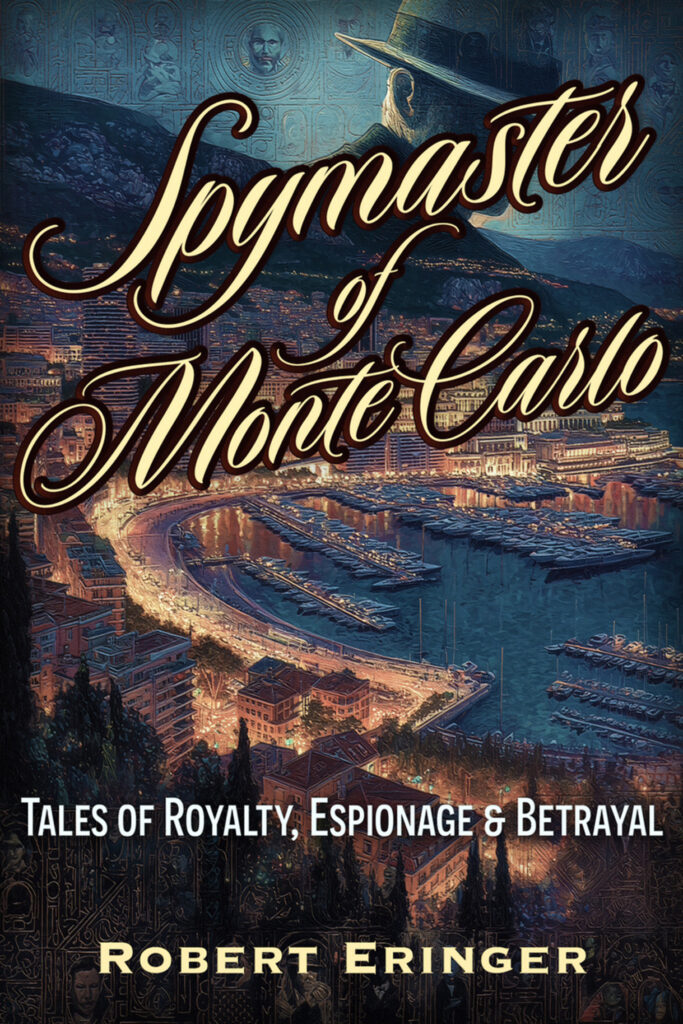
Pre-order the new book by Robert Eringer, The Spymaster of Monte Carlo
Albert summoned Eringer to build Monaco’s first intelligence capability with a clear mission: uncover corruption, map criminal influence, and confront entrenched interests that had quietly shaped the principality for decades. Eringer did exactly that. He cultivated intelligence channels with the CIA, MI6, and nearly twenty foreign services, reviewed police files, tracked money laundering networks, and compiled hard evidence implicating powerful figures embedded in Monaco’s political and financial system.
Prince Albert saw the evidence.
At first, there were signs of resolve. Then something changed.
As Eringer documents in his latest commentary and in his forthcoming book, Spymaster of Monte Carlo, any serious appetite Albert may have had for reform was quietly extinguished. The same forces Eringer was tasked with exposing proved adept at neutralizing threats, not through open confrontation, but through temptation, leverage, and compromise. The reformer became restrained. The investigator became inconvenient.
What followed was not reform, but absorption. Monaco’s system functioned exactly as elite power structures often do: fat cats shielding one another, protecting access, influence, and wealth under the guise of stability. Cronyism replaced accountability. Corruption wasn’t eliminated; it was managed. Those who stayed close to power prospered. Those who pushed too hard were marginalized or removed.
Eringer chose to leave.
His account is not about one bad actor or one rogue official. It’s about how monarchies and closed systems preserve themselves, how blackmail and indulgence corrode reform from within, and how the appearance of order often masks deep rot.
Only at the end does Eringer turn to a now-disgraced palace insider, Claude Palmero, Albert’s longtime accountant, whose recent claims of “reform” serve less as revelation than as illustration. Palmero is not the story. He is the anecdote that explains it.
This is a rare, first-person exposé of how corruption survives at the highest levels, not by force, but by familiarity. And it asks the uncomfortable question royal systems never want asked: what happens when the man who hires the investigator becomes part of the problem himself?
Relevant Article(s):
OPTIONAL Q&A:
- What prompted you to respond now to Claude Palmero’s claims of reform, and why do you see them as revisionism rather than revelation?
- You write that Prince Albert initially saw the evidence of corruption you gathered, then pulled back. What changed, and who applied the pressure?
- How central was Claude Palmero to the very system he now criticizes, and why do you believe he remained inside it for two decades?
- What did Monaco’s police files suggest about the Marzocco Schriqui Consortium, and why were those concerns never meaningfully acted upon?
- You describe the Odeon Tower as a product of manipulation rather than urban planning. What does that project reveal about how decisions are really made in Monaco?
- At what moment did you conclude that Monaco’s promised “new ethic” was dead, and why did you choose to leave when others stayed?
- How does Monaco’s image as a glamorous, well governed principality help shield corruption from scrutiny?
- With Spymaster of Monte Carlo about to be released, what do you most want readers to understand about power, complicity, and accountability in Monaco?
ABOUT ROBERT ERINGER…
In 2002, Prince Albert of Monaco appointed Robert Eringer as his intelligence adviser. He went on to create the principality’s first intelligence service. He currently lives in Montecito, California. Eringer has spent nearly five decades in the intelligence and investigative game. He began as an undercover journalist for Fleet Street and served as a foreign correspondent for The Toronto Star and The Toledo Blade. Infiltrating the Ku Klux Klan was just the start. From 1993, he operated undercover for FBI Counterintelligence in Moscow, Havana, and beyond.
TO SCHEDULE AN INTERVIEW, CALL OR TEXT 512-966-0983 OR EMAIL BOOKINGS@SPECIALGUESTS.COM

Prince, Prince, Prince

