
ICE 2 Meet U: After Minneapolis Backlash, Polarizing Enforcement Agency Enters Airports
A quiet policy shift could turn America’s airports into flashpoints—by introducing immigration enforcement into spaces built for routine security. Investigative journalist Bill Conroy, a veteran reporter covering federal law enforcement and civil liberties, is available to break down the potential deployment of agents from the U.S. Immigration and Customs Enforcement (ICE) inside U.S. airports—potentially supplanting or supplementing the Transportation Security Administration (TSA)—and why it could reshape public perception, traveler behavior, and the broader travel economy.
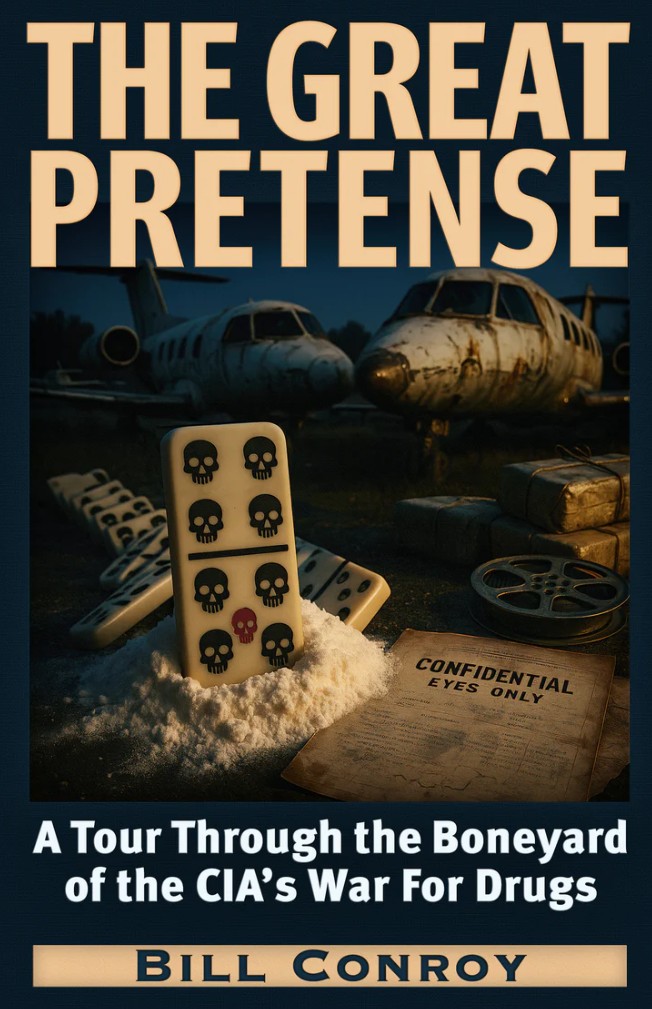
Bill Conroy’s New Book, The Great Pretense: A Tour Through the Boneyard of the CIA’s War For Drugs
- Presence in airports could shift the atmosphere from security to enforcement
- Public perception of U.S. Immigration and Customs Enforcement may deter travelers and impact tourism
- Transportation Security Administration (TSA) screening requires specialized training ICE agents do not have
- Unclear roles for ICE inside airports could create confusion and tension
- Airports are already high-stress environments—adding a politically charged agency could escalate it
From Minnesota to ICE Air
When Americans hear “ICE,” they don’t think “airport security.” They think immigration enforcement—and, increasingly, deportation. That perception has hardened in recent months, particularly following high-profile protests earlier this year in Minnesota. Whether justified or not, the enforcment arm has become a flashpoint agency, carrying political and emotional weight that TSA simply does not.
Putting agents into airports introduces that tension into one of the most high-stress civilian environments in the country.
Airports already test patience: long lines, invasive screening, tight connections. The TSA’s role, while often criticized, is at least familiar and narrowly defined—security screening. ICE, by contrast, signals enforcement. Its presence could fundamentally change how travelers—especially international visitors, immigrants, and even U.S. citizens wary of profiling—experience air travel.
Bill can speak to why this matters now:
Will travelers hesitate to fly if airports feel like enforcement zones?
Could tourism decline if the U.S. is perceived as less welcoming at the point of entry and departure?
Are airlines and airport authorities prepared for the backlash if tensions escalate inside terminals?
There are also operational concerns. ICE agents are not trained to perform TSA screening functions, which require specialized procedures and consistency. Any rapid integration raises questions about effectiveness, training gaps, and passenger safety.
Perhaps most importantly, there is still little clarity about what ICE agents would actually be doing inside airports—creating uncertainty that could heighten anxiety for millions of travelers.
Bill Conroy brings deep experience covering federal law enforcement and civil liberties and can break down both the policy implications and the real-world impact on travelers.
This is a timely, visually compelling story with immediate relevance to your audience.
SUGGESTED Q&A
- How would replacing Transportation Security Administration (TSA) officers with U.S. Immigration and Customs Enforcement (ICE) agents change the way travelers experience airport security?
- Could the presence of ICE inside airports deter certain travelers—especially immigrants or international visitors—from flying altogether?
- After the protests in Minnesota, has ICE become too politically charged to place in everyday public settings like airports?
- Is there a risk that introducing ICE into airports could chill tourism and business travel in the U.S.?
- Are ICE agents actually trained to perform the specialized screening functions currently handled by TSA personnel?
- What do we know—and what don’t we know—about what ICE agents would actually be doing inside airport terminals?
- Could the optics of ICE at airport checkpoints create legal or civil liberties concerns, even for U.S. citizens?
- If airports are already high-stress environments, what happens when you introduce an agency many Americans associate with enforcement and deportation?
Related Article(s)
Why $100 Oil Isn’t Going to Spark a New Shale Boom | OilPrice.com
ABOUT BILL CONROY…
Bill Conroy, M.A. in Mass Communications/Journalism (Marquette University), is a veteran journalist with 40 years of experience working as a staff reporter, editor-in-chief, and freelance correspondent at print and online publications across the United States and in Mexico. His journalism has been cited in more than 35 books to date. Conroy also is the author of the nonfiction books The Great Pretense: A Tour Through the Boneyard of the CIA’s War for Drugs; Dispatches from the House of Death: A Juarez Cartel informant, a DEA whistleblower, mass murder and a coverup on the edge of the Empire; and Borderline Security: A Chronicle of Reprisal, Cronyism and Corruption in the U.S. Customs Service.
TO SCHEDULE AN INTERVIEW, CALL OR TEXT 512-966-0983 OR EMAIL BOOKINGS@SPECIALGUESTS.COM