
Will Cain sits down with Iranian American and former Political Prisoner to discuss what’s next for Iran
Via Fox News:
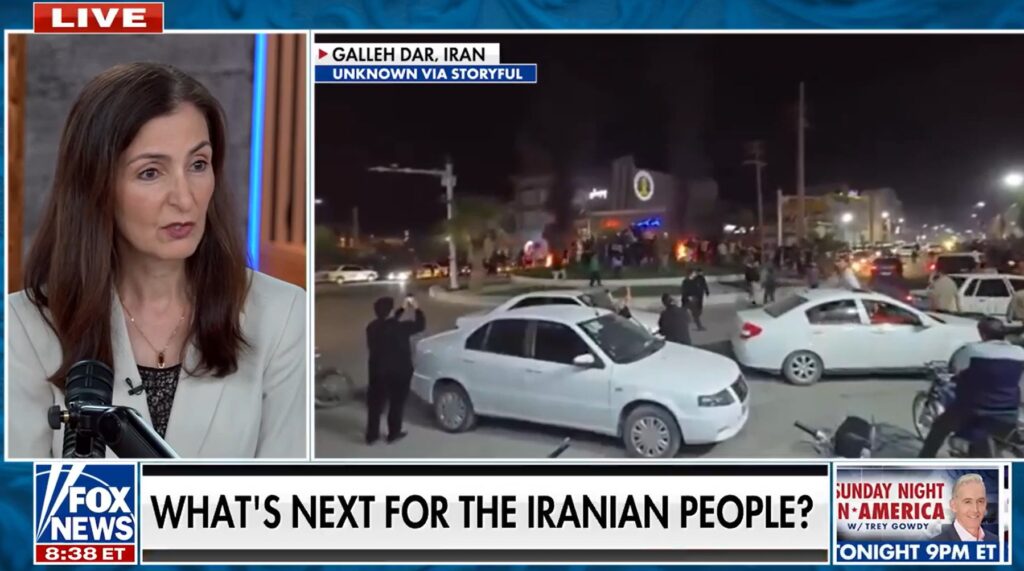
In a special episode of Fox News following the bombing of Iran, host Will Cain spoke with Iranian-American activist and former political prisoner Homeira Hesami about the unfolding situation in Iran and the potential implications for the Iranian people. The discussion focused on the political and social conditions inside the country, the reaction among ordinary citizens to recent events, and the possibilities for change in the aftermath of the strikes.
The interview began with a broad examination of the moment Iran finds itself in after the bombing campaign and the broader regional tensions surrounding it. Hesami provided context from the perspective of someone who once lived under the regime and experienced imprisonment for political activity. She described a system in which dissent is tightly controlled and opposition movements face severe consequences. Drawing from her own past, she explained that many Iranians who have challenged the government have endured imprisonment, harsh interrogations, and long-term intimidation designed to suppress activism and discourage political organizing.
Hesami recounted how her early experiences with the Iranian justice system shaped her understanding of the regime’s methods. She described a political structure that relies heavily on surveillance and coercion, with authorities often targeting young activists, students, and advocates for civil liberties. According to her, even minor expressions of dissent have historically been treated as threats to the state, and individuals can find themselves arrested for activities as simple as reading certain materials or participating in discussions about reform.
Fox Henhouse
From there, the conversation shifted toward the atmosphere inside Iran following the bombing. Hesami explained that the reactions among the population are complex and varied. While many people fear instability or retaliation, she suggested that others see the moment as a potential turning point. In her view, a significant portion of the Iranian population has long been dissatisfied with the current leadership and has been searching for an opportunity to push for meaningful change. Various protest movements over the years have demonstrated that underlying frustration, even if those movements were eventually suppressed.
Cain asked about the role of resistance networks inside the country and whether they are capable of taking advantage of the current situation. Hesami described a decentralized opposition that includes activists, civil society organizations, and groups advocating for democratic reforms. According to her assessment, these networks have grown over time despite government repression, and they remain active in different parts of the country. Their efforts, she said, are aimed at promoting a political transition that would replace authoritarian rule with a more representative system of government.
The interview also addressed the communication challenges facing Iranians during periods of unrest. Hesami explained that the government often restricts internet access and monitors communications in order to control the flow of information. These tactics, she suggested, are designed to prevent coordination among protest groups and limit the ability of citizens to share news about demonstrations or government crackdowns. Such measures can isolate communities and make it difficult for people both inside and outside the country to understand what is happening in real time.
Throughout the conversation, Hesami emphasized that the desire for change is not limited to any single demographic group. She pointed to widespread dissatisfaction among students, workers, and women’s rights advocates as evidence that frustration with the regime spans many layers of Iranian society. Over the years, various protests and demonstrations have reflected those grievances, particularly around issues of economic hardship, political repression, and social restrictions.
Cain and Hesami also explored the question of what a transition might look like if the current leadership were to weaken or lose control. Hesami stressed that any long-term solution would ultimately need to come from the Iranian people themselves rather than being imposed from outside the country. While external events can influence the political environment, she suggested that lasting change requires internal participation, organization, and leadership from within Iranian society.
In discussing the broader geopolitical context, Cain noted that the bombing of Iran has dramatically altered the regional landscape and intensified debate about the future of the country’s leadership. Hesami acknowledged that such developments create uncertainty, but she maintained that they also highlight the ongoing struggle between the ruling establishment and those seeking greater freedoms.
By the end of the interview, the conversation returned to the human dimension of the conflict. Hesami reflected on the experiences of ordinary Iranians who must navigate political repression, economic pressures, and the uncertainty created by international tensions. Despite these challenges, she conveyed a sense that many Iranians remain determined to pursue a future defined by greater openness and political accountability.
The discussion ultimately framed the bombing of Iran not only as a geopolitical event but also as a moment that could influence the trajectory of a long-running struggle between authoritarian governance and popular demands for reform. Through her personal history and continued advocacy, Hesami offered a perspective grounded in both the hardships of the past and the possibility of a different political future for Iran.

Fox, Fox, Fox, Fox, Fox, Fox

