
House of Hush: Congress Demanded Full Transparency on Elite Sex Scandals but Just Voted to Bury its Own
Hypocrisy in our nation’s Capital is not new, but it just reached a new level. When Congress had the will to push through a bill demanding the release of the Epstein files, it was nearly unanimous. Passing a bill that exposes its own members for similar misdeeds is quite a different story.
Robert Eringer, former intelligence adviser to Albert II, Prince of Monaco, is uniquely positioned to weigh in on a stunning display of political hypocrisy unfolding in Washington. The U.S. House of Representatives recently voted 357–65 to effectively block the release of internal congressional records related to sexual misconduct investigations involving members of Congress and their staff. Had the votes been reversed, the American people would have access to the names of members of Congress who benefited from a sexual misconduct slush / hush fund. The procedural move sent the proposal to the House Ethics Committee, effectively killing the effort to make the documents public.
- The House voted 357–65 to block release of records tied to sexual-misconduct investigations involving members of Congress
- The same Congress previously voted 534–1 to release the Epstein files, exposing a striking double standard on transparency
- Critics say taxpayer dollars have been used for years to quietly settle misconduct claims involving lawmakers
- Robert Eringer witnessed firsthand how elites use secrecy and leverage to shield wrongdoing while maintaining public power
- The controversy highlights how wealth, access, and institutional protection can foster hypocrisy at the highest levels
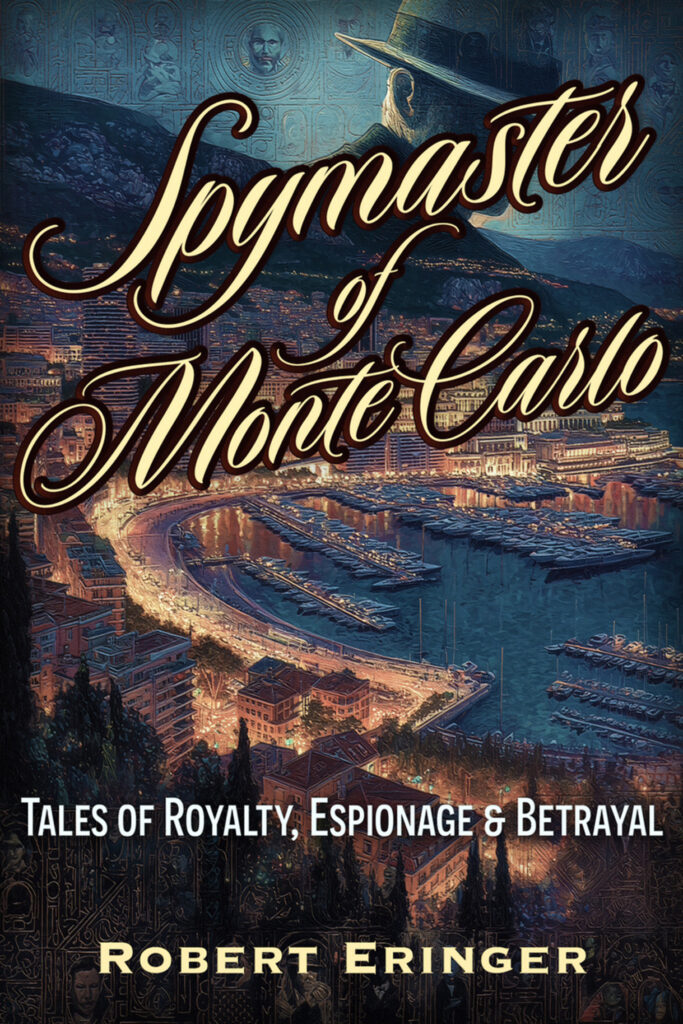
Veteran intelligence adviser for Prince Albert II of Monaco, Robert Eringer, is more than qualified to discuss this dynamic. He witnessed the temptations of power firsthand. He gives readers a ringside seat to that very thing in his new Book, The Spymaster of Monte Carlo: Tales of Royalty, Espionage & Betrayal. In fact, in this parallel, Prince Albert’s hiring of Eringer is similar to what Congress did in demanding Epstein transparency. His actions allegedly more closely mirrored what Congress did in suppressing transparency of its own members.
Order the new book by Robert Eringer, The Spymaster of Monte Carlo
What makes the decision even more striking is the contrast with Congress’s overwhelming bipartisan vote not long ago to release files related to the Jeffrey Epstein case. That measure passed Congress by an extraordinary 534–1 margin and was subsequently signed into law by Donald Trump, reflecting a near-universal demand for transparency when it came to elite sexual misconduct. Yet now, many of the same lawmakers who supported exposing Epstein’s network are refusing to open the books on potential misconduct within their own institution.
Critics argue that the blocked measure could have shed light on a longstanding system in which taxpayer funds have been used to quietly settle harassment claims involving lawmakers—what some watchdogs have called a congressional “hush fund.” Supporters of the proposal argued the public has a right to know whether elected officials have used taxpayer dollars to resolve allegations behind closed doors. Opponents countered that releasing investigative files could deter victims from cooperating or expose sensitive information tied to ongoing cases.
For Eringer, the story goes far beyond partisan politics. During his tenure in Monaco, he was tasked with gathering intelligence to expose corruption and criminal influence within elite financial and political circles. Instead, he found himself confronting a system where power, wealth, and access were often used to conceal wrongdoing rather than expose it. The experience gave him a rare firsthand view of how kompromat—compromising information—can shape behavior at the highest levels of influence.
Eringer can discuss how the dynamics of secrecy, leverage, and mutual protection often transcend national borders and political systems. In his experience, institutions built on privilege frequently develop mechanisms to shield insiders from accountability while projecting an image of moral authority to the public. The result is a culture where hypocrisy becomes almost inevitable.
The current controversy in Congress, he argues, reflects that same pattern. Calls for transparency are often loudest when directed outward—toward disgraced financiers, foreign adversaries, or political rivals—but become muted when the spotlight turns inward. Eringer can explore why powerful institutions instinctively resist exposing their own vulnerabilities and how secrecy itself can become a form of political currency.
At a time when public trust in government remains fragile, Eringer offers a rare perspective on how corruption networks function behind the scenes and why genuine accountability remains so difficult to achieve—even in democracies that claim transparency as a core value.
Relevant Article(s):
House kills effort to release all congressional sexual misconduct and harassment reports
OPTIONAL Q&A:
- What does the House vote to block release of the congressional sexual-misconduct records tell us about how power protects itself
- Why would lawmakers vote overwhelmingly to release the Epstein files but refuse transparency about misconduct within their own ranks
- Based on your experience as intelligence adviser to Prince Albert II of Monaco, how common are “hush fund” systems used by powerful institutions
- How does kompromat function as a form of leverage inside elite political and financial circles
- Did your time in Monaco change how you view the relationship between wealth, influence, and accountability
- Why do institutions often promote transparency publicly while resisting it internally
- What risks arise when elected officials can use taxpayer money to quietly settle misconduct claims
- From your perspective, what would real accountability look like when corruption and secrecy become institutionalized
ABOUT ROBERT ERINGER…
In 2002, Prince Albert of Monaco appointed Robert Eringer as his intelligence adviser. He went on to create the principality’s first intelligence service. He currently lives in Montecito, California. Eringer has spent nearly five decades in the intelligence and investigative game. He began as an undercover journalist for Fleet Street and served as a foreign correspondent for The Toronto Star and The Toledo Blade. Infiltrating the Ku Klux Klan was just the start. From 1993, he operated undercover for FBI Counterintelligence in Moscow, Havana, and beyond.
ALTERNATE GUEST NICK BRYANT…
ABOUT NICK BRYANT…
Nick Bryant is an investigative journalist. He was the first to acquire and publish Epstein’s flight logs and Black Book. Bryant acquired these items in 2012 but was unable to get them published until 2015. When it comes to the history, connections, and details of Epstein’s background, there is no one more knowledgeable than Nick Bryant.
He spent seven years investigating a child sex trafficking network that was covered up by state and federal authorities, culminating in The Franklin Scandal: A Story of Powerbrokers, Child Abuse, and Betrayal. The trafficking network I wrote about in The Franklin Scandal has been the focal point of considerable misinformation and/or disinformation on the Internet. Individuals who, perhaps, suffer from psychiatric disorders have woven the Illuminati and shape shifting reptilian ETs into the narrative.
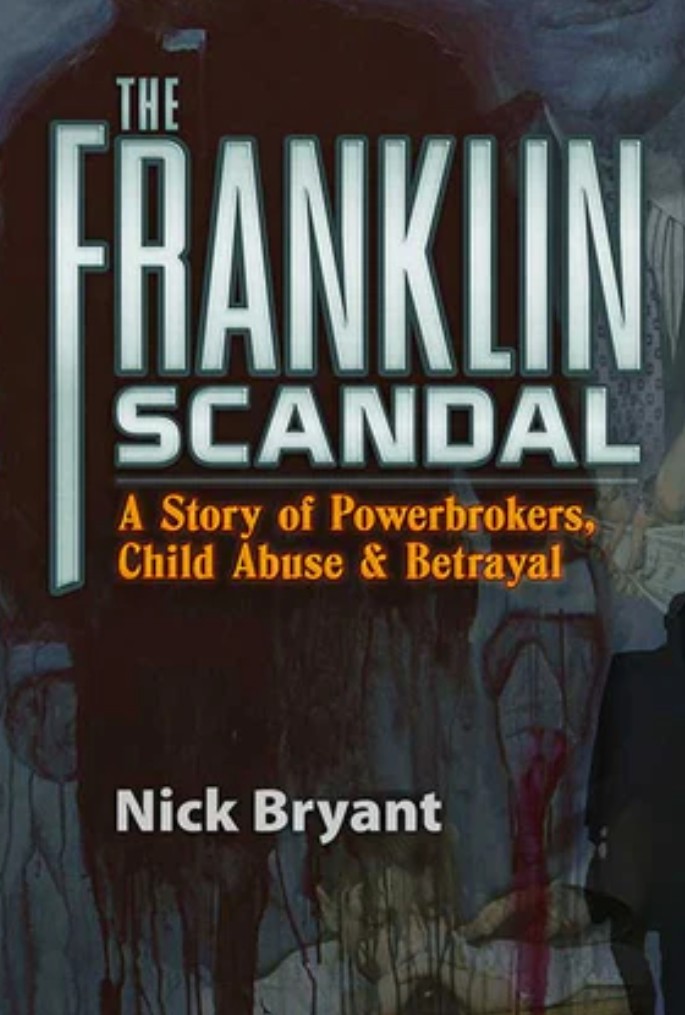
But the book’s foremost transgressor has been Wikipedia. The “Franklin child prostitution ring allegations” Wikipedia page has been under siege by unscrupulous Wikipedia “editors,” and they’ve intentionally made it nonsensical.
The Franklin Scandal and the Epstein scandal are quite similar in the sense that both child trafficking networks were covered up by state and federal authorities and the mainstream media has been complicit, because it never demanded justice for the children whose lives had been disfigured. I started investigating the Epstein network in 2012, when I acquired his “Little Black Book”—seven years before the case broke nationally. I pitched an article on the Little Black Book for three years to mainstream media outlets, but, like The Franklin Scandal, my pitches were met with unbridled skepticism and incredulity. In 2015, finally, Gawker published the Little Black Book and accompanying articles. I found it ironic that Gawker, considered to be the mean kids in the media, had the fortitude to publish a story about children whose lives have been disfigured with impunity, whereas media outlets ostensibly immersed in integrity had rejected the story.
His latest book, The Truth About Watergate: A Tale of Extraordinary Lies and Liars, details the false narrative that our history books have imparted about the infamous Watergate affair.
TO SCHEDULE AN INTERVIEW, CALL OR TEXT 512-966-0983 OR EMAIL BOOKINGS@SPECIALGUESTS.COM