
Suicide Killers: Kavanaugh Ruling Meets Epstein Ties as FBI’s Child Abduction and Serial Killer Unit Part of Investigation
Attorney John H. Clarke has been raising urgent questions about a pattern of controversial federal investigations—linking the 1993 death of Vince Foster to the legal saga of Jeffrey Epstein, with one name at the center: Kenneth Starr and Supreme Court Justice Brett Kavanaugh. At one point, Clarke sat in on meeting that included Kavanaugh and the latter was visibly shaken.
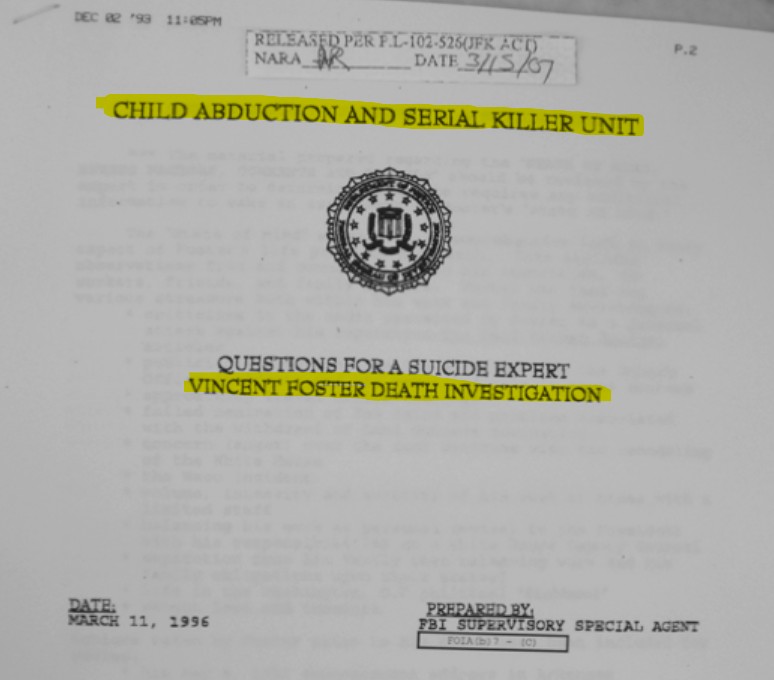
- The Foster investigation was mishandled and prematurely closed—dissenting witnesses were marginalized and intimidated, Attorney says
- The role of Starr and Kavanaugh in shaping the official narrative of Foster’s death is suspect, Attorney says
- Why was an FBI unit focused on child abduction and serial killers involved in a “suicide” case? Attorney wants answers
- Starr’s involvement in Epstein’s legal defense and what it suggests in retrospect, Attorney wants answers
- Whether these cases point to a broader pattern of institutional failure or protection
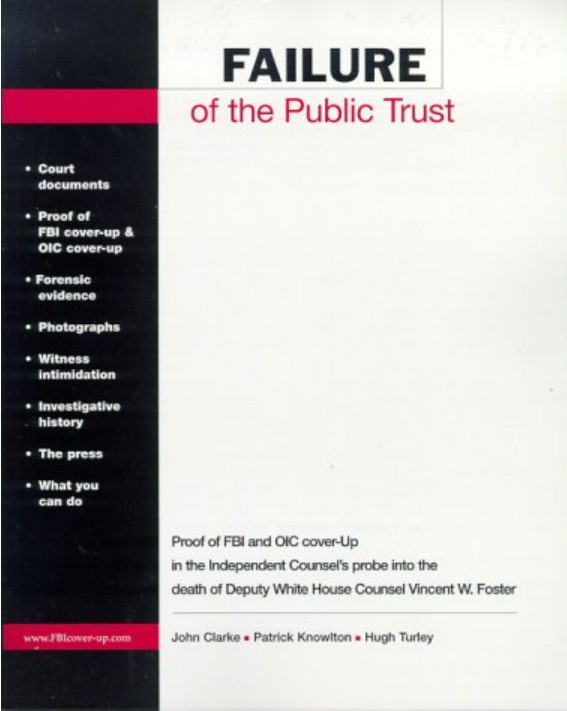
Attorney Clarke, who represented key Foster witness Patrick Knowlton, has long challenged the official ruling that Foster died by suicide. Knowlton, present in the park the day Foster’s body was discovered, directly contradicted elements of the government’s timeline and findings—putting him at odds with Starr’s Office of Independent Counsel, which ultimately concluded Foster’s death was self-inflicted. Leading that investigation under Starr was none other than current Supreme Court Justice Brett Kavanaugh.
Attorney Smells Fish
Clarke argues the Foster case was not just flawed, but emblematic of a broader failure of accountability. Among the most troubling revelations: an official FBI document that surfaced years later bearing the header “Child Abduction and Serial Killer Unit” with the subject line, “Questions for a Suicide Expert – Vince Foster Death Investigation.” Clarke says the existence of such a document raises profound questions about what investigators were considering behind the scenes—and why.
Fast forward more than a decade, and Starr re-emerges in another explosive case: Epstein. Starr was tied to Epstein’s legal orbit during the controversial 2007–2008 non-prosecution agreement in Florida and later served on Epstein’s defense team in 2019, advocating for his release after federal sex trafficking charges were filed. To Clarke, the overlap is deeply concerning.
Clarke brings decades of legal experience and firsthand involvement in one of Washington’s most disputed cases. As new scrutiny continues to surround Epstein and long-standing questions persist about Foster, he offers a rare, insider perspective on two cases that continue to fuel debate—and demand answers.
RELEVANT ARTICLE(S):
The Vince Foster Cover-up: The FBI and The Press
OPTIONAL Q&A
- What led you to conclude that Vince Foster’s death was not a suicide?
- How did your client Patrick Knowlton’s account conflict with the official findings of Kenneth Starr’s investigation?
- What role did Brett Kavanaugh play in shaping the final conclusions of the Foster case?
- Why would an FBI unit focused on child abduction and serial killers be involved in what was ruled a suicide?
- Do you believe key evidence in the Foster investigation was ignored, suppressed, or misinterpreted?
- How does Starr’s later involvement with Jeffrey Epstein change how we should view his earlier work?
- Are there parallels between how the Foster and Epstein cases were handled by authorities?
- What questions still remain unanswered today—and what would it take to reopen scrutiny into these cases?
ABOUT JOHN H. CLARKE…
John H. Clarke is a seasoned attorney and member of the District of Columbia Superior Court Fiduciary Panel, specializing in complex litigation, federal oversight, and civil rights matters. Over his career, Clarke has pursued numerous high-profile Freedom of Information Act (FOIA) lawsuits, including cases related to unrepatriated American POWs from the Korean and Vietnam Wars. Notably, in Hall et al. v. CIA, a 21-year litigation effort, he challenged the agency’s failure to search operational records for POWs held in Laos, resulting in a landmark appellate ruling in April 2025.
Clarke has also litigated significant national security and transparency matters, including FOIA actions concerning the Benghazi attack, TWA Flight 800, and Department of Defense record disclosures. He has pursued civil rights claims on behalf of plaintiffs in cases against FBI and federal agents and has successfully compelled disclosure in matters historically shielded by classification.
In addition to FOIA and civil rights litigation, Clarke has investigated high-profile political and governmental controversies, including the death of Deputy White House Counsel Vincent Foster. His work consistently emphasizes accountability, government transparency, and the public’s right to know. Clarke combines legal expertise with rigorous investigative analysis, making him a trusted advocate in cases at the intersection of law, history, and public interest.
Websites: www.VinceFosterMurder.com and www.JohnHClarkeLaw.com