
Royal Flesh: Man Formerly Known as Prince Andrew Being Offered up to Appease Public Rage at Elites
The elite pedophile arrest counter just went from 0000 to 0001 with the news that the man formerly known as Prince Andrew has been arrested for misconduct. Robert Eringer is uniquely positioned to answer a question now quietly circulating among power circles on both sides of the Atlantic: Is the arrest of the man formerly known as Prince Andrew justice—or ritual sacrifice?
As the former intelligence adviser to Prince Albert of Monaco, Eringer didn’t study royal culture from the outside. He built Monaco’s modern intelligence apparatus from the ground up, serving a rare European principality still governed by a monarchy. He understands how elites protect themselves, how information is managed, and how reputations are preserved—or destroyed—when the public mood turns hostile. He also knows a few things about the twisted proclivities of elites who think they are untouchable.
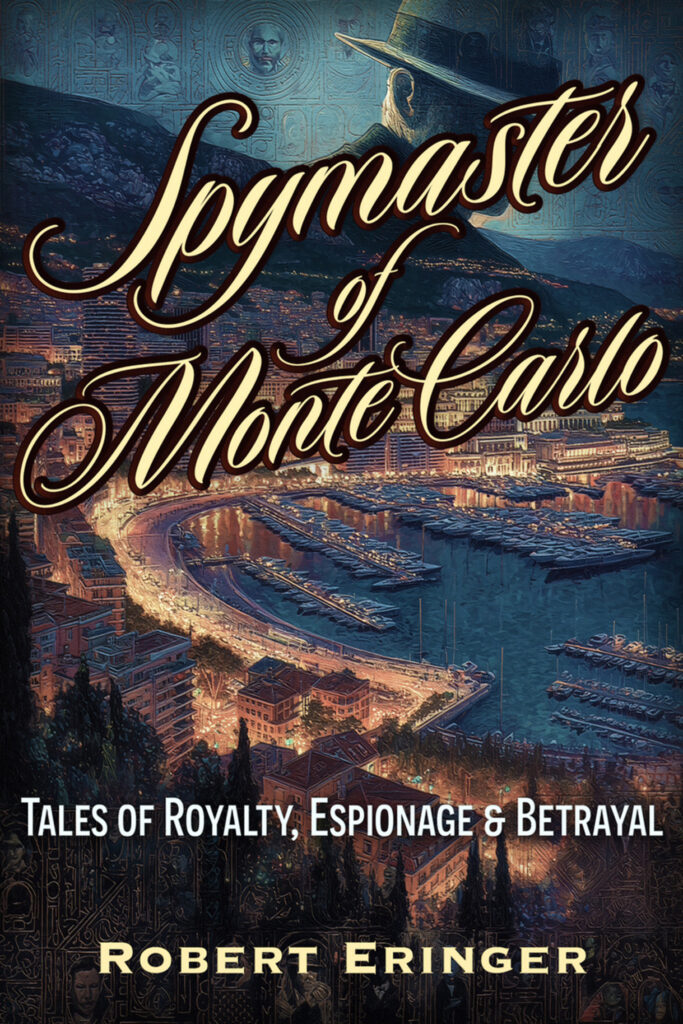
Pre-order the new book by Robert Eringer, The Spymaster of Monte Carlo
The stripping of Andrew’s royal titles and standing was once assumed to be the end of the matter. The institution had acted. The damage, we were told, was contained. But that calculation appears wrong. The public backlash against elites has not subsided; it has intensified. And now, with Andrew facing arrest, a deeper question emerges: has the pressure become so great that one of their own is being offered up as a pound of flesh?
Eringer brings rare clarity to this moment. While he does not believe Prince Albert personally knew Jeffrey Epstein, he does know something more unsettling: Albert and Prince Andrew were friends and shared remarkably similar tastes. That overlap matters—not because it proves guilt by association, but because it exposes a broader, largely unexamined culture among royal and elite circles.
This is not about one man. It’s about a system.
Eringer can explain how elites draw lines internally—what is tolerated, what is ignored, and what becomes unforgivable only when exposure threatens the institution itself. He can speak to how intelligence services quietly manage scandals, assess risk, and decide when someone becomes a liability rather than an asset.
Most importantly, Eringer understands that the public’s anger is no longer satisfied by symbolic punishment. Titles stripped behind palace walls are not enough. The demand now is visible accountability, and Andrew may represent the first time that elite immunity visibly cracks.
Is this a genuine reckoning—or a strategic concession designed to preserve the larger structure? Are we witnessing justice, or a carefully calculated offering meant to absorb public fury and protect others whose names will never surface?
Robert Eringer knows how royal intelligence works because he built it. At a moment when trust in elites is collapsing, his perspective offers something rare: an insider’s explanation of how power reacts when secrecy fails—and survival is on the line.
Relevant Article(s):
King Charles’ brother Andrew arrested on suspicion of misconduct
OPTIONAL Q&A:
- Is Prince Andrew’s arrest genuine accountability, or a calculated sacrifice to relieve public anger toward elites?
- Why was stripping Andrew of his royal status once deemed sufficient, and what changed?
- How do royal and elite institutions decide when someone becomes a liability rather than protected?
- What does this case reveal about the hidden culture and shared tastes among royal elites?
- How are intelligence services used to contain, redirect, or delay scandals involving powerful figures?
- Is Andrew being punished for his actions, or for the exposure that threatened the institution?
- Could offering up one elite figure be a strategy to shield others from scrutiny?
- Does this moment signal a real break in elite immunity—or a controlled release to preserve the system?
ABOUT ROBERT ERINGER…
In 2002, Prince Albert of Monaco appointed Robert Eringer as his intelligence adviser. He went on to create the principality’s first intelligence service. He currently lives in Montecito, California. Eringer has spent nearly five decades in the intelligence and investigative game. He began as an undercover journalist for Fleet Street and served as a foreign correspondent for The Toronto Star and The Toledo Blade. Infiltrating the Ku Klux Klan was just the start. From 1993, he operated undercover for FBI Counterintelligence in Moscow, Havana, and beyond.
TO SCHEDULE AN INTERVIEW, CALL OR TEXT 512-966-0983 OR EMAIL BOOKINGS@SPECIALGUESTS.COM