Fauci’s Ouch Man: COVID Doctor’s Adviser David Morens Falls on Sword, Raising Questions about who stays Protected
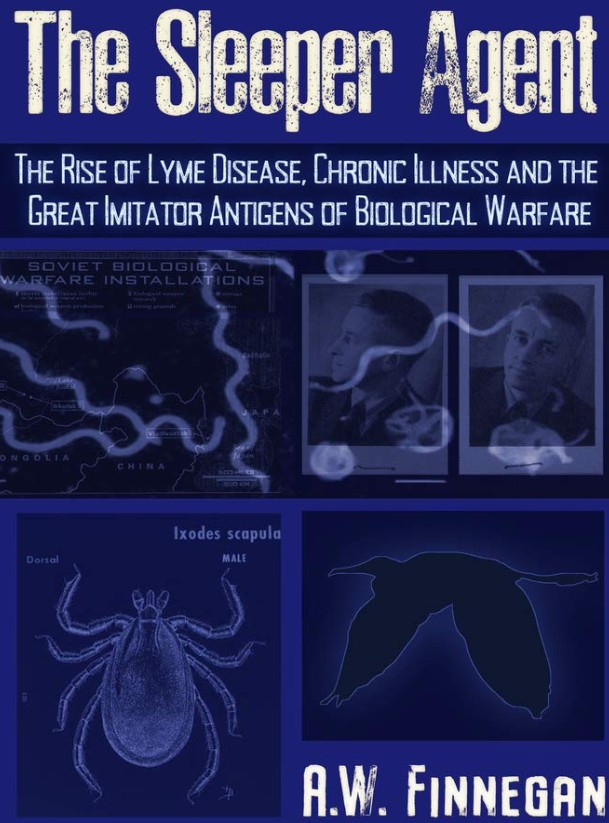
The COVID-19 reckoning just took another explosive turn—and it raises questions that Americans have a right to have answered. Author of The Sleeper Agent and Lyme Disease survivor, Adam Finnegan sees accountability for the Anthony Fauci cadre as a good thing, but he would like to see more of it. Former senior Fauci adviser David Morens has pleaded guilty to a federal conspiracy charge to defraud the United States. The more serious charge of records-falsification would have carried up to a 20-year sentence, but that and other charges were subsequently dropped for some inexplicable reason.
- Morens admitted concealing COVID-related government records from public disclosure
- Original charges carried dramatically greater potential penalties than his plea
- Guilty plea raises fresh questions about Fauci’s pandemic-era communications
- Hidden records could expose how officials shaped COVID’s public narrative
- Americans deserve the complete record of pandemic decisions and policies
Why did Morens receive such a dramatic reduction in his potential criminal exposure—and what is contained in the sealed portion of his plea agreement? Did he agree to help prosecutors expose larger players, or did the deal effectively allow him to take the fall while protecting people above him?
In normal law enforcement practice, when a defendant sees significant charges dropped, it’s supposed to indicate that said defendant gave up larger fish. Unfortunately, history indicates it may be the opposite. So, what kind of a deal did Morens receive and why? If it wasn’t to give up complicit actors higher up the chain, what thing of value did he provide in exchange?
After admitting he used personal email to conceal government records tied to coronavirus research and efforts to influence public-health agencies, Morens is not likely going to see anywhere near the maximum sentence. The case gives Finnegan a powerful opportunity to explain why the public should be looking far beyond one guilty plea.
Morens admitted that he and others worked to obstruct compliance with the Freedom of Information Act and Federal Records Act, including by concealing records related to an NIH grant involving bat-coronavirus research. He also acknowledged efforts to counter the lab-leak narrative, exchange non-public NIH information and influence funding decisions involving EcoHealth Alliance. According to the New York Post, Morens also acknowledged passing information back to Fauci, who court documents identify as “Senior NIAID Official 1.”
For Finnegan, whose previous commentary has been sharply critical of Fauci and what he regards as the deliberate suppression and distortion of information surrounding COVID-19 and its vaccines, the guilty plea represents more than another scandal involving a former government official. It raises the larger question: How much of the COVID narrative was shaped not by emerging science, but by people determined to control what the public was allowed to know?
The timing is especially striking. Fauci has recently refused another Senate request to testify after invoking the Fifth Amendment more than 100 times during a July hearing. He was subsequently held in contempt by the Senate Homeland Security and Governmental Affairs Committee.
Finnegan can discuss whether Morens’ admissions fundamentally change how Americans should view the government’s pandemic-era messaging, including claims about COVID’s origins, vaccine risks and benefits, scientific dissent and the suppression of information that challenged the official narrative.
He can also address the uncomfortable question now confronting Fauci critics and supporters alike: If government officials were willing to hide records and conduct official business through personal email to evade public disclosure, what else remains buried?
Finnegan offers a provocative perspective on why accountability cannot stop with one guilty plea—and why the American public deserves the complete COVID record, not the carefully curated version it was given.
Relevant Article(s):
Fauci adviser pleads guilty to charges connected to the concealment of COVID-19-related records
OPTIONAL Q&A:
- Why did Morens’ original, far more serious records charges disappear from the case? Should we have any confidence it was in exchange for giving up larger fish or conversely, to keep his mouth shut?
- Why did prosecutors accept a five-year conspiracy plea instead of pursuing those charges?
- What does Morens’ guilty plea reveal about Fauci’s role during COVID?
- Were officials deliberately concealing information that contradicted the government’s COVID narrative?
- How much evidence about COVID’s origins may still be hidden from Americans?
- Did the same culture of secrecy affect how vaccine risks were communicated?
- If records were deliberately concealed, how can Americans trust the official COVID history?
- What should Congress demand now from Fauci, Morens and other pandemic-era officials?
ABOUT A.W. FINNEGAN…
Adam Finnegan is a survivor of Lyme disease and immune tolerance and has been battling health problems since he was young, with the onset of a chronic disease in 2016. He is a writer, graphic artist and designer, and avid reader and researcher of history, biological warfare, esoteric philosophy, spirituality, and the Western Mystery Traditions. He has made a special study of the life and work of Erich Traub and the science of immune tolerance. He has collected and translated to English all of Traub’s published research. He lives in Cape Cod, Massachusetts, peacefully by himself, where he enjoys BMX biking, fitness, study, the arts, and self-development.
TO SCHEDULE AN INTERVIEW, CALL OR TEXT 512-966-0983 OR EMAIL BOOKINGS@SPECIALGUESTS.COM