
Iran’s Axis Looking Wobbly: As NATO Intercepts Tehran’s Missiles, Iran’s Partnership with Russia and China looks Shaky
The war in Iran has stunned observers around the world—but few can explain the deeper strategic implications like former intelligence operative Robert Eringer, author of Spymaster of Monte Carlo. In his latest Substack commentary, Eringer breaks down how the U.S. military’s aerial campaign against that country has showcased unmatched precision, training, and expertise, leaving Russia’s corrupt, poorly equipped forces looking amateurish by comparison. With morale collapsing under President Vladimir Putin’s pressure, Eringer argues that Russia is simply unequipped to project real power the way the U.S. does, and that the lessons of Tehran will reverberate across the globe.
- U.S. airpower just exposed Russia’s military weakness — proving Moscow lacks the training, equipment, and discipline to match American precision warfare.
- Iran’s missile strike on Turkey tests NATO’s sacred Article 5 pledge — an attack on one member is an attack on all.
- Kurdish fighters are now doing the ground fighting there — meaning the regime could face internal collapse without U.S. boots on the ground.
- New Ayatollah is already issuing blood-thirsty threats — but in Eringer’s view, the regime’s new leader may be a “dead man walking.”
- The real story isn’t just the war — it’s the global power shift now unfolding among NATO, Russia, and China.
Eringer argues that turmoil inside Iran may not reduce global tensions—it could shift them toward the NATO-Russia front, where the strategic stakes are even higher.
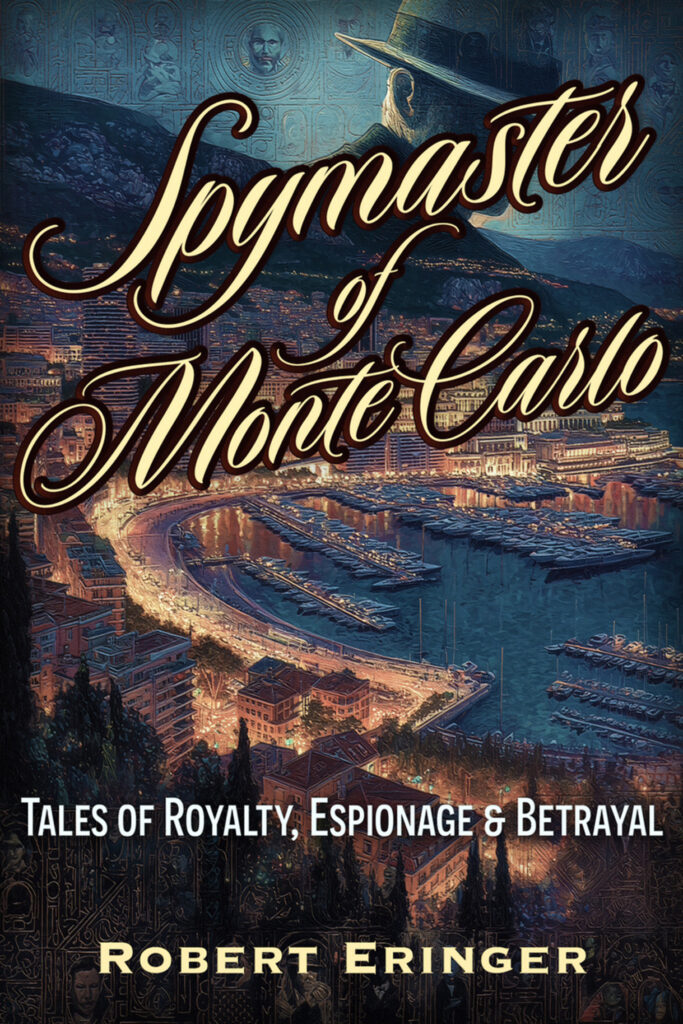
Order the new book by Robert Eringer, The Spymaster of Monte Carlo
The implications go far beyond Iran. When NATO’s air defenses successfully intercepted Iranian missiles targeting Turkey, Eringer emphasizes that the alliance’s Article 5 “one-for-all” guarantee was put to the test. Turkey is not “just another country”—it is NATO (unfortunately or not). And Iran’s attack threatens to draw the alliance into a direct confrontation. Eringer’s insight frames the question bluntly: is NATO vigilant, asleep, or as ineffective as the UN in deterring aggressive actors?
Meanwhile, Iran’s internal dynamics are shifting dramatically. Thousands of Kurdish fighters have launched ground offensives into Iranian territory—without American boots on the ground—targeting century-old regional power structures. Eringer explains how these movements could finally carve out a real Kurdistan, disrupting Tehran’s ability to maintain control and creating new geopolitical fault lines.
On top of that, the new Iranian Ayatollah, Abdollah Javadi Amoli, has made chilling threats of revenge against the U.S., specifically mentioning former President Trump. Eringer describes him as a “dead man walking”, caught in the middle of a regime under siege, and how his inflammatory rhetoric could backfire spectacularly in a rapidly destabilizing country.
For producers seeking a broader geopolitical perspective, Casey Fleming, CEO of Black Ops Partners, is also available as an alternative guest. Fleming can contextualize how Iran’s instability is already influencing China and the Chinese Communist Party, from energy security and regional leverage to great-power competition with the West. He lays it all out in The Red Tsunami: The Silent Storm Killing your Freedom
Together or separately, Eringer and Fleming provide an intelligence-driven, high-stakes view of the Iran conflict, showing audiences not just what happened—but how it shifts the global balance of power. Interviews are available immediately.

For outlets seeking a deeper look at the broader geopolitical chessboard behind Iran’s turmoil, Casey Fleming, CEO of Black Ops Partners, is also available as an alternative guest. Fleming is a strategic intelligence expert who advises governments and corporations worldwide on geopolitical risk and great-power competition.
Fleming can explain how instability in Tehran connects directly to China’s long-term strategic interests. The Chinese Communist Party has spent years strengthening economic, military, and technological ties with Iran as part of Beijing’s effort to expand influence across the Middle East while countering Western pressure. Any disruption inside Iran has ripple effects for China’s energy security, regional strategy, and broader geopolitical ambitions.
Together, these perspectives provide audiences with both the inside-the-intelligence-world view of regime instability and the wider geopolitical implications linking Iran’s turmoil to the global power struggle increasingly defined by Beijing. Interviews with Eringer or Fleming are available.
Relevant Article(s):
OPTIONAL Q&A:
- How does the sudden turmoil inside Iran change the balance of power in the Middle East?
- Why can power vacuums inside authoritarian regimes make the situation more dangerous rather than more stable?
- What signs should intelligence professionals be watching to determine who will ultimately control Iran?
- How might Russia respond if instability in Tehran threatens one of its key strategic partners?
- Could Iran’s internal crisis shift geopolitical pressure toward NATO and Europe?
- What role does China play behind the scenes as events unfold in Iran?
- How do intelligence insiders interpret these developments differently than the way they’re being covered in the media?
- What scenarios should the West be preparing for if Iran enters a prolonged period of instability?
ABOUT ROBERT ERINGER…
In 2002, Prince Albert of Monaco appointed Robert Eringer as his intelligence adviser. He went on to create the principality’s first intelligence service. He currently lives in Montecito, California. Eringer has spent nearly five decades in the intelligence and investigative game. He began as an undercover journalist for Fleet Street and served as a foreign correspondent for The Toronto Star and The Toledo Blade. Infiltrating the Ku Klux Klan was just the start. From 1993, he operated undercover for FBI Counterintelligence in Moscow, Havana, and beyond.
ABOUT CASEY FLEMING…
Fleming is the CEO of BlackOps Partners Corporation and is at the forefront of evolving strategic risks affecting global leaders. His leadership has enabled organizations to proactively identify hidden risks and uncover new opportunities within their operations and supply networks. In particular, Fleming’s expertise and laser focus is on the threat of the Chinese Communist Party (CCP) to the U.S. As such, he has provided the blueprint for Americans to confront it.
His extensive contributions extend beyond technology and strategy. His insights in unrestricted war and cognitive war have been regularly featured in conferences, media interviews, prominent publications, documentaries, and as a TEDx speaker. Notable recognition includes Cybersecurity Professional of the Year from the Cybersecurity Excellence Awards and the Directorship 100 Governance Award from the National Association of Corporate Directors.
TO SCHEDULE AN INTERVIEW, CALL OR TEXT 512-966-0983 OR EMAIL BOOKINGS@SPECIALGUESTS.COM