
Bye-Atollah: Iran’s Supreme Leader Dead, Leaving behind a Violent Power Vacuum
The hardest phase begins now. With Iran’s supreme leadership decapitated and the country rocked by coordinated bombings, the central challenge is no longer shock—it is reconstruction under fire. Power vacuums don’t stay empty. They are contested, exploited, and often hijacked. The question facing policymakers and the public alike is whether this moment produces stability—or spirals into chaos with global consequences.
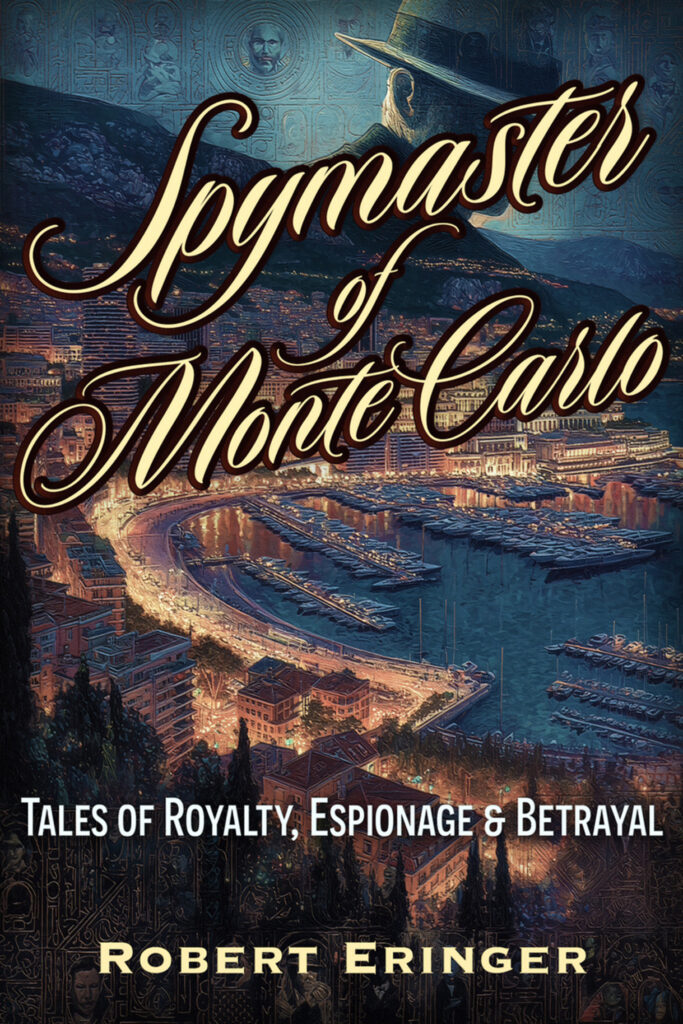
Casey Fleming is the CEO of Black Ops Partners and author of THE #1 Best Selling Book in National and International Security and he and is not in the business of conjecture. Order The Red Tsunami: The Silent Storm Killing Your Freedom Robert Eringer, the one-time Intelligence Adviser to Prince Albert II of Monaco and author of Spymaster of Monte Carlo; Joshua Philipp, senior Investigative Reporter at Epoch Times knows geopolitics like no one else, can explain Iran and China; Nan Su is a reporter for the Epoch Times and he too can lay out how this action ensnares the CCP; Senator Robert Torricelli and NCRI Deputy Director Alireza Jafarzadeh can talk about what comes next inside Iran.

***ADDITIONAL GUESTS AVAILABLE AS WELL****
This conversation demands more than punditry. It requires voices with operational, geopolitical, intelligence, and regional expertise.
Fleming, CEO of Black Ops Partners, can speak to the immediate strategic danger posed by destabilized authoritarian regimes. Iran and China now resemble cornered rats—unpredictable, desperate, and prone to asymmetric retaliation. Fleming can explain how post-strike environments invite cyber escalation, proxy violence, and economic coercion, and what a stout but sensible military strategy must prioritize to prevent regional spillover.
Joshua Philipp, senior investigative reporter at The Epoch Times, brings a rare ability to connect global dots. From Middle East instability to Beijing’s long game, Philipp can frame how Iran’s collapse intersects with broader power realignments, great-power competition, and the risks of miscalculation in a multipolar world.
Nan Su offers deep insight into Chinese Communist Party tactics at moments of foreign crisis. As Beijing quietly probes for advantage—diplomatic, economic, and intelligence—Su can explain how the CCP exploits disorder abroad while maintaining plausible deniability, and why Iran’s turmoil matters far beyond the region.
Robert Eringer, who built an intelligence apparatus for the Prince of Monaco, can demystify what intelligence operations look like at a moment like this. His perspective clarifies priorities: identifying successor power centers, tracking covert retaliation, and distinguishing genuine reform movements from regime rebrands.
Finally, the political future. Robert Torricelli, speaking for the National Council of Resistance of Iran, can explain why the NCRI is uniquely positioned to fill the leadership vacuum with an organized, secular alternative. Alireza Jafarzadeh, with unparalleled insight into internal Iranian dynamics, can detail why the Islamic Revolutionary Guard Corps is at its most desperate—and therefore most dangerous—moment.
This is not just a story about what fell. It’s about what must be built, and who is best equipped to ensure the future doesn’t become more lethal than the past.
OPTIONAL Q&A
- What is the single greatest risk in the immediate power vacuum following the Ayatollah’s killing?
- Which actors—internal or external—are most likely to exploit Iran’s instability in the next 30 to 90 days?
- How does a cornered regime typically behave when it believes survival is at stake?
- What does effective reconstruction look like when intelligence, military pressure, and diplomacy must operate simultaneously?
- How vulnerable is the Islamic Revolutionary Guard Corps right now, and why does that make it more dangerous?
- What signals should the public watch for that distinguish genuine reform from a regime rebrand?
- How does Iran’s instability intersect with China’s global strategy and opportunism?
- Why is this moment different from previous crises in Iran—and why does it matter globally?
ABOUT CASEY FLEMING…
Casey Fleming is an internationally recognized keynote speaker and author on national security, intelligence, and strategic risk.
As Chief Executive Officer of BlackOps Partners Corporation, Mr. Fleming is at the forefront of evolving strategic risk affecting global leaders. His leadership has enabled organizations to proactively identify hidden risks and uncover new opportunities within their operations and supply networks.
His extensive contributions extend beyond technology and strategy. His insights in unrestricted war and cognitive war have been regularly featured in conferences, media interviews, prominent publications, documentaries, and as a TEDx speaker. Notable recognition includes Cybersecurity Professional of the Year from the Cybersecurity Excellence Awards and the Directorship 100 Governance Award from the National Association of Corporate Directors.
Mr. Fleming’s expertise is sought after by a diverse range of institutions, including the private sector, domestic and foreign governments, and academia. He offers guidance to the Fortune 500, Congress, the Pentagon, the Department of Justice (DOJ), the Federal Bureau of Investigation (FBI), the National Counterintelligence Security Center (NCSC), the Cybersecurity and Infrastructure Security Agency (CISA), the House Select Committee on Strategic Competition between the United States and the Chinese Communist Party, the Securities and Exchange Commission (SEC), The White House, and other vital institutions responsible for national security and strategic decision-making. He serves as an expert witness in matters of strategic risk, counterintelligence, and national security.
He has held pivotal roles as a board-appointed turnaround executive for Silicon Valley companies, executive for Deloitte Consulting’s Global Risk and Strategy Group, and founding executive for IBM’s early cybersecurity division, now known as IBM Security.
Mr. Fleming earned his bachelor’s degree from Texas A&M University and served as an instructor within IBM’s internal MBA program. He continued his leadership acumen through executive programs at Harvard Business School, The Wharton School, and IBM Executive Leadership.
ABOUT JOSHUA PHILIPP…
Joshua Philipp is an award-winning journalist and Senior Investigative Reporter at The Epoch Times. He is the host of ‘Crossroads,’ a news and analysis program on EpochTV. Subscribe at Crossroads with Joshua Philipp – YouTube His works have included breakthrough investigations into the origins of Covid-19 and the Wuhan laboratory in the early days of the pandemic. He spearheaded the first documentary on the lab leak origins of the COVID-19 virus, released in April 2020. This groundbreaking documentary garnered over 75 million views, and while many tried to label it misinformation, its findings have since been vindicated by the White House and US intelligence agencies.
ABOUT NAN SU…
Nan Su is currently a Senior Reporter for the Epoch Times, a New York-based newspaper published in 36 countries and 22 languages. Mr. Su’s focus has been subjects related to China.
Born and raised in China, Mr. Nan Su came to the United States in 1989. Since 2003, he has served as a news commentator for the SOH International Chinese Radio Network and NTD International TV Network, focusing on news related to China. Over the past two decades, Mr. Su has delivered numerous speeches at public events on a wide range of China-related topics.
As an expert on China, Mr. Su’s work has covered extensively on subjects such as the threat of CCP’s global expansion, the security of Taiwan and Taiwan Strait, CCP’s human rights abuses in China, China’s economy, traditional Chinese culture before communism, forced organ harvesting in China, and the struggle for freedom in Hong Kong.
ABOUT ROBERT ERINGER…
Robert Eringer has spent nearly five decades in the intelligence and investigative game. He began as an undercover journalist for Fleet Street and served as a foreign correspondent for The Toronto Star and The Toledo Blade. Infiltrating the Ku Klux Klan was just the start. From 1993, he operated undercover for FBI Counterintelligence in Moscow, Havana, and beyond. In 2002, Prince Albert of Monaco appointed him intelligence adviser. He went on to create the principality’s first intelligence service. He lives in Montecito, California where truth-questing continues over fine Pinot Noir.
ABOUT ROBERT TORRICELLI…
Senator Robert Torricelli served 14 years in the U.S. House of Representatives, representing the 9th district of New Jersey until January 1997, when he was elected as Democratic Senator from the state of New Jersey. While in the Congress, he was the leading voice for a free Iran and has been advocate of a free and democratic Iran for the past three decades.
In 1999, he joined the Democratic Leadership as the chair of the Democratic Senatorial Campaign Committee.
Senator Torricelli served in the House Foreign Affairs Committee as the chairman of the House Subcommittee on the Western Hemisphere.
Senator Torricelli earned his law degree from Rutgers University and completed a Master of Public Administration from Harvard University’s John F. Kennedy School of Government.
Before becoming a member of the U.S. Congress, Torricelli served as associate counsel to then-Vice President Walter Mondale.
ABOUT ALIREZA JAFARZADEH…
Alireza Jafarzadeh serves as the Deputy Director of the Washington Office of the National Council of Resistance of Iran (NCRI). He is also the author of The Iran Threat (Palgrave MacMillan, New York, 2008).
A recognized expert on Iranian policy, Jafarzadeh has been at the forefront of efforts to prevent the Iranian regime from acquiring nuclear weapons. His groundbreaking work in 2002 and 2003 led to the discovery of key illicit nuclear sites in Iran, including the Natanz uranium enrichment facility, the Arak heavy water plant, the Kalaye Electric centrifuge testing facility near Tehran, and the Lashkar Ab’ad laser enrichment facility. These revelations prompted the first-ever inspections of Iranian nuclear sites by the International Atomic Energy Agency (IAEA).
Jafarzadeh is a frequent guest on major television and radio networks, including CBS Evening News, CNN, MSNBC, Fox News, CNBC, Bloomberg TV, and France 24. His insights have also been featured in leading publications such as The New York Times, The Washington Post, The Wall Street Journal, Los Angeles Times, USA Today, Time, and The Hill.
TO SCHEDULE AN INTERVIEW, CALL OR TEXT 512-966-0983 OR EMAIL BOOKINGS@SPECIALGUESTS.COM