Burned Without Flames: AI Rewrites the Future While Fear Erases the Past
TrineDay Books was expecting to release an extremely explosive book about Jeffrey Epstein, courtesy of one of his victims. The details are incredibly dark. Due to harassment, both physical and electronic, suffered at the hands of the author, the book is not being published. This is but a microcosm of a growing problem. That problem is the desire of globalists to burn books using AI technology to do it.
A global censorship moment is quietly crystallizing, and few people understand it better than Kris Millegan, publisher of TrineDay Books. As governments, corporations, and global forums accelerate toward an AI-managed future, a core truth is being ignored: digital information can be edited, rewritten, or erased—printed books cannot. That distinction now sits at the heart of a cultural and political battle over who controls truth itself.
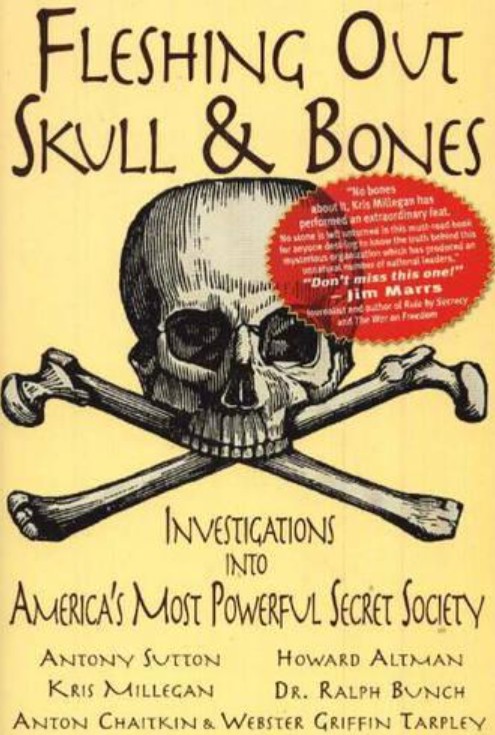
Order Millegan’s Book: Fleshing Out Skull & Bones
At this year’s World Economic Forum in Davos, elites openly floated the idea of eliminating printed books altogether, replacing them with AI-mediated knowledge systems. The argument is efficiency. The consequence is control. When all information lives in digital form, those who control the systems can alter history in real time as narratives shift or facts become inconvenient. Physical books resist that power. They do not update. They do not comply. They remain.
Millegan has lived the realities of censorship firsthand. TrineDay’s decision not to publish Blue Butterfly: Inside the Diary of an Epstein Survivor followed sustained harassment directed at the author and insurmountable legal pressure—an example of how truth is often suppressed not by formal bans, but by intimidation, litigation, and exhaustion. It’s modern censorship without a government stamp, and it’s increasingly common.
Trying Days for TrineDay
The Davos discussion went further. In widely circulated remarks, Yuval Noah Harari argued that anything built from words—laws, religion, books—will ultimately be overtaken by AI. If AI becomes the ultimate interpreter of text, it becomes the de facto authority over law, faith, and culture. The question Millegan raises is simple but profound: Who programs that authority and whose interests does it serve?
As AI systems grow more powerful, errors today become doctrines tomorrow. What begins as “assistive technology” risks evolving into an unchallengeable arbiter of meaning. Printed books—fixed, tangible, and decentralized—are one of the last defenses against that future.
Millegan’s warning isn’t anti-technology. It’s pro-human. In an era racing toward digital absolutism, the fight to preserve physical books is not nostalgia—it’s resistance. This is a conversation about memory, power, and whether truth will remain something people can hold in their hands, or only something they are permitted to access.
OPTIONAL Q&A:
- What happens to truth when all information is filtered through AI-controlled systems rather than physical books?
- Why are global elites openly discussing the elimination of printed books, and who benefits from that shift?
- How does digital censorship differ from traditional government bans, and why is it harder to detect?
- What does the TrineDay experience reveal about how intimidation and lawfare are used to suppress inconvenient narratives?
- If AI becomes the primary interpreter of law, religion, and history, who ultimately holds power?
- Why are physical books uniquely resistant to narrative revision and historical erasure?
- At what point does “assistive” AI cross into becoming an unchallengeable authority?
- Is the fight to preserve printed books really about nostalgia, or about preventing centralized control of human knowledge?
Relevant Article(s):
Holy SH*T! The new WEF Davos agenda is worse even than we thought | Redacted with Clayton Morris
ABOUT KRIS MILLEGAN…
Kris Millegan is a writer, researcher and publisher whose father was in the Office of Strategic Services (OSS), Military Intelligence (G2), and later was in the CIA, rising to Branch Chief, Head of Intelligence Analysis for East Asia. His father told Kris some things that he didn’t understand in the late 60’s. These revelations led to over thirty years of research into the subjects of CIA-drugs, clandestine operations, conspiracy theory and secret societies.
Kris’s publishing house TrineDay brought Antony Sutton’s underground classic, America’s Secret Establishment An Introduction to the Order of Skull & Bones to a wider audience, published the book, Expendable Elite, by Lt Col Dan Marvin, a tale of special forces commander and his tangles with the CIA. TrineDay’s most recent release is Fleshing Out Skull & Bones is being well received, being called encyclopedic and the bedrock of books on Skull & Bones. TrineDay also has the book Ambushed Secrets of the Bush Family, the Stolen Presidency, 9-11 and 2004, coming out in April 2004 and four more books in the works.
Kris produced two CIA-Drugs Symposium in 2000 that brought together the top researchers, whistleblowers, authors and academicians in the field with many new revelations and understandings developing from the conclaves. Kris is also singer/songwriter with several songs in the National Lampoon release, Last Resort. Kris lives in a rural community outside Eugene, Oregon.
TO SCHEDULE AN INTERVIEW, CALL OR TEXT 512-966-098 OR EMAIL BOOKINGS@SPECIALGUESTS.COM