Twisted Twister: Tornados Mastermind Turned Bathroom into Hit Factory Before Downward Spiral
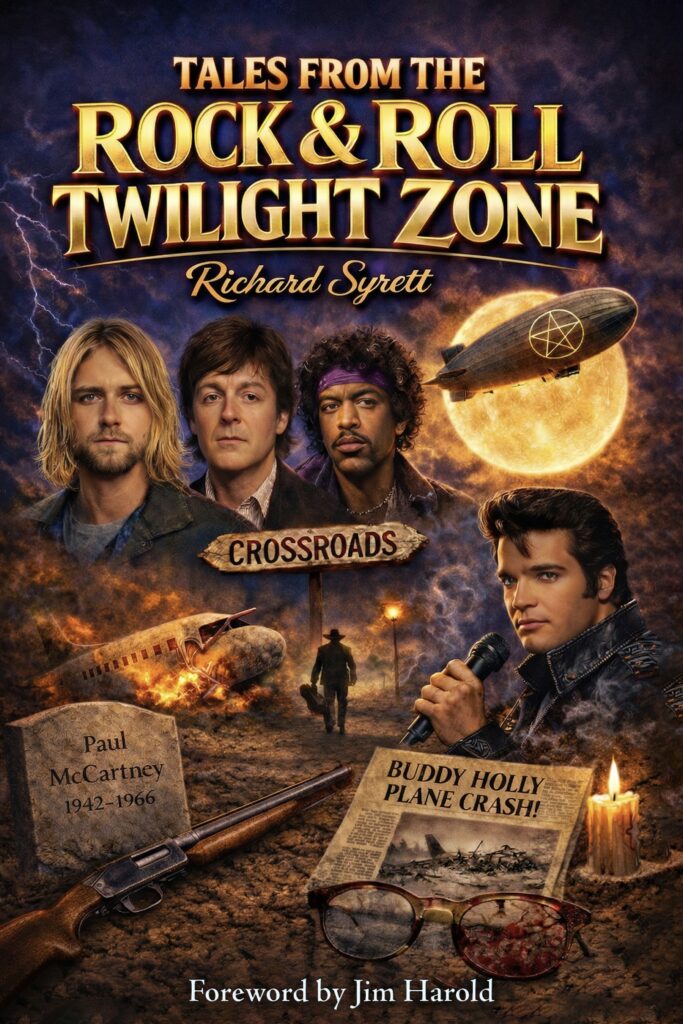
Before the Beatles conquered America, before Abbey Road became synonymous with innovation, and before the British Invasion transformed popular culture, one eccentric outsider working from a cramped North London flat changed recorded rock music forever. Richard Syrett, host of The Strange Planet Podcast and author of Tales from the Rock and Roll Twilight Zone, is available to discuss the extraordinary rise and tragic fall of Joe Meek—the brilliant, troubled producer behind “Telstar,” the first British record by a group to reach No. 1 in America.
CLICK HERE TO LEARN MORE ABOUT RICHARD SYRETT’S BOOK, TALES FROM THE ROCK & ROLL TWILIGHT ZONE
- Recorded a chart-topping hit in a North London bathroom.
- Pioneered recording techniques later adopted throughout the industry.
- “Telstar” reached America before Beatlemania crossed the Atlantic.
- Lived under intense pressure as homosexuality remained illegal.
- Died tragically after a descent into paranoia and obsession.
What makes Meek’s story remarkable isn’t just the success of “Telstar.” It’s where and how it was created.
Earth Inherited Meek
Operating from a small apartment at 304 Holloway Road, Meek rejected the conventions of the recording industry. Instead of relying on expensive professional studios, he transformed his bathroom, stairwell, and living spaces into rock recording chambers. He built much of his own equipment, experimented relentlessly with compression, reverb, overdubbing, and sound manipulation, and treated recordings not as mere documentation of performances but as works of art unto themselves.
Decades before home recording became commonplace, Meek was proving that imagination could outperform infrastructure.
Yet his story is also one of obsession, paranoia, and personal rock tragedy.
Living as a gay man in an era when homosexuality remained illegal in Britain, Meek carried the burden of secrecy and fear. As the 1960s progressed, his mental state deteriorated. He became convinced that rivals were stealing his rock ideas. He feared surveillance, consulted psychics and mediums, and developed an increasingly unhealthy fixation on the occult within rock environment. Musicians and colleagues who admired his genius also witnessed behavior that became progressively erratic and frightening.
Ironically, the musical revolution he helped create eventually left him behind. The British Invasion that followed “Telstar” shifted popular tastes and eclipsed the futuristic production style that had made him famous.
Then came one of rock music’s darkest endings.
Officially, on February 3, 1967—the anniversary of Buddy Holly’s death, a musician Meek deeply idolized—he shot his landlady, Violet Shenton, during an argument before turning the gun on himself. He was just 37 years old.
Syrett explores how one of the most influential producers in music history created the future from a bathroom studio, only to be consumed by demons that fame, innovation, and success could not overcome. It is a cautionary tale where genius, madness, technology, and tragedy collide in a story stranger than fiction.
Relevant Article(s):
The Dowlands and the Soundtracks Little Sue [Joe Meek].wmv
OPTIONAL Q&A:
- How did Joe Meek revolutionize music production decades before home recording became common?
- Why was “Telstar” such a groundbreaking achievement, both musically and historically?
- What made Meek’s bathroom studio at 304 Holloway Road more innovative than many professional recording facilities of the era?
- How did Meek’s approach to recorded sound influence generations of producers who followed him?
- To what extent did Meek’s struggles as a gay man in a time when homosexuality was illegal contribute to his personal decline?
- What role did paranoia, spiritualism, and the occult play in Meek’s increasingly unstable behavior?
- Why has Joe Meek’s contribution to the British Invasion been largely overshadowed by artists who followed in his wake?
- What lessons does Joe Meek’s tragic rise and fall offer about the relationship between genius, innovation, and self-destruction?
ABOUT RICHARD SYRETT…
Richard Syrett is the host of the popular and critically acclaimed podcast, Richard Syrett’s Strange Planet. He has built his reputation as an accomplished teller of spell-binding tales, and a keen interviewer in the arena of the unexplained.
https://www.youtube.com/@StrangePlanetRadio
https://www.instagram.com/richardsyrettstrangeplanet
https://www.facebook.com/p/Richard-Syrett-100015151936532
He is a regular guest-host on Coast to Coast AM, the most-listened-to, late-night radio program in the world.
Beginning in 2010, Richard created, wrote, produced and hosted five seasons of The Conspiracy Show, a documentary-style television program which aired across Canada, Australia, parts of Europe and Africa.
In 2013 he co-starred in a pilot for The Discovery Channel in the U.S. called The United States of Paranoia, which investigated claims of electronic harassment and mind control.
In 2018 Richard created, wrote, and hosted the critically acclaimed podcast The Rock ‘n Roll Twilight Zone on Westwood One and The Chris Jericho podcast network.
He is a much sought-after expert on all things unexplained and has appeared on numerous television series, including: William Shatner’s Weird or What?; National Park Mysteries; and Freak Encounters.
Richard and The Mighty Aphrodite are parents to twin boys and reside just north of Toronto, Canada. Visit Syrett’s website Here: Richard Syrett’s Strange Planet | Alternative, UFO, Paranormal Radio and Podcast
CLICK HERE TO LEARN MORE
TO SCHEDULE AN INTERVIEW, CALL OR TEXT 512-966-0983 OR EMAIL BOOKINGS@SPECIALGUESTS.COM