
Former U.S. Congressman Talks about Tariffs and the Members of Congress Resigning
Via CNN:
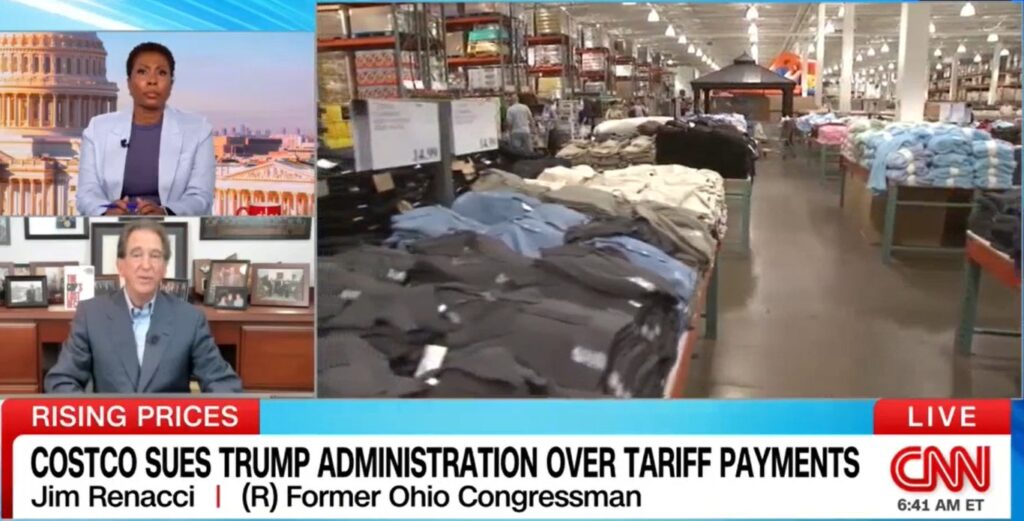
In a recent interview on CNN This Morning, former U.S. Congressman Jim Renacci spoke with host Audie Cornish about the broad topic of tariffs and their impact on American businesses and consumers. Renacci provided an overview of how tariffs function as a tool of trade policy, discussing their intended purpose as a means to protect domestic industries and address perceived unfair trade practices by other countries.
He explained that tariffs are often implemented with the goal of creating a level playing field for American manufacturers, particularly in industries where foreign competitors may benefit from government subsidies or regulatory advantages. Renacci noted that while tariffs can theoretically strengthen domestic production, their effects on the broader economy are complex and often produce unintended consequences that ripple through supply chains and retail markets.
Renacci addressed the economic principles underlying tariffs, emphasizing that while they are designed to incentivize domestic production, they can also lead to higher costs for American consumers. He explained that tariffs function as a tax on imported goods, which often results in increased prices for everyday products. According to Renacci, these higher costs are ultimately passed on to consumers, potentially impacting household budgets and overall spending. He underscored the need for policymakers to weigh the intended benefits of protecting domestic industries against the potential burdens placed on consumers and small businesses, suggesting that careful calibration is essential to ensure that trade policies achieve their goals without creating undue economic strain.
Renacci has Been Consistent on Tariffs
The conversation centered around the more specific issue of tariffs imposed on Costco and the wholesaler’s lawsuit against the Trump administration. As one of the nation’s largest wholesale / retail chains. Renacci outlined how such tariffs can affect large-scale retailers differently than manufacturers, highlighting that companies like Costco often operate on slim profit margins and rely on efficient supply chains to maintain low prices. He explained that when tariffs increase the cost of imported goods, retailers may face difficult choices, including raising prices for consumers, absorbing costs themselves, or adjusting product offerings. Renacci suggested that the imposition of tariffs on major retailers can have a cascading effect, influencing consumer behavior, supply chain management, and even employment within affected industries.
Renacci also addressed the broader geopolitical context of tariffs, noting that trade policy is often influenced by diplomatic considerations and strategic negotiations. He observed that tariffs can serve as a bargaining tool in international trade disputes, with governments using them to encourage other nations to adhere to fair trade practices or to modify policies that disadvantage American companies. At the same time, Renacci cautioned that while tariffs can be a lever in negotiations, they are not without risk, as prolonged trade conflicts can disrupt markets, reduce competitiveness, and create uncertainty for businesses planning long-term investments.
Throughout the discussion, Renacci emphasized the importance of balancing protection of domestic industries with the need to maintain healthy consumer markets. He noted that while tariffs can shield certain sectors from international competition, overreliance on protectionist measures may discourage innovation, reduce efficiency, and lead to higher costs over time. Renacci argued for a strategic approach, suggesting that targeted measures, combined with incentives for domestic production and investment, may achieve better results than broad, sweeping tariffs that impact a wide range of goods and companies.
Cornish and Renacci explored the specific implications for consumers, particularly in the context of retail pricing and product availability. Renacci explained that tariffs can lead to higher prices on everyday items, from electronics to clothing, and that consumers may not always be aware of the underlying trade policies that affect their shopping choices. He highlighted the importance of transparency and public understanding, asserting that informed citizens are better equipped to evaluate policy decisions and their potential economic impact.
In concluding the interview, Renacci reiterated that trade policy, including the use of tariffs, requires a nuanced approach that balances the interests of domestic industries, consumers, and the broader economy. He stressed that while tariffs can be a valuable tool, they must be applied thoughtfully, with careful consideration of their ripple effects across supply chains and markets. Renacci’s commentary underscored the complexity of trade policy, highlighting both its potential benefits and its risks, and emphasized the need for policymakers to adopt strategies that promote sustainable economic growth while protecting American businesses and consumers alike. The conversation provided viewers with a broad understanding of tariffs, their practical consequences, and the strategic considerations that shape trade decisions in the modern economy.