
Former Mayor of Shiloh, Israel Appears on Morning in America, from Israel
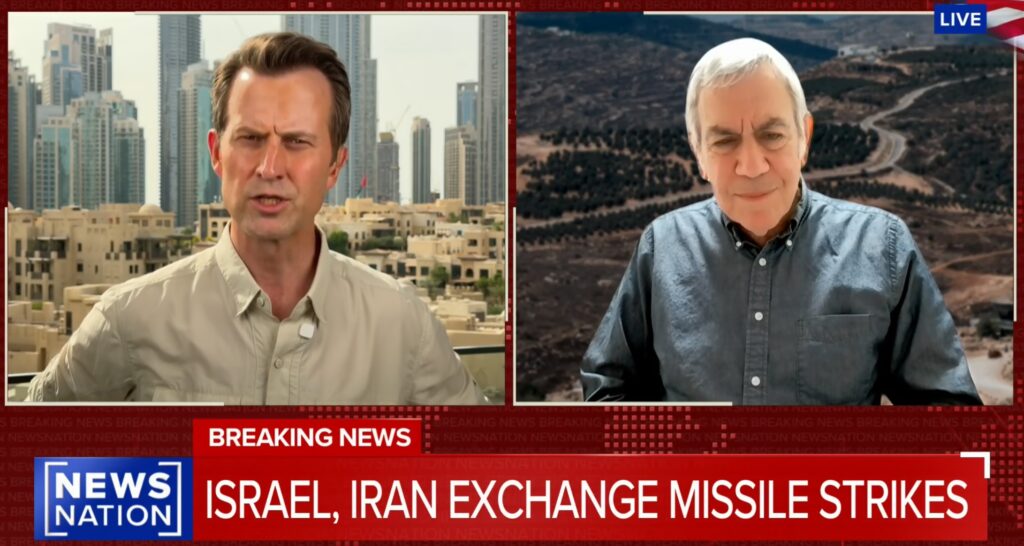
The interview between David Rubin and NewsNation focused on the rapidly evolving situation involving Iran and the broader implications for Israel, the United States, and the stability of the Middle East. The discussion centered on the growing confrontation between Iran and Israel, the strategic calculations of regional actors, and the potential consequences of escalation. Rubin spoke as a former Israeli mayor and longtime commentator on Middle Eastern security issues, offering his perspective on the current crisis and the risks it poses both regionally and globally.
The segment began by setting the stage for the latest developments involving Iran and the rising tensions that have captured international attention. Rubin was introduced as a former mayor of Shiloh and a figure who frequently analyzes Israel’s security environment. His background as a public figure in the biblical heartland of Israel and his experience dealing with the realities of terrorism and regional conflict helped frame his perspective on the unfolding events. The host asked Rubin to explain how the current developments involving Iran fit into the broader strategic picture facing Israel.
Rubin described the situation as part of a long-running struggle between Iran and Israel, emphasizing that the tensions did not emerge suddenly but are the result of years of geopolitical rivalry, ideological hostility, and competing regional ambitions. He explained that Iran has positioned itself as a major adversary of Israel and has invested heavily in building military capabilities and proxy networks throughout the Middle East. In his analysis, these networks play a central role in Tehran’s strategy of exerting influence and applying pressure against Israel without always engaging in direct confrontation.
NewsNation Showcases Rubin
A key portion of the interview examined Iran’s nuclear ambitions and the concerns they raise for Israeli security. Rubin discussed how the possibility of a nuclear-armed Iran has long been viewed in Israel as an existential threat. He explained that Israeli leaders across the political spectrum have repeatedly warned that Iran’s nuclear program could dramatically shift the balance of power in the region. During the interview, Rubin emphasized that this concern remains one of the primary drivers behind Israel’s posture toward Iran and its willingness to consider strong measures to prevent such an outcome.
The conversation also explored the role of Iran’s regional alliances and proxy forces. Rubin described how Iran has built partnerships with militant groups and allied militias in several countries, creating what he characterized as a strategic network that extends Iran’s reach far beyond its own borders. These relationships, he explained, allow Iran to influence conflicts across the region and create additional pressure points against Israel and other adversaries. Rubin noted that this network has become a central component of Iran’s broader strategy in the Middle East.
Another major theme in the interview involved the potential for escalation. Rubin addressed concerns that the current tensions could spiral into a wider regional conflict involving multiple countries. He discussed how events involving Iran rarely remain confined to a single location because of the interconnected nature of Middle Eastern alliances and rivalries. According to Rubin’s analysis, any major confrontation involving Iran could have ripple effects across the region, drawing in other actors and increasing the risk of a broader crisis.
The host also asked Rubin to discuss the role of the United States and its relationship with Israel during the current situation. Rubin explained that the alliance between the two countries remains a central pillar of Israel’s security strategy. He described the partnership as one that involves not only diplomatic support but also intelligence cooperation and broader strategic coordination. Rubin suggested that the United States plays a significant role in shaping the overall balance of power in the region, particularly when it comes to deterring adversaries such as Iran.
The discussion also touched on the broader geopolitical implications of the confrontation with Iran. Rubin explained that the conflict is not solely about Israel and Iran but is part of a larger struggle involving regional influence, ideological competition, and the future direction of the Middle East. He noted that various countries are closely watching how the situation unfolds because the outcome could affect alliances, economic stability, and security dynamics throughout the region.
Another portion of the interview focused on the human and societal impact of ongoing tensions. Rubin discussed how repeated periods of conflict and uncertainty shape daily life in Israel and influence the mindset of the population. He noted that Israelis have long lived with the reality of security threats and that the possibility of escalation with Iran adds another layer of concern for many citizens. At the same time, he emphasized that Israeli society has developed a strong sense of resilience in the face of these challenges.
As the interview progressed, Rubin continued to analyze the strategic calculations of the various actors involved. He explained that Iran, Israel, and their respective allies each weigh different political, military, and economic considerations when responding to developments in the region. These calculations, he suggested, often determine whether tensions escalate or stabilize in the short term.
The segment concluded with a broader reflection on the uncertainty surrounding the situation with Iran. Rubin emphasized that the Middle East remains a region where events can change rapidly and where seemingly isolated incidents can have far-reaching consequences. He suggested that policymakers and observers should view the latest developments involving Iran not as a single event but as part of a larger and continuing geopolitical struggle that will likely shape the region’s future for years to come.

NewsNation, NewsNation, NewsNation, NewsNation, NewsNation

