
Senior Reporter discusses Trump’s meeting with Xi Jinping at Beijing Summit
Via Real America’s Voice (Begins at the 12:40 mark):
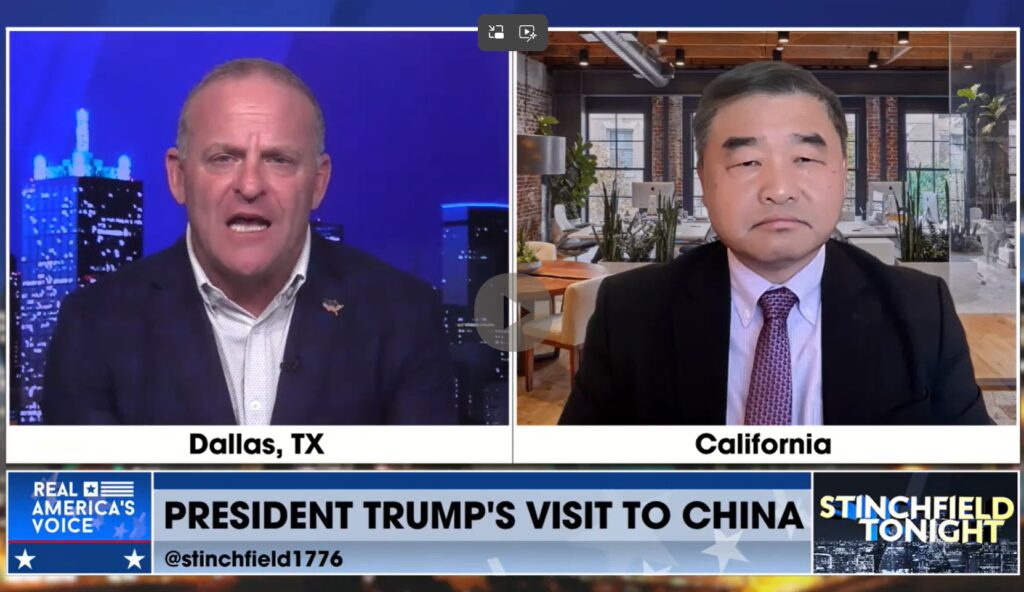
Grant Stinchfield of Real America’s Voice recently spoke with Epoch Times reporter Nan Su about President Donald Trump’s visit to China for a high-profile summit meeting with Chinese President Xi Jinping in Beijing. The discussion focused on the broader geopolitical, economic, and diplomatic significance of the meeting as the leaders of the world’s two largest powers continue navigating a complex and evolving relationship. The interview explored the international attention surrounding the summit, the political messaging from both governments, and the global implications tied to U.S.-China relations moving forward.
During the conversation, Stinchfield and Su discussed how the summit represented a major moment in ongoing negotiations and strategic communications between Washington and Beijing. Topics included trade relations, economic competition, military tensions, diplomatic positioning, and the larger struggle for influence on the world stage. The interview examined how both Trump and Xi sought to project strength and stability while presenting their respective national priorities to domestic and international audiences.
Stinchfield lets Su Roll
The segment also touched on the symbolism surrounding the Beijing Summit itself, including the optics, ceremonial elements, and public messaging that accompanied the meetings. Stinchfield and Su analyzed how political leaders often use these events to send signals not only to each other, but also to allies, rivals, financial markets, and global institutions. The discussion highlighted the broader context of U.S.-China tensions and cooperation, particularly as economic uncertainty, technological competition, and military concerns continue shaping relations between the two countries.
Nan Su provided analysis regarding China’s perspective on the summit and the strategic calculations that may influence Beijing’s approach to negotiations and diplomacy. The interview covered how Chinese leadership views the current state of relations with the United States and the importance of maintaining influence in key economic and geopolitical areas. Broader themes included international trade, tariffs, manufacturing, supply chains, regional security concerns, and the long-term balance of power between the two nations.
Grant Stinchfield also addressed the domestic political significance of Trump’s visit and how the summit may be interpreted by supporters, critics, policymakers, and international observers. The conversation explored the media coverage surrounding the event and the competing narratives emerging from various political and ideological perspectives. Attention was given to how moments like these often become defining visual and political events in modern diplomacy.
The interview further examined the challenges facing both countries as they attempt to manage areas of conflict while maintaining channels for communication and negotiation. Topics included economic leverage, energy concerns, military posturing, trade policy, global markets, and strategic alliances. The discussion emphasized how developments between the United States and China continue affecting international business, national security conversations, and diplomatic relations around the world.
Throughout the segment, Stinchfield and Su reflected on the broader historical significance of high-level meetings between American and Chinese leaders. They discussed how past summits have shaped international policy debates and how current negotiations could influence future economic and geopolitical developments. The conversation considered how world leaders increasingly use high-profile meetings to reinforce national image, communicate priorities, and shape public perception.
The interview also explored the role of media coverage in framing international diplomacy and influencing public understanding of complex geopolitical events. Stinchfield and Su discussed how political narratives, strategic messaging, and public reactions often become intertwined during major international summits. The segment highlighted how audiences around the world closely follow developments involving the United States and China due to the enormous economic and political influence both nations hold globally.
As tensions and negotiations between Washington and Beijing continue evolving, the interview underscored the importance of monitoring future developments tied to trade, security, technology, and international diplomacy. The discussion reflected broader concerns about global stability, economic competition, and the future direction of one of the world’s most consequential bilateral relationships.
The conversation between Grant Stinchfield and Nan Su offered viewers additional perspective on the Beijing Summit and the larger issues surrounding U.S.-China relations in an increasingly competitive geopolitical environment.