
ICE, ICE Maybe… CCP: Chinese Communist Party Foments, Exploits Minnesota Unrest and Insurrection to Divide America
Minnesota has become a flashpoint in America’s simmering internal conflicts — with tens of thousands of protesters clashing with federal Immigration and Customs Enforcement (ICE) agents after a Minneapolis ICE agent fatally shot a U.S. citizen, Renée Nicole Good, and another shooting wounded a man as federal enforcement operations surged across the state. The conflict has sparked nationwide demonstrations, legal challenges from Minnesota’s state and city governments, and even threats from the Trump administration to invoke the rarely used Insurrection Act to deploy U.S. military forces to “quell insurrectionists” if state officials fail to contain the unrest.
Counterintelligence Expert and founder of Black Ops Partners, Casey Fleming connects all the geopolitical dots. Fleming is the author of THE #1 Best Selling Book in National and International Security, is not in the business of conjecture. Order The Red Tsunami: The Silent Storm Killing Your Freedom

As headlines dominate with debates over federal versus local authority, civil liberties, immigration policy, and whether invoking the Insurrection Act is constitutional or wise, Casey Fleming argues the public is missing the broader strategic dynamic at play — one that extends far beyond domestic protests. Fleming, a counterintelligence expert backed by more than two dozen military, intelligence, technical, and medical authorities, believes we must look at Minnesota not just through the lens of municipal governance and immigration enforcement, but through an international information warfare lens that considers how external adversaries benefit from America’s division.
Fleming contends that the Chinese Communist Party (CCP) benefits whenever Americans are divided, distracted, and consumed by internal conflict rather than unified around national resilience and strategic clarity. In his analysis, the sustained media focus on clashes between protesters and federal agents — and the escalating rhetoric around federal force like the Insurrection Act — plays directly into a broader CCP objective: to amplify domestic polarization, making the U.S. weaker and less focused on external challenges. According to Fleming, this is exactly the kind of dynamic the CCP would want — because a distracted superpower is easier to outmaneuver geopolitically.
He points to trends such as the dramatic annual issuance of student visas to Chinese nationals, a large proportion of whom he argues are ideologically aligned with or influenced by CCP objectives, and the noticeable presence of such individuals in U.S. media ecosystems, where narratives can be shaped and amplified. While the exact numbers are unknowable, Fleming asserts that the impacts are real: narratives favoring chaos, division, and distrust in government institutions gain traction far more easily than unifying ones.
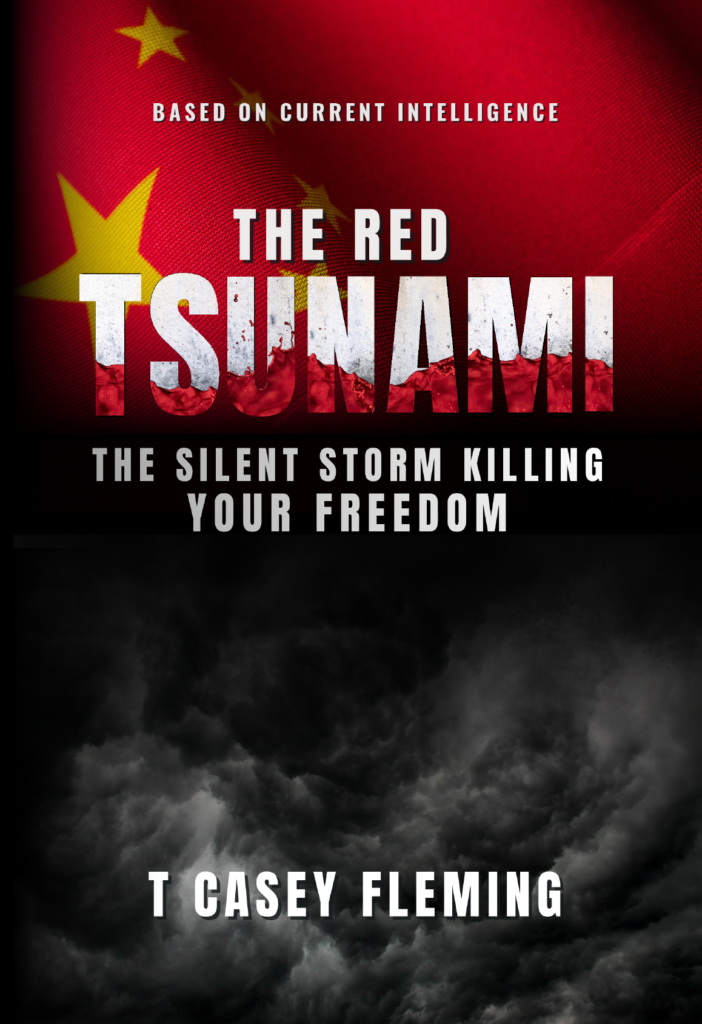
In his book The Red Tsunami, Fleming urges Americans to reframe how they view events like Minnesota’s unrest — not merely as isolated domestic policy disputes, but as potential leverage points in a broader geopolitical contest in which adversaries exploit every fracture in the nation’s social fabric. By understanding this, he believes Americans can resist manipulation, see through propaganda cycles, and pivot toward strategic unity rather than fragmentation.
Relevant Article(s):
GOP senators try to talk Trump down from invoking Insurrection Act in Minneapolis
January 15, 2026 – Minneapolis shootings and protests | CNN
Send in the National Guard, Gov. Walz: Minnesota needs protection
OPTIONAL Q&A
- Why is Minnesota dominating national headlines, and what deeper forces might be influencing the narrative?
- How does the debate over invoking the Insurrection Act play into broader strategic objectives, both domestic and foreign?
- What evidence suggests that external actors, like the CCP, benefit from America’s internal divisions?
- How significant is the pipeline of Chinese nationals entering the U.S., and what role might ideology play in their influence?
- In what ways have U.S. media narratives amplified the unrest in Minnesota, intentionally or not?
- Why does Fleming view the Minnesota protests as more than a local or policy issue?
- How does analyzing Minnesota through a counterintelligence lens change public perception of the events?
- What lessons does The Red Tsunami offer for Americans in recognizing and countering these kinds of influence operations?
ABOUT CASEY FLEMING…
Casey Fleming is an internationally recognized keynote speaker and author on national security, intelligence, and strategic risk.
As Chief Executive Officer of BlackOps Partners Corporation, Mr. Fleming is at the forefront of evolving strategic risk affecting global leaders. His leadership has enabled organizations to proactively identify hidden risks and uncover new opportunities within their operations and supply networks.
His extensive contributions extend beyond technology and strategy. His insights in unrestricted war and cognitive war have been regularly featured in conferences, media interviews, prominent publications, documentaries, and as a TEDx speaker. Notable recognition includes Cybersecurity Professional of the Year from the Cybersecurity Excellence Awards and the Directorship 100 Governance Award from the National Association of Corporate Directors.
Mr. Fleming’s expertise is sought after by a diverse range of institutions, including the private sector, domestic and foreign governments, and academia. He offers guidance to the Fortune 500, Congress, the Pentagon, the Department of Justice (DOJ), the Federal Bureau of Investigation (FBI), the National Counterintelligence Security Center (NCSC), the Cybersecurity and Infrastructure Security Agency (CISA), the House Select Committee on Strategic Competition between the United States and the Chinese Communist Party, the Securities and Exchange Commission (SEC), The White House, and other vital institutions responsible for national security and strategic decision-making. He serves as an expert witness in matters of strategic risk, counterintelligence, and national security.
He has held pivotal roles as a board-appointed turnaround executive for Silicon Valley companies, executive for Deloitte Consulting’s Global Risk and Strategy Group, and founding executive for IBM’s early cybersecurity division, now known as IBM Security.
Mr. Fleming earned his bachelor’s degree from Texas A&M University and served as an instructor within IBM’s internal MBA program. He continued his leadership acumen through executive programs at Harvard Business School, The Wharton School, and IBM Executive Leadership.
TO SCHEDULE AN INTERVIEW, CALL OR TEXT 512-966-0983 OR EMAIL BOOKINGS@SPECIALGUESTS.COM