
Minnesota Pops: Shots Fly as Federal Agents Clash with Protesters in Minneapolis
Minnesota has become a national flashpoint of unrest in recent weeks, but the sequence of events and the forces at play aren’t as simple as some narratives suggest. What began with one controversial federal law enforcement deployment has escalated into public protest, political confrontation, and another fatal shooting — all against a backdrop of misinformation and political theater.
Investigative journalist Bill Conroy brings four decades of experience covering Latin America and the inner workings of federal agencies. He has specialized expertise in the drug trade and the operations of DHS agencies, including ICE.
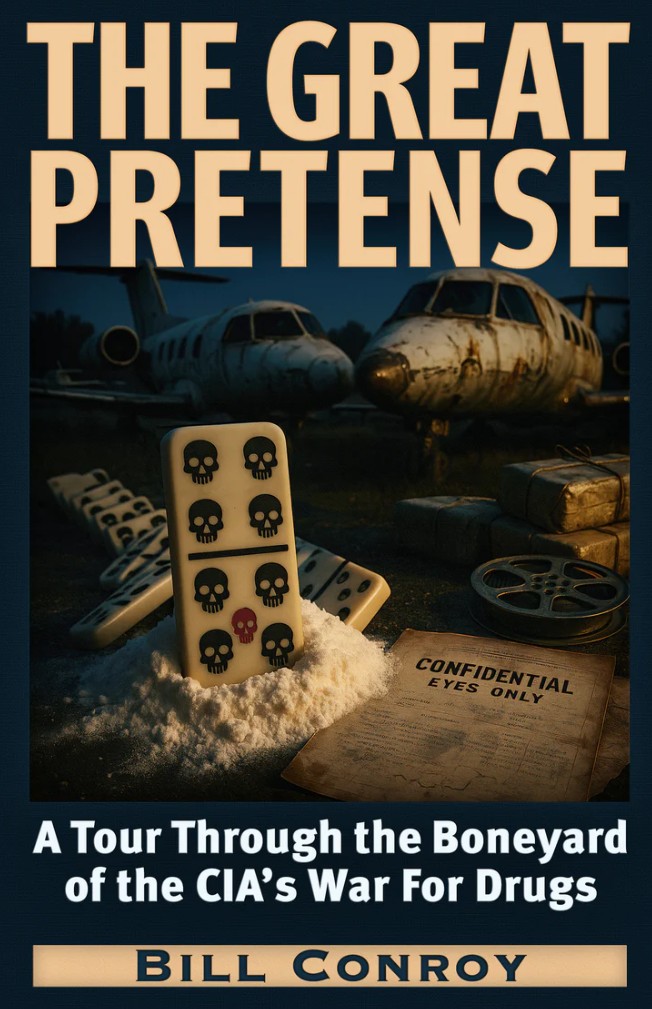
Bill Conroy’s New Book, The Great Pretense: A Tour Through the Boneyard of the CIA’s War For Drugs
On January 7, 2026, 37-year-old Renée Good was fatally shot by an ICE agent in south Minneapolis during a federal immigration enforcement operation. That incident — involving an agency normally tasked with deportations, now operating in urban neighborhoods — was captured on video and widely circulated. Local leaders and civil rights advocates immediately challenged the official account, with the mayor calling aspects of the federal narrative “garbage” and the governor condemning the deployment. Good’s death became a catalyzing event, sparking thousands into the streets.
In the days that followed, Minnesota has seen large protests — including a statewide “economic blackout” and mass marches in freezing conditions — demanding ICE’s removal and accountability for Good’s death. Tens of thousands participated, with labor unions, student groups, clergy, and community leaders joining the demonstrations.
Then, on January 24, federal law enforcement officers shot and killed another Minneapolis resident during a related operation. Authorities claim the man was armed, but local officials and residents see this as part of a pattern of militarized federal action. This is at least the third shooting involving ICE or Border Patrol in a short span — including a separate instance where a protester was shot in the leg.
Leading up to all of this was a series of videos that purported to uncover day care fraud in Minnesota, involving Somali immigrants. Within days, Good’s shooting stole headlines and moved the fraud scandal off the front pages. The videos prompted scrutiny from state and federal authorities and sparked harassment and threats against Somali childcare providers.
This mix of federal enforcement, public distrust, and exaggerated or false narratives has created a combustible environment. The shootings and protests are not simply about immigration policy or fraud allegations in isolation — they reflect a broader struggle over federal authority, community trust, and the consequences of misinformation amplified online.
For leaders and citizens alike, understanding the real sequence and causes matters. If policymakers respond only to sensationalized claims rather than the underlying dynamics of federal action and community response, the situation is likely to deteriorate further. This isn’t just local unrest — it’s a test of how communities and institutions manage accountability, transparency, and the fallout from politically charged conflict.
SUGGESTED Q&A
- What connects the recent ICE shootings in Minnesota, and why do you believe they should be viewed as part of a single pattern rather than isolated incidents?
- How did the killing of Renée Good change the trajectory of federal enforcement operations and public protest in Minnesota?
- What role did the viral YouTube video alleging Somali daycare fraud play in escalating tensions, even if it wasn’t the direct trigger for violence?
- Why do confrontations between ICE and civilians so often dominate headlines while allegations of large-scale fraud tend to fade from public focus?
- How does the structure of DHS and its sub-agencies contribute to a lack of accountability when federal agents use lethal force?
- In your view, what incentives exist for federal institutions to allow immigration conflicts to overshadow investigations into financial or programmatic fraud?
- How have local and state officials responded to the federal presence, and where have they fallen short in protecting their communities?
- What should Americans be asking right now about federal law enforcement power, transparency, and the risks of politicized enforcement operations?
Related Article(s)
Who was fatally shot by federal law enforcement in Minneapolis?
Live updates: Man shot and killed by federal agents in Minneapolis | CNN
ABOUT BILL CONROY…
Bill Conroy, M.A. in Mass Communications/Journalism (Marquette University), is a veteran journalist with 40 years of experience working as a staff reporter, editor-in-chief, and freelance correspondent at print and online publications across the United States and in Mexico. His journalism has been cited in more than 35 books to date. Conroy also is the author of the nonfiction books The Great Pretense: A Tour Through the Boneyard of the CIA’s War for Drugs; Dispatches from the House of Death: A Juarez Cartel informant, a DEA whistleblower, mass murder and a coverup on the edge of the Empire; and Borderline Security: A Chronicle of Reprisal, Cronyism and Corruption in the U.S. Customs Service.
TO SCHEDULE AN INTERVIEW, CALL OR TEXT 512-966-0983 OR EMAIL BOOKINGS@SPECIALGUESTS.COM

Minnesota, Minnesota, Minnesota

