

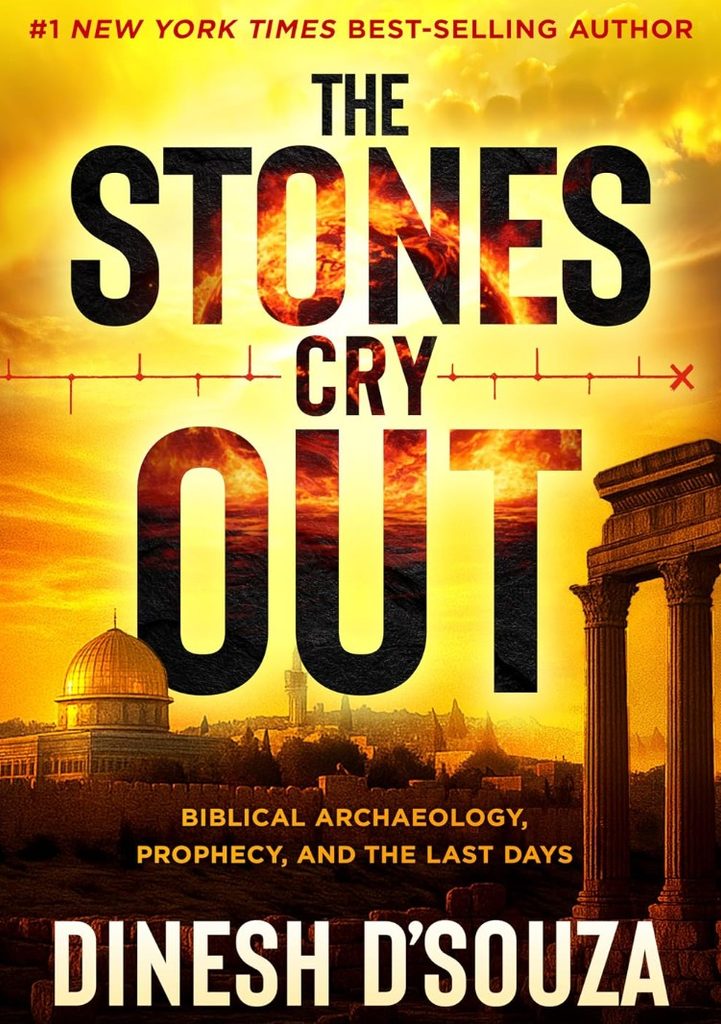
In this video, bestselling author and filmmaker Dinesh D’Souza discusses the significance of a remarkable archaeological discovery in Israel and its connection to the world described in the Bible. The discovery offers another opportunity to explore the relationship between archaeology, history and the biblical account, themes central to D’Souza’s forthcoming book and documentary, The Stones Cry Out.
The discussion on Fox News Digital centers on the importance of preserving and studying ancient sites and artifacts that provide glimpses into the lives, customs and beliefs of people who lived thousands of years ago. Such discoveries help researchers reconstruct the historical setting of biblical events and better understand the societies in which the people described in Scripture lived.
Fox News Features Biblical Archeology
D’Souza explain on Fox News Digital why archaeological findings can be meaningful to believers and nonbelievers alike. For Christians, the opportunity to encounter physical evidence from the ancient world can bring familiar biblical accounts into sharper focus. For historians and other researchers, the same discoveries offer valuable information about ancient civilizations, religious practices and the development of the communities that shaped the region.
The Fox news Digitalconversation also addresses the broader significance of biblical archaeology. While archaeological evidence does not settle every question about Scripture or establish the theological claims of Christianity, it can help illuminate historical details, confirm the existence of people and places, and provide context for understanding the biblical narrative. D’Souza emphasizes the value of examining these discoveries and considering what they reveal about the world of the Bible.
These subjects are explored in The Stones Cry Out, in which D’Souza examines archaeological discoveries associated with the Old and New Testaments. The book reflects an extended effort to investigate the historical record and consider how material evidence relates to accounts that have been preserved in Scripture for generations.
The project also invites readers to consider the relationship between the ancient world and the present. The places, people and events described in the Bible have influenced religious traditions, cultural identities and the development of Western civilization. Archaeological research offers another way to investigate that legacy, bringing together historical inquiry and questions that continue to interest scholars, believers and the general public.
D’Souza’s Fox News Digital discussion highlights the importance of remaining attentive to new discoveries and the questions they raise. Each excavation can contribute another piece to the larger picture of ancient life, helping researchers refine their understanding of historical settings and cultural practices. Even discoveries that initially appear limited in scope can have broader implications for understanding the past.
The video provides an introduction to the ideas behind The Stones Cry Out and D’Souza’s interest in the historical dimensions of biblical accounts. It encourages viewers to consider how archaeology can deepen their understanding of the ancient world and why discoveries in Israel continue to attract international attention.
Ultimately, the Fox News Digital discussion is about the enduring relationship between history, archaeology and the Bible. By examining physical evidence alongside ancient texts, researchers can gain a richer understanding of the people and places that shaped biblical history. D’Souza’s work invites audiences to explore that evidence, consider its significance and take a closer look at the historical foundations of one of the world’s most influential religious traditions.
Another important dimension of the discussion is the way archaeological discoveries can challenge assumptions about the ancient world. Modern audiences often encounter biblical history through familiar stories, religious traditions or popular interpretations, but physical evidence can add details that are otherwise difficult to appreciate. Ancient structures, inscriptions, objects and burial sites provide tangible connections to people who lived in a very different era. Examining these materials can help place biblical accounts within the broader historical landscape of the Middle East.
For D’Souza, these questions extend beyond the academic study of antiquity. They concern how people evaluate historical claims, interpret evidence and understand the origins of enduring beliefs. By drawing attention to discoveries associated with the biblical world, The Stones Cry Out encourages readers to look more closely at the evidence and consider how the past continues to inform debates about faith, history and civilization today.