
Votes Cry Out: Israel’s Voters Set the Stage while America’s Midterms Could Bring Down the House
As Israel’s election results reshape the country’s political landscape, the consequences could reach far beyond its borders. With the Iran War threatening to redefine the balance of power across the Middle East, the stakes for Israel, its neighbors and Washington could hardly be higher. Conservative political commentator and author of The Stones Cry Out, Dinesh D’Souza is available to analyze what Israel’s election results portend for the region, the future of the conflict with Iran, and the strategic calculations facing the Trump administration.
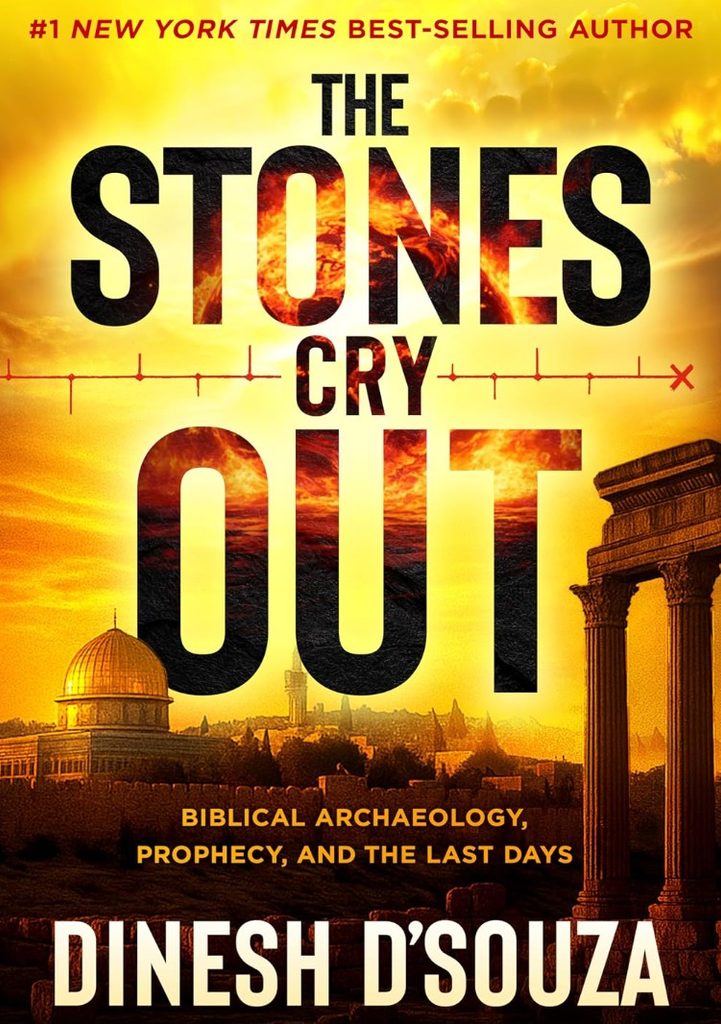
CLICK HERE TO LEARN MORE ABOUT THE STONES CRY OUT: Biblical Archaeology, Prophecy and the Last Days
- Israel’s election results could reshape the Iran War and Middle East
- Trump’s options for confronting Tehran and securing Israel’s future
- How Israel’s political direction could alter Washington’s regional strategy
- Midterm election scenarios that could make or break Trump’s agenda
- How congressional control could redefine America’s foreign policy through 2028
Will Israel’s political direction strengthen its ability to confront Tehran and its regional proxies, or complicate efforts to forge a lasting security framework? What might the results signal about Israeli public opinion, the country’s appetite for continued confrontation, and the prospects for reshaping the Middle East?
Dinesh Opines on Future States
D’Souza can examine how the election’s outcome could influence Israel’s relationship with the United States, the direction of American policy toward Iran, and the broader struggle for regional influence. He can also discuss the potential consequences for Tehran’s leadership, Israel’s security priorities and the future of American involvement in a conflict with implications for global stability.
Meanwhile, America faces its own political crossroads and Dinesh knows where they meet.
With the U.S. midterm elections approaching, the results could determine the political environment in which President Donald Trump governs during the next two years of his second term. D’Souza is available to explore multiple election scenarios, from Republicans maintaining control of Congress to Democrats gaining power in one or both chambers.
What would a Democratic takeover mean for Trump’s ability to advance his agenda? Could congressional opposition constrain his foreign-policy objectives, complicate military strategy or undermine his leverage in negotiations with adversaries? Conversely, would Republican victories give Trump greater freedom to pursue his priorities abroad, including confronting Iran and strengthening America’s strategic position?
Dinesh can connect the domestic political stakes to the international consequences, examining how congressional control, political momentum and competing visions of American leadership could shape Washington’s decisions on war, diplomacy and national security.
With Israel’s political future and America’s governing balance both carrying potentially far-reaching consequences, D’Souza offers a timely perspective on the intersection of elections, executive power and geopolitical strategy.
Dinesh D’Souza is available for interviews on Israel’s election results, the Iran War, the future of the Middle East, and what the 2026 U.S. midterms could mean for Trump’s final two years in office.
Relevant Article(s):
Israeli exit polls: Netanyahu bloc loses, but Eisenkot’s short of clear majority
OPTIONAL Q&A:
- What do Israel’s election results reveal about the country’s appetite for continued confrontation with Iran?
- How could the election outcome reshape Israel’s military strategy and its relationship with the Trump administration?
- Could Israel’s political shift change the trajectory of the Iran War or the prospects for a broader regional conflict?
- What do the results mean for Iran’s leadership and its ability to maintain influence across the Middle East?
- How might the Israeli election affect Trump’s options for ending the war while preserving Israel’s security?
- What are the most consequential scenarios for the 2026 U.S. midterms, and what would each mean for Trump’s agenda?
- If Democrats take control of one or both chambers of Congress, how could that constrain Trump’s foreign policy and national security strategy?
- If Republicans retain control of Congress, could Trump pursue a more aggressive foreign policy toward Iran and other American adversaries during his final two years in office?
ABOUT DINESH D’SOUZA…
Born in Mumbai, India, Dinesh D’Souza came to the United States as an exchange student in 1978. After graduating from Dartmouth College, he served as a policy analyst in the Reagan White House and a scholar in two prominent think tanks, the American Enterprise Institute and the Hoover Institution at Stanford University.
He is a New York Times best-selling author who has written books on politics, religion, culture, and economics— including Illiberal Education, The End of Racism, What’s So Great About America, and United States of Socialism—and three books on Christian apologetics: What’s So Great About Christianity, Life After Death, and Godforsaken. D’Souza has made eight political documentary films and produces a daily podcast called The Dinesh D’Souza Podcast, which is seen and heard by about 100,000 people daily.
TO SCHEDULE AN INTERVIEW, CALL OR TEXT 512-966-0983 OR EMAIL BOOKINGS@SPECIALGUESTS.COM