
Swampy Slush: Taxpayer Funds Encourage Congressional Deviancy, Extortion, and Deferred Prostitution
Congress may lecture the nation about workplace ethics, but former Spymaster of Monte Carlo and Intelligence expert, Robert Eringer says Capitol Hill has quietly run one of Washington’s most brazen insider protection schemes for decades: a taxpayer-funded account used to secretly settle sexual harassment and discrimination claims against members of Congress themselves. According to records compiled under congressional workplace law, more than $18.2 million in public money has been paid out over the past 25 years to resolve misconduct complaints—often while shielding the identities of the lawmakers involved. In Eringer’s telling, the scandal isn’t just the alleged behavior. It’s the system that allows politicians to make accusations disappear while American taxpayers unknowingly pick up the tab.
- $18.2 million of taxpayer money has quietly settled workplace misconduct claims tied to congressional offices since the late 1990s.
- Lawmakers don’t pay—taxpayers do, thanks to a settlement system created under the Congressional Accountability Act of 1995.
- Most names remain secret, with complaints handled through the Office of Congressional Workplace Rights rather than open court.
- Confidential settlements protect reputations, while the public funds the payouts.
- A secret payout system invites abuse, raising questions about accountability—and incentives—in Washington’s swamp.
While it may be true that members of Congress are the main perpetrators here but there’s also something else to consider. This corrupt system has been in place for over 30 years and begs a very interesting question. How many women in Washington, D.C. know this slush fund exists and of that number, how many choose to exploit it by luring politicians into sexual trysts with the full intention of filing a complaint upon consummation? Any women who engage in that behavior could be engaged in a form of deferred prostitution through extortion.
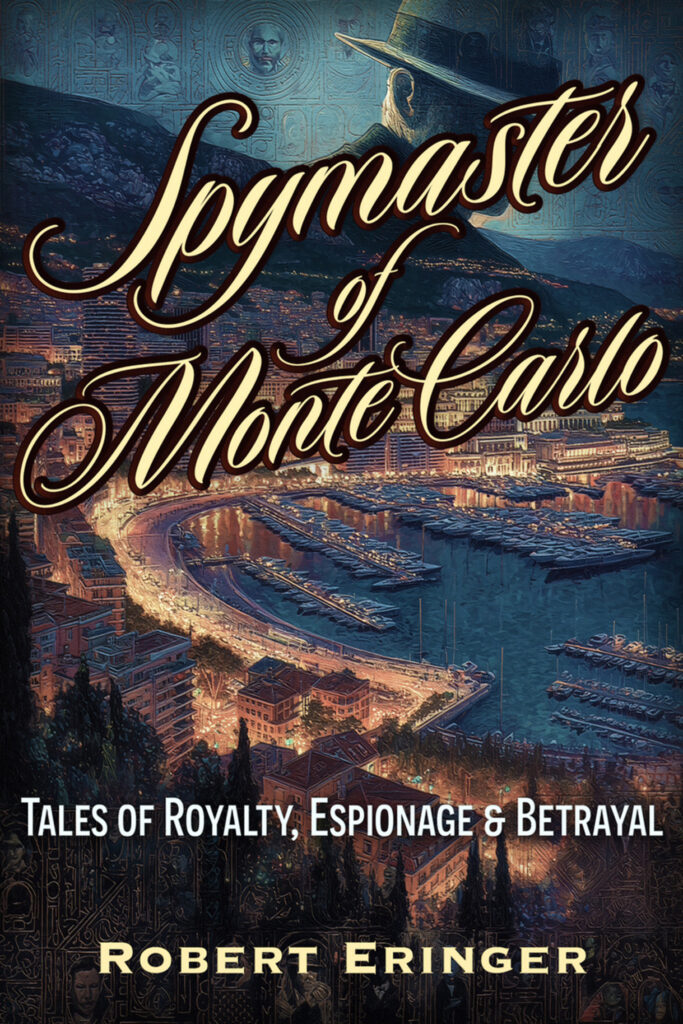
Order the new book by Robert Eringer, The Spymaster of Monte Carlo
The mechanism traces back to the Congressional Accountability Act of 1995, which created a specialized process for handling workplace complaints on Capitol Hill. Rather than proceeding through the normal federal court system, staffers file complaints through a dispute process administered by the Office of Congressional Workplace Rights. Cases typically go through mediation and administrative review. If a settlement is reached, the payment often comes from a Treasury account funded by taxpayers—not from the lawmaker personally.
For years, the process operated almost entirely out of public view. The names of members tied to settlements were generally withheld, and details of cases were buried inside confidential agreements. The issue briefly surfaced during the Me Too movement, when it was revealed that millions had already been paid through the system. Despite calls for transparency, much of the information about who benefited from the fund remains locked inside congressional ethics channels.
Eringer argues that the structure raises deeper questions about accountability—and incentives. When settlements can be paid quietly with public funds and without public disclosure, the system can potentially invite abuse from multiple directions. Washington is a city where power, ambition, and access intersect daily, and Eringer notes that the arrangement theoretically creates the conditions for something even more troubling.
In such an environment, it is at least conceivable that some individuals could engage in a form of “deferred prostitution,” knowingly entering sexual relationships with powerful lawmakers while understanding that a later harassment complaint could trigger a confidential settlement funded by taxpayers. Eringer emphasizes that there is no evidence this has occurred, but the existence of a secret settlement system financed by the public makes the scenario impossible to dismiss outright.
“Congress built a system where accusations can vanish into mediation rooms and the bill quietly goes to the American people,” Eringer notes. “If the public is paying for these settlements, the public deserves to know who and what they’re paying for.”
Eringer is available to discuss how the congressional settlement fund operates, why secrecy persists, and whether Washington’s internal misconduct system has created one of the most overlooked accountability failures in modern American government.
Relevant Article(s):
NEWS REVUE – by Robert Eringer – ERINGER
OPTIONAL Q&A:
- How did Congress create a system where taxpayers quietly pay to settle misconduct claims against lawmakers?
- Why have more than $18 million in harassment and discrimination settlements been hidden from the public for decades?
- What role does the Congressional Accountability Act of 1995 play in shielding members of Congress from public scrutiny?
- Why are the identities of lawmakers tied to settlements handled through the Office of Congressional Workplace Rights kept largely confidential?
- Does a taxpayer-funded settlement system remove personal accountability for members of Congress accused of misconduct?
- Could the secrecy surrounding congressional settlements create opportunities for abuse on either side of the complaint process?
- Is it conceivable that some individuals might engage in “deferred prostitution,” knowing a later complaint could lead to a taxpayer-funded payout?
- What reforms would be needed to ensure transparency so Americans know when their tax dollars are used to settle claims against Congress?
ABOUT ROBERT ERINGER…
In 2002, Prince Albert of Monaco appointed Robert Eringer as his intelligence adviser. He went on to create the principality’s first intelligence service. He currently lives in Montecito, California. Eringer has spent nearly five decades in the intelligence and investigative game. He began as an undercover journalist for Fleet Street and served as a foreign correspondent for The Toronto Star and The Toledo Blade. Infiltrating the Ku Klux Klan was just the start. From 1993, he operated undercover for FBI Counterintelligence in Moscow, Havana, and beyond.
ABOUT CASEY FLEMING…
Fleming is the CEO of BlackOps Partners Corporation and is at the forefront of evolving strategic risks affecting global leaders. His leadership has enabled organizations to proactively identify hidden risks and uncover new opportunities within their operations and supply networks. In particular, Fleming’s expertise and laser focus is on the threat of the Chinese Communist Party (CCP) to the U.S. As such, he has provided the blueprint for Americans to confront it.
His extensive contributions extend beyond technology and strategy. His insights in unrestricted war and cognitive war have been regularly featured in conferences, media interviews, prominent publications, documentaries, and as a TEDx speaker. Notable recognition includes Cybersecurity Professional of the Year from the Cybersecurity Excellence Awards and the Directorship 100 Governance Award from the National Association of Corporate Directors.
TO SCHEDULE AN INTERVIEW, CALL OR TEXT 512-966-0983 OR EMAIL BOOKINGS@SPECIALGUESTS.COM