
When Stones Cry: Noah’s Ark, Pharaoh’s Tomb and other Examples of the Ground Breaking its Silence
What if the stones beneath our feet are telling a story the headlines have missed? Dinesh D’Souza, bestselling author, filmmaker and political commentator, is the author of the new book The Stones Cry Out: Biblical Archaeology, Prophecy and the Last Days, a three-year research project arguing that modern archaeology is providing increasingly compelling evidence that the people, places and events described in Scripture are rooted in history.
CLICK HERE TO LEARN MORE ABOUT THE STONES CRY OUT: Biblical Archaeology, Prophecy and the Last Days
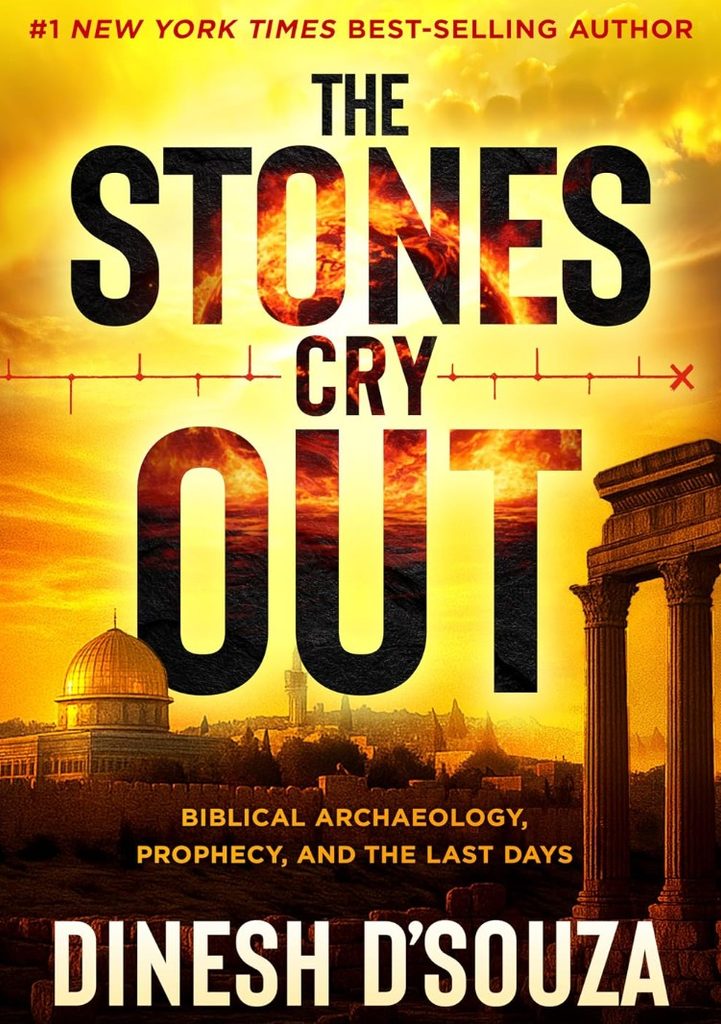
- New archaeological discoveries are bringing biblical people and places into sharper historical focus
- Researchers are drilling Turkey’s controversial Durupinar formation in search of Noah’s Ark evidence
- D’Souza connects archaeological discoveries from Israel to biblical history and prophecy
- Thutmose II’s tomb adds a provocative new dimension to Exodus-era archaeology
- The Stones Cry Out challenges skeptics to follow the evidence beneath their feet
Now, almost concurrently with the release of D’Souza’s book, a potentially extraordinary archaeological development is putting one of the Bible’s most famous stories back in the spotlight. Researchers have begun drilling at Turkey’s controversial Durupinar formation, a boat-shaped geological formation near Mount Ararat that some researchers believe could be connected to the biblical account of Noah’s Ark.
D’Souza and Fortuitous Timing
The team, which includes archaeologists and geologists working with Turkish universities and government approval, says earlier ground-penetrating radar surveys indicated possible structures or corridors beneath the surface. The drilling is intended to allow researchers to insert a specially designed robot and collect samples from inside the formation. The site remains highly controversial, with previous studies generally concluding that it is a natural geological formation—but researchers are now attempting to settle the question through further investigation.
That development arrives at precisely the moment D’Souza is challenging readers to reconsider the relationship between faith, history and physical evidence. In The Stones Cry Out, D’Souza draws on three years of research and visits to archaeological sites throughout Israel, examining discoveries connected to biblical figures and events ranging from the patriarchs and Exodus to King David, the First Temple, Jesus, Pontius Pilate and the crucifixion. His argument is not that archaeology can prove every supernatural event described in Scripture, but that an expanding body of physical evidence can illuminate and corroborate the historical framework in which the biblical narrative unfolds.
The book also explores biblical prophecy and argues that archaeology is relevant not only to understanding the ancient past, but to interpreting events unfolding in the present. D’Souza contends that if Scripture has demonstrated historical accuracy, its claims about the future deserve renewed scrutiny.
The timing could hardly be more compelling: as researchers drill into one of the world’s most famous alleged biblical sites, D’Souza is asking a fundamental question—what happens when discoveries from the ground begin challenging the assumption that biblical history belongs exclusively to the realm of faith?
D’Souza is available to discuss the Noah’s Ark drilling, the latest discoveries in biblical archaeology, the historical evidence surrounding Scripture, the Exodus, ancient Israel, Jesus and the implications of archaeology for biblical prophecy and the last days.
Relevant Article(s):
OPTIONAL Q&A:
- What evidence does The Stones Cry Out present that biblical events are historically grounded?
- What can the new drilling at Turkey’s Durupinar formation potentially reveal about Noah’s Ark?
- How has modern archaeology changed your understanding of the Bible’s historical claims?
- What recent discoveries provide the strongest evidence for people and places described in Scripture?
- What does the tomb of Thutmose II potentially tell us about the Exodus story?
- Why do you believe the archaeological evidence is becoming increasingly difficult to dismiss?
- How do the discoveries you document connect ancient biblical history to prophecy today?
- What should skeptics make of the growing archaeological evidence you present in the book?
ABOUT DINESH D’SOUZA…
Born in Mumbai, India, Dinesh D’Souza came to the United States as an exchange student in 1978. After graduating from Dartmouth College, he served as a policy analyst in the Reagan White House and a scholar in two prominent think tanks, the American Enterprise Institute and the Hoover Institution at Stanford University.
He is a New York Times best-selling author who has written books on politics, religion, culture, and economics— including Illiberal Education, The End of Racism, What’s So Great About America, and United States of Socialism—and three books on Christian apologetics: What’s So Great About Christianity, Life After Death, and Godforsaken. D’Souza has made eight political documentary films and produces a daily podcast called The Dinesh D’Souza Podcast, which is seen and heard by about 100,000 people daily.
TO SCHEDULE AN INTERVIEW, CALL OR TEXT 512-966-0983 OR EMAIL BOOKINGS@SPECIALGUESTS.COM