PalanThiel: Billionaire’s Blend of Christianity, Homosexuality, and Silicon Valley Tech Fuels Antichrist Debate
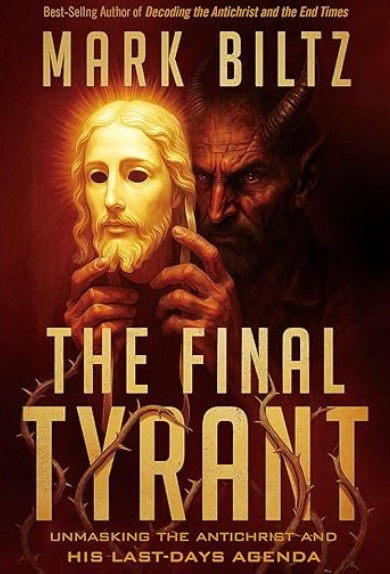
Peter Thiel has become one of the most influential and polarizing figures in modern technology and political thought. As co-founder of Palantir Technologies, early investor in Facebook, and a central architect of Silicon Valley’s political realignment, Thiel occupies a rare position at the intersection of private capital, national security, and ideological debate. Mark Biltz, author of The Final Tyrant identifies Thiel as a near perfect example of someone who fits the model of what the antichrist will be.
In fact, Thiel checks all but one box and that box is definitely something he can achieve in a very short time. Biltz is quite quick to clarify he is NOT saying Thiel is the antichrist, only that he demonstrates many of the traits Biltz says the antichrist will have.
CLICK HERE TO PRE-ORDER MARK BITZ’S NEW BOOK, THE FINAL TYRANT
- Peter Thiel sits at the intersection of technology, capital, and national security influence
- Mark Biltz uses Thiel as a case study in modern power concentration dynamics
- Palantir’s data capabilities raise questions about surveillance, privacy, and state reliance on private firms
- Critics debate whether elite tech networks are reshaping free speech and public accountability
- The discussion explores how influential leaders emerge through stability, security, and institutional trust
Thiel’s ventures span government contracting, data analytics, venture capital, and elite intellectual circles, giving him reach into both public policy and private infrastructure systems that shape how information is collected, interpreted, and acted upon. He is also openly homosexual and has no desire for women, an antichrist trait. He even took his brand of Christianity was brought to Silicon Valley. Again, professing to be a Christian and appealing to Christians is something the antichrist would do.
In recent years, Thiel has also drawn attention for his increasingly explicit critiques of mainstream media institutions, democratic governance structures, and what he describes as systemic failures within liberal modernity. Supporters view him as a contrarian thinker willing to challenge entrenched orthodoxies; critics argue his influence raises questions about the concentration of technological power in the hands of a small number of private actors with unprecedented access to data and decision-making frameworks. This tension has placed Thiel at the center of broader debates about surveillance, speech, and the future boundaries of free expression in a digital state.
Bible prophecy teacher Mark Biltz enters this discussion from a very different angle, though he argues the cultural conversation is worth examining even for secular audiences. Biltz suggests that modern society often misunderstands how transformative figures of global influence emerge. Rather than appearing as obvious antagonists, he argues, they tend to present themselves as problem-solvers—figures who promise order, stability, and protection in times of uncertainty while accumulating influence across economic, technological, and institutional systems.
From Biltz’s perspective, Peter Thiel represents a contemporary case study in how power, technology, and ideology can converge in one individual. He points to Thiel’s combination of wealth, elite networks, political proximity, and technological infrastructure, particularly through data analytics and national security applications, as evidence of how modern systems increasingly rely on private entities for functions once reserved for states.
It is at this point that Biltz introduces his theological framework. He argues that biblical descriptions of a future “end-times” figure emphasize persuasion, intelligence, and broad cultural acceptance rather than overt hostility to religion. In that interpretation, he suggests the Antichrist figure would not be defined by a single external identity marker, but by the ability to integrate into existing cultural and religious frameworks while reshaping them from within.
Biltz is careful to note that he is not declaring Peter Thiel to be such a figure. In fact, odds that Thiel is the antichrist could be much longer than odds he’s not. Instead, Biltz uses Thiel as a modern reference point to explore how technological power, global instability, and institutional distrust are reshaping the kinds of leaders societies may elevate in the future—and why those dynamics are increasingly relevant in both secular and religious discussions of authority and control.
Relevant articles:
Peter Thiel-Backed Tribunal Is Putting Journalists on Trial.
OPTIONAL Q&A:
- What specifically about Peter Thiel’s role in technology and national security most concerns you from a cultural or structural standpoint?
- You’ve argued that influential figures often emerge as “problem-solvers” rather than obvious antagonists—how does Thiel fit or not fit that pattern in your view?
- How do you interpret the growing overlap between private companies like Palantir and government intelligence functions?
- Critics say centralized data systems improve security and efficiency—where do you draw the line between protection and overreach?
- What do you see as the long-term risks of concentrating data analysis and surveillance capabilities in a handful of private firms?
- You’ve spoken about modern leaders gaining influence through trust and perceived competence—how does public perception factor into your concerns about Thiel’s influence?
- In your framework, how should Christians or faith communities responsibly evaluate powerful secular figures without overreaching into speculation?
- Regardless of theology, what guardrails would you argue should exist to ensure no individual or company gains excessive control over information infrastructure?
ABOUT PASTOR MARK BILTZ…
Pastor Mark Biltz was born and raised Catholic. He spent four years in a Catholic Seminary studying to become a priest. He not only knows Latin, but he knows how to conduct the entire Latin Catholic Mass. Biltz is also extremely familiar with the Catholic hierarchy, doctrine and culture.
CLICK HERE TO PRE-ORDER MARK BITZ’S NEW BOOK, THE FINAL TYRANT
Today, he is the founder and Senior Pastor of El Shaddai Ministries in Washington State. He is a well-known and popular speaker on the Feasts of the Lord and has authored four best-selling books and videos on the Feasts that have gone global.
Mark Biltz has lectured at congregations and conferences all over the world including twelve countries on 5 continents. He’s been on the cover of several magazines and has been interviewed many times on national radio stations as well as appearing on several different television programs.
Pastor Biltz has a local congregation in Washington State and live-streams their weekly service on their website at www.esm.us as well as on face-book and you-tube to over 200 cities from 20 nations.
You can learn more about Pastor Biltz’s ministry and his book, America at War: 2024 – 2026 by visiting www.esm.us
CLICK HERE TO LEARN MORE
TO SCHEDULE AN INTERVIEW, CALL OR TEXT 512-966-0983 OR EMAIL BOOKINGS@SPECIALGUESTS.COM