
Globalist Secession: How Annexation Rhetoric Strengthened Canada’s Globalist Political Bloc
Ever since President Donald Trump suggested annexing Canada, reactions have been diametrically opposed to the idea. MAGA roared as Canadians balked and withdrew. Jeff Brown, a Canadian who had access to the wife of then Prime Minister Justin Trudeau, examines a counterintuitive political outcome of Donald Trump’s rhetoric toward Canada: that messaging intended to project leverage and strength may have instead hardened Canadian resistance and shifted its political center of gravity further away from Washington.
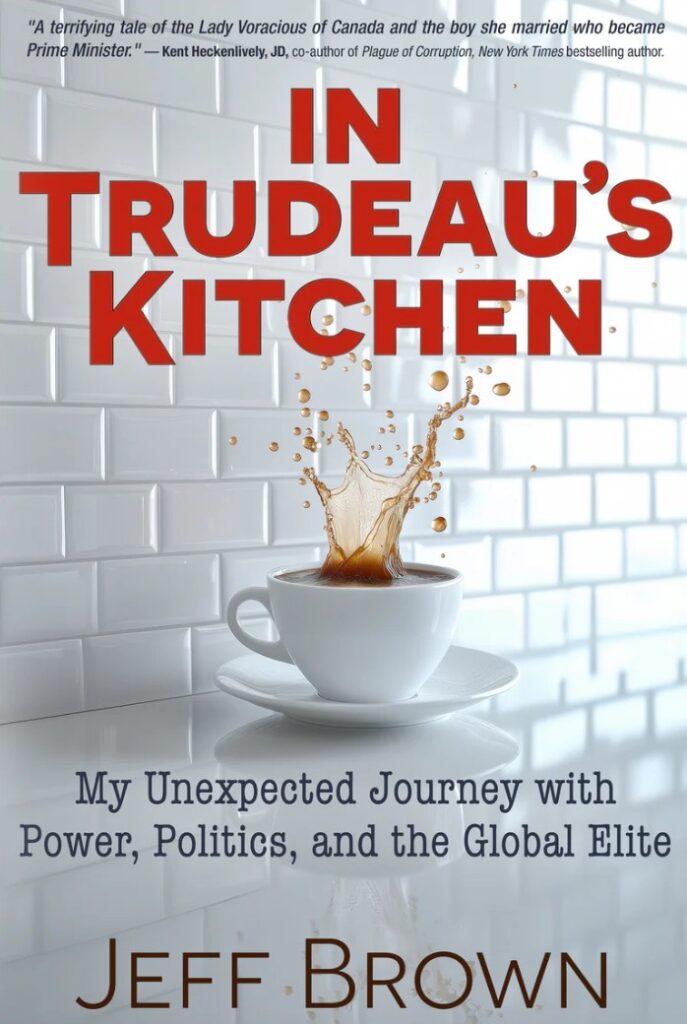
CLICK HERE TO LEARN MORE ABOUT IN TRUDEAU’S KITCHEN BY JEFF BROWN
- Annexation rhetoric unintentionally strengthened Canadian sovereignty-driven political cohesion
- Lack of clear policy explanation allowed adversarial media framing to dominate
- Canadian electorate shifted further toward globalist leadership in response
- Domestic U.S. support masked negative diplomatic consequences abroad
- Messaging ambiguity reduced leverage instead of increasing negotiation pressure
Brown’s core argument is that Trump’s repeated suggestions that Canada could be absorbed as a 51st state or effectively annexed were not interpreted in Ottawa as strategic provocation, but as a direct challenge to sovereignty. Rather than opening space for negotiations on trade imbalances, defense spending, or energy integration, the rhetoric triggered a defensive national response that strengthened Canadian political cohesion against perceived U.S. pressure.
Canadian blames Messaging
In Brown’s view, the most significant downstream effect was internal to Canada itself. Instead of encouraging recalibration or accountability within Canadian politics, the backlash reinforced globalist and establishment-aligned forces. The result, he argues, was a political environment that elevated leadership even further to the left than Justin Trudeau, with a stronger orientation toward multilateral institutions and less willingness to engage in bilateral concessions with the United States.
A central theme in Brown’s analysis is the absence of explanatory framing. Without a clear articulation of intent, the rhetoric was left open to interpretation, and Canadian media, political leadership, and bureaucratic institutions filled that gap with the most adversarial reading possible. Once that narrative hardened, any Canadian politician advocating engagement risked being seen as capitulating to external pressure.
Brown emphasizes that this is not simply a communications misfire, but a case study in how international signaling interacts with domestic political incentives. In Canada’s political ecosystem, sovereignty concerns are highly sensitive, and external pressure—real or perceived—tends to consolidate rather than fracture elite consensus. The result was a political shift that strengthened precisely those actors least inclined to align more closely with U.S. strategic preferences.
At the same time, Brown acknowledges why the rhetoric resonated domestically in the United States. Within Trump’s political base, such statements were often interpreted as a form of unapologetic leverage, a rejection of polite diplomatic constraints in favor of blunt bargaining power. But Brown warns that domestic resonance does not translate cleanly across borders, especially in allied democracies with strong national identities.
His broader conclusion is that clarity matters as much as strength in foreign policy signaling. Had the underlying objectives—whether related to trade reciprocity, defense burden-sharing, or continental integration—been clearly articulated, Canadian public discourse might have shifted toward internal accountability rather than defensive consolidation.
Instead, Brown concludes, ambiguity proved strategically costly. Rather than increasing U.S. influence over Canada, the rhetoric contributed to a political realignment that strengthened globalist leadership in Ottawa and reduced Washington’s ability to shape outcomes in its closest ally.
Relevant Article(s):
Toward Greater Clarity with Canada – by Jeff Brown
OPTIONAL Q&A:
- What specific U.S. policy objectives toward Canada were most obscured by the annexation rhetoric?
- How did Canadian media and political institutions amplify or reframe Trump’s statements domestically?
- Why did sovereignty concerns become the dominant lens through which Canadians interpreted the remarks?
- In what ways did the rhetoric unintentionally strengthen globalist or multilateral political forces inside Canada?
- Could clearer communication have realistically shifted Canadian public opinion, or was resistance inevitable?
- How did Trump’s base interpret the Canada messaging compared to how it was received in Canada itself?
- What historical examples exist where blunt diplomatic rhetoric produced similar counterproductive political outcomes?
- Does this episode suggest a broader lesson about the limits of leverage-based foreign policy messaging among close allies?
ABOUT JEFF BROWN…
Jeff Brown is a breakthrough voice in the self-help/spirituality field, and the author of In Trudeau’s Kitchen and nine popular books including Soulshaping: A Journey of Self-Creation, Ascending with Both Feet on the Ground, Love It Forward, and Where is God in all of This? A Conversation. He is a criminal lawyer, psychotherapist and founder of Soulshaping Institute. You can contact his offerings at www.jeffbrown.co
TO BOOK THIS INTERVIEW, CALL OR TEXT 512-966-0983 OR EMAIL BOOKINGS@SPECIALGUESTS.COM