Cease-Pause: Iran and U.S. “Ceasefire” is More About Trading Restraint While Preparing for Escalation
Veteran intelligence adviser and investigator, as well as author of The Spymaster of Monte Carlo, Robert Eringer is available for interviews regarding his latest analysis of the Iran–U.S. ceasefire, which he argues is being widely misread as a diplomatic breakthrough when it more closely resembles a managed pause in an ongoing cycle of strategic positioning. In his Substack commentary, Eringer frames the latest extension of the ceasefire in Iran not as evidence of de-escalation, but as part of what he calls the “performative architecture” of modern diplomacy, where public declarations of restraint mask continued military recalibration behind the scenes.
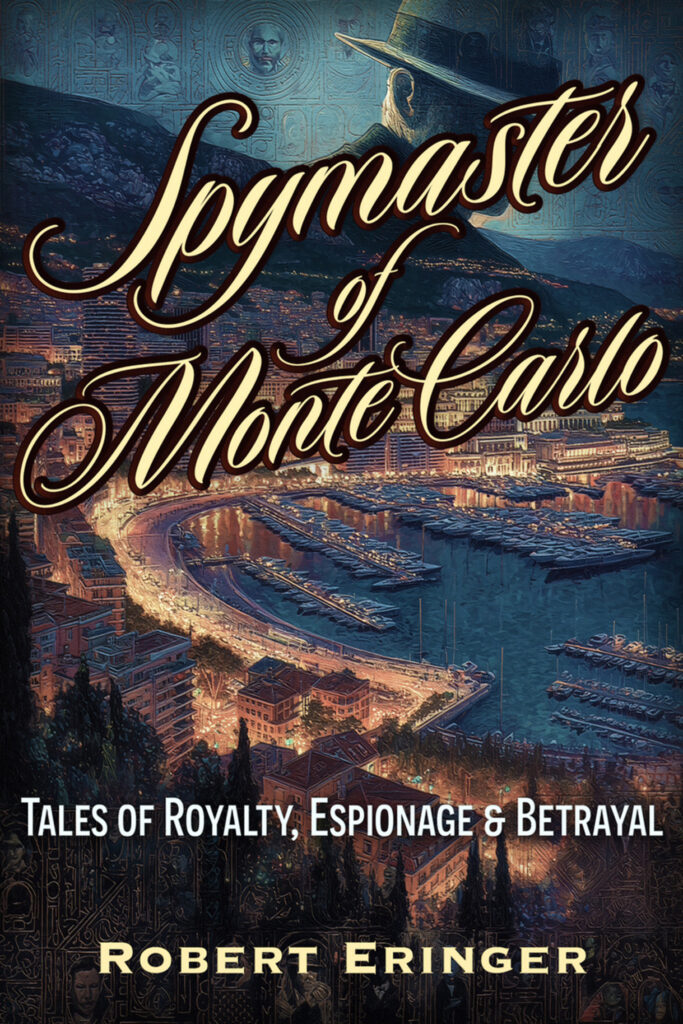
Order the new book by Robert Eringer, The Spymaster of Monte Carlo
SUBSCRIBE TO ERINGER’S SUBSTACK HERE
- Ceasefire reflects managed pause, not genuine de-escalation between adversaries
- Both sides reposition military assets under diplomatic cover
- Diplomacy increasingly functions as strategic narrative management tool
- Repeated truces normalize instability without resolving core tensions
- Iran–U.S. standoff remains structurally unchanged despite public messaging
Rather than signaling meaningful progress toward stability, Eringer contends the ceasefire functions as a structured holding pattern that benefits both Washington and Tehran. Each extension allows both sides to project an image of control and responsibility while quietly repositioning assets, refining messaging, and preparing for the possibility of renewed confrontation. In his analysis, what appears outwardly as diplomacy is increasingly indistinguishable from theater, in which outcomes matter less than sustaining the appearance of restraint.
Eringer further argues that this dynamic reflects a broader shift in international relations, where crises are no longer resolved in decisive terms but are instead “stabilized into repetition.” In this environment, ceasefires become procedural rather than transformative, offering temporary relief from escalation without addressing the underlying strategic tensions that drive conflict in the first place. He suggests that this creates a paradox in which the language of peace is amplified even as the conditions for renewed conflict remain firmly in place.
The commentary situates the Iran ceasefire within a wider pattern of geopolitical fatigue, where major powers increasingly favor narrative management over decisive resolution. According to Eringer, this results in a system where symbolic gestures and carefully timed announcements serve to maintain the illusion of progress, even as the underlying balance of power remains unchanged.
With decades of experience examining intelligence operations, covert influence, and state behavior, Eringer brings a distinctive perspective to questions of Middle East stability and global conflict management. He challenges conventional interpretations of ceasefires as linear steps toward peace, instead suggesting they may function as recurring mechanisms that regulate, rather than resolve, geopolitical tension.
Eringer is available to expand on why the Iran ceasefire may represent strategic recalibration rather than genuine de-escalation, how modern diplomacy increasingly operates as narrative construction, and what the normalization of “temporary permanence” in conflict zones could mean for future U.S. and Middle East policy.
Relevant Article(s):
GLOBAL AFFAIRS SERVICE – by Robert Eringer – ERINGER
OPTIONAL Q&A:
- What does the Iran ceasefire reveal about the balance of power between Washington and Tehran?
- Why do you argue the ceasefire is more performance than progress in your analysis?
- What evidence suggests both sides are using the truce to reposition rather than de-escalate?
- How has modern diplomacy shifted toward what you describe as “narrative management”?
- In what ways do recurring ceasefires risk normalizing instability rather than resolving it?
- Is the United States treating the Iran file as a managed conflict rather than a solvable one?
- How does geopolitical fatigue shape decision-making on both sides of this standoff?
- What would genuine de-escalation between the U.S. and Iran actually require at this stage?
ABOUT ROBERT ERINGER…
Beginning in 1993, Eringer operated undercover for FBI Counterintelligence in Moscow, Havana, and beyond. In 2002, Prince Albert of Monaco appointed Robert Eringer as his intelligence adviser. He went on to create the principality’s first intelligence service. He currently lives in Montecito, California. Eringer has spent nearly five decades in the intelligence and investigative game. He began as an undercover journalist for Fleet Street and served as a foreign correspondent for The Toronto Star and The Toledo Blade. Infiltrating the Ku Klux Klan was just the start. TO SCHEDULE AN INTERVIEW, CALL OR TEXT 512-966-0983 OR EMAIL BOOKINGS@SPECIALGUESTS.COM