
John Foster Kirk (JFK): 3 High Profile Assassinations Framed as Lone Gunman or Suicide
More than 60 years after the public assassination of President John F. Kennedy and less than a year after the public assassination of Charlie Kirk, America remains captivated by unanswered questions surrounding high-profile deaths that defy easy explanation. Sandwiched between both, 30 years after and before, respectively, came the similarly mysterious death of Deputy White House Counsel Vince Foster on July 20, 1993.
Attorney John Clarke and researcher Hugh Turley have spent decades examining the Foster case in detail. Clarke represented the most important witness in the Foster case and has long challenged aspects of the official narrative. Turley has co-authored extensive investigative work digging into inconsistencies, timelines, and forensic conclusions.
- Foster’s assassination remains one of the most controversial White House cases
- Forensic inconsistencies continue to fuel debate decades later, just as they do with JFK and CK assassinations
- Witnesses provide conflicting accounts of key events and timelines
- Lessons from Foster assassination can illuminate other high-profile political deaths
- Public trust hinges on transparency and full investigation of Foster assassination
We are told that Tyler Robinson shot Charlie Kirk with a .30-06 in the neck from a distance of more than several hundred feet. Yet, there was no exit wound; that is highly unusual if not impossible. The public was also told that Vince Foster shot himself with a .38 revolver. Again, there was no exit wound there either. There was a small caliber bullet hole underneath Foster’s right jaw though.
Found dead in a Virginia park, Foster’s assassination has been the subject of multiple investigations, reports, and ongoing skepticism from legal experts, journalists, and researchers who argue key questions remain unresolved.
Together, they bring a deeply informed, fact-driven perspective to one of the most debated deaths connected to the Clinton-era White House. Their analysis raises critical questions about evidence handling, autopsy findings, and whether all relevant information was fully examined or disclosed.
At a time when public trust in institutions is already under strain, renewed attention to cases like Foster’s assassination taps into a broader issue: how controversial deaths are investigated, explained, and remembered. Clarke and Turley can walk audiences through what is known, what remains disputed, and why the case continues to resonate more than three decades later.
They are available to discuss the Foster case in depth, explore parallels to other high-profile incidents that have fueled public skepticism, and examine what these controversies reveal about transparency, accountability, and the limits of official investigations.
If you’re covering the intersection of politics, history, and unresolved questions that continue to capture national attention, this is a timely and compelling conversation.
Let me know if you’d like to book John Clarke and Hugh Turley.
RELEVANT ARTICLE(S):
The Vince Foster Cover-up: The FBI and The Press
OPTIONAL Q&A
- How do Foster’s death and the Kennedy and Kirk assassinations illuminate patterns in high-profile political deaths?
- What forensic inconsistencies in the Foster case continue to raise questions decades later?
- Could lessons from Foster’s investigation help explain gaps in public understanding of other political deaths?
- How do witness accounts in the Foster case compare to those in JFK and Kirk incidents?
- What role did investigative and media narratives play in shaping public perception of Foster’s death?
- Why do legal experts like John Clarke argue the official suicide ruling may overlook critical evidence?
- How might comparing Foster, JFK, and Kirk deaths reveal systemic failures in security or oversight?
- What unresolved questions about Foster’s death remain most pressing for public accountability and historical record?
ABOUT JOHN H. CLARKE…
John H. Clarke is a seasoned attorney and member of the District of Columbia Superior Court Fiduciary Panel, specializing in complex litigation, federal oversight, and civil rights matters. Over his career, Clarke has pursued numerous high-profile Freedom of Information Act (FOIA) lawsuits, including cases related to unrepatriated American POWs from the Korean and Vietnam Wars. Notably, in Hall et al. v. CIA, a 21-year litigation effort, he challenged the agency’s failure to search operational records for POWs held in Laos, resulting in a landmark appellate ruling in April 2025.
Clarke has also litigated significant national security and transparency matters, including FOIA actions concerning the Benghazi attack, TWA Flight 800, and Department of Defense record disclosures. He has pursued civil rights claims on behalf of plaintiffs in cases against FBI and federal agents and has successfully compelled disclosure in matters historically shielded by classification.
In addition to FOIA and civil rights litigation, Clarke has investigated high-profile political and governmental controversies, including the death of Deputy White House Counsel Vincent Foster. His work consistently emphasizes accountability, government transparency, and the public’s right to know. Clarke combines legal expertise with rigorous investigative analysis, making him a trusted advocate in cases at the intersection of law, history, and public interest.
Websites: www.VinceFosterMurder.com and www.JohnHClarkeLaw.com
ABOUT HUGH TURLEY…
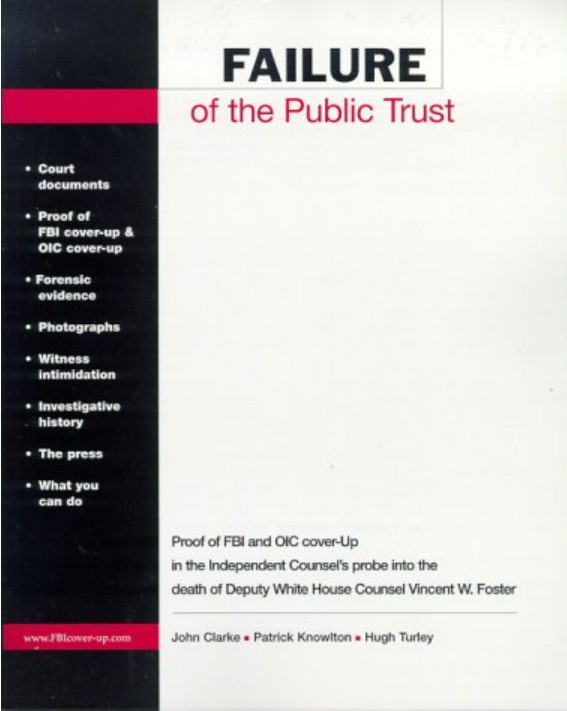
Hugh Turley is an investigative author and award-winning columnist whose work focuses on unresolved political deaths and historical controversies in modern American history. He is the co-author of the book Failure of the Public Trust, written with key witness Patrick Knowlton and John Clarke, Knowlton’s attorney. Turley has co-authored The Martyrdom of Thomas Merton: An Investigation, a detailed study of the mysterious 1968 death of the well-known Trappist monk, writer, and peace activist. His investigative writing has appeared in a number of publications, and he has received a National Newspaper Association award for best serious column in the small-circulation non-daily category. Hugh Turley has spent years researching historical records, witness testimony, and government reports related to controversial cases that continue to generate debate decades later.
TO SCHEDULE AN INTERVIEW, CALL OR TEXT 512-966-0983 OR EMAIL BOOKINGS@SPECIALGUESTS.COM