
Anti-Semantic: When Antisemitism Hides Behind the “Semantics” of Criticizing Israel
Across the West, something alarming is happening; antisemitism is no longer confined to the fringes. It is marching openly through college campuses, flooding social media, and creeping into mainstream political commentary. Jewish students report harassment, Jewish institutions face rising threats, and the once widely accepted taboo against antisemitism is rapidly eroding. What was once whispered in dark corners is now spoken aloud — and too often excused as merely “criticism of Israel.” A new dynamic at work today even involves Bible believing Christians beginning to question the modern state of Israel being of God.
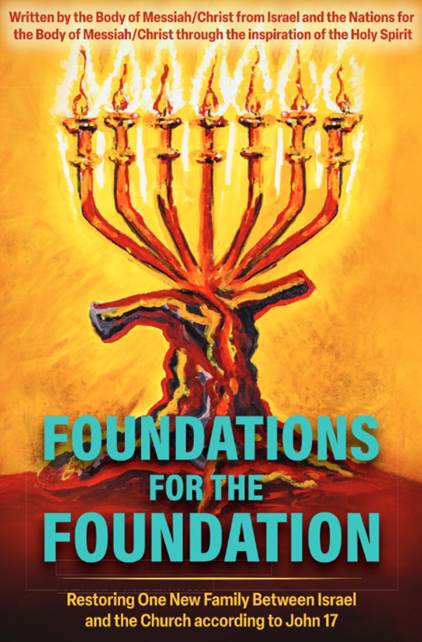
Grant Berry, the Founder of Reconnecting Ministries, the Romans 911 Project, has made it his life’s mission to help RESTORE the One New Family between Israel and the Church. Click here and the image below to download the illuminating new booklet Foundations for the Foundation
- Antisemitism is no longer hiding in the shadows — it’s trending on social media and marching across Western campuses.
- Bible believing Christians are even beginning to question the modern state of Israel being of God.
- The October 7 massacre should have unified the world against terrorism. Instead, it triggered a wave of suspicion toward the victims.
- Conspiracy theories claiming Israel “allowed” the attacks reveal how quickly the Jewish state is presumed guilty.
- Criticizing Israeli policy is legitimate; denying Israel’s right to exist is something far darker.
- When antisemitism becomes socially acceptable again, history warns us of what comes next.
To understand how we arrived here, we must trace the shift back to October 7, 2023 — the day Hamas terrorists launched the deadliest attack on Jews since the Holocaust. The barbarity of that day should have produced global moral clarity. Instead, the months that followed saw something extraordinary: sympathy for Israel quickly gave way to suspicion, accusation, and conspiracy.
Israeli forces relentlessly pounded Gaza, turning it to rubble. Lost were the years of indiscriminate attacks on innocent Jewish civilians. Found was a new paradigm that included screams of “genocide” in Gaza.
Another narrative began spreading that Israel was not simply responding to terrorism but exploiting it. Some well-known commentators now claim the Israeli government had prior knowledge of the October 7 attacks and allowed them to occur as a pretext for eliminating the threat posed by Hamas in Gaza. Once confined to internet conspiracy circles, these claims now circulate widely online and increasingly influence broader public discourse.
At the same time, prominent voices who once spoke favorably about Israel have turned sharply critical. Media figures such as Candace Owens and Tucker Carlson have openly questioned the Israeli government and its actions, fueling debate among audiences that historically viewed Israel as a key democratic ally. Either way, the degree to which the Israeli government is in the wrong doesn’t account for all of the innocent Israeli citizens who’ve done no wrong, while having to endure constant attacks, whether they be in the form of rhetoric or missiles.
Israel’s citizens continue to live under constant threat — surrounded by hostile actors including Hamas, Hezbollah, and Iranian-backed militias — while a growing segment of global opinion seems willing to overlook or rationalize antisemitic rhetoric.
The result is a troubling transformation: criticism of Israeli policy is blending with an increasingly open hostility toward the Jewish state itself, and toward Jews more broadly.
Grant Berry believes this moment demands honest confrontation.
Berry, author and founder of Reconnecting Ministries, has spent years addressing the historic divide between Jews and Christians. Today he argues that the conversation must expand beyond theology to confront a rapidly shifting cultural reality: the normalization of antisemitism disguised as political critique.
Berry is calling for a candid discussion about why antisemitism is resurging, how misinformation surrounding the October 7 attacks is fueling that rise, and why so many voices in the West now seem comfortable questioning Israel’s very legitimacy.
He is ready to challenge the narratives directly — and to ask why, less than two years after the worst massacre of Jews in modern history, the world seems to be forgetting who the victims were.

Relevant Article(s)
Foundations Ebook – Reconnecting Ministries
OPTIONAL Q&A:
- What has changed in global culture that allows antisemitism to be spoken openly again without the stigma it once carried?
- How did the narrative surrounding the October 7 attacks shift so quickly from outrage over terrorism to suspicion and accusation toward Israel?
- Why are conspiracy theories claiming Israel “knew” about the attacks gaining traction, and what does that reveal about deeper biases toward the Jewish state?
- When criticism of Israeli policy crosses into questioning Israel’s legitimacy, where is the line between political debate and antisemitism?
- Why are influential voices in Western media increasingly willing to turn against Israel, and what impact does that have on public perception?
- How has social media accelerated the spread of anti-Israel narratives and normalized hostility toward Jewish people worldwide?
- What dangers arise when a society begins treating antisemitism as just another political opinion rather than a form of hatred?
- If Israel loses the battle for global public opinion, what are the broader consequences not only for Israel but for Jews around the world?
ABOUT GRANT BERRY…
Grant was born in London, England. He is a student of Scripture and a close follower of geopolitics. Berry is the founder of Reconnecting Ministries and Producer of The Romans 911 Project that builds bridges of understanding between Israel and the nations.
Grant has written five books, The New Covenant Prophecy, The Ezekiel Generation, Romans 911 – Time to Sound the Alarm!, Romans 911 Study Guide, and The Reconnection Mandate. He also writes for Charisma Magazine and sits on the board of multiple organizations.
Grant led missions teams to the former Soviet Union from 1993-1997.
As a marketplace leader, Grant was also an entrepreneur in the Cosmetic industry for more than 30 years.
Grant is married to Hali Berry, and they have five children.
TO SCHEDULE AN INTERVIEW, CALL OR TEXT 512-966-0983 OR EMAIL BOOKINGS@SPECIALGUESTS.COM