IRANclad No More: Trump Using Mao Strategy Against Xi, to Weaken China’s CCP by Taking Out its Allies
Trump says if you Sun Tzu Me, I will Sun Tzu YOU!
Jan Jekielek is one of the few journalists uniquely equipped to explain what the collapse of Iran’s clerical regime and the death of the Ayatollah actually mean beyond the headlines. This strategy, employed by Trump, is not just about removing a dictator. It’s also about weakening America’s biggest enemy, China and the ruling Communist Party (CCP) there without confronting it directly. In fact, Trump is using Mao and Sun Tzu strategies to confront Xi and China.
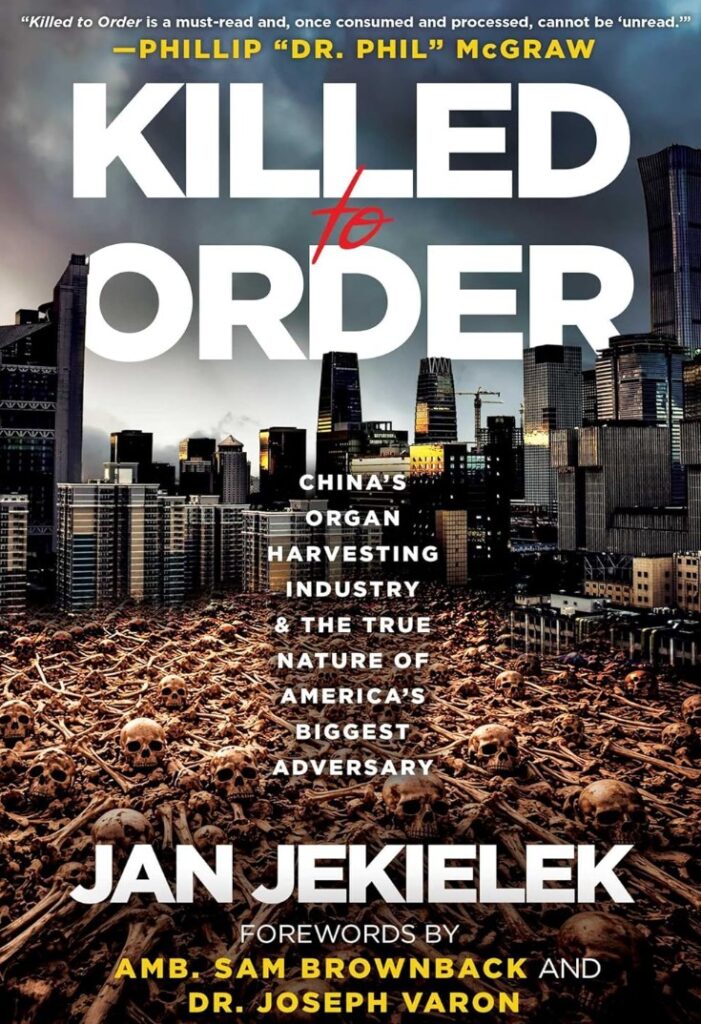
Order Jan Jekielek’s new book about forced organ harvesting, KILLED TO ORDER
- Iran’s regime collapse is a strategic inflection point, not a regional anomaly
- Authoritarian systems survive through networks—and those networks are now breaking
- China’s global insulation weakens as aligned regimes fall
- Internal legitimacy, not force alone, determines regime survival
- Moral collapse precedes political collapse in totalitarian states
At a moment when global audiences are struggling to understand whether this is a regional upheaval or a historic turning point, Jan brings the clarity of someone who has spent years dissecting how authoritarian systems rise, sustain themselves, and ultimately fall. His analysis cuts through speculation and talking points, offering a sober, strategic understanding of why this event matters now—and what comes next.
As senior editor at The Epoch Times and host of American Thought Leaders, Jan has conducted in-depth interviews with world leaders, senior intelligence officials, defectors, dissidents, and national security experts. His work focuses on the intersection of power, ideology, and morality, with particular expertise on the Chinese Communist Party and its global influence operations. That background allows Jan to place Iran’s collapse in a much larger framework: the weakening of a network of authoritarian regimes that have long reinforced one another politically, economically, and strategically.
Jan can explain how Iran functioned as more than a regional actor, serving as a critical node in a broader system that enabled sanctions evasion, energy leverage, proxy warfare, and diplomatic obstruction. With that node removed, long-standing assumptions about stability in the Middle East, China’s strategic insulation, and the durability of authoritarian alliances must be reevaluated. Jan’s perspective helps audiences understand why these systems often appear strong until they suddenly aren’t—and why internal legitimacy, not external pressure alone, determines their survival.
Equally important, Jan addresses the moral dimension often missing from geopolitical analysis. He has extensively examined how totalitarian regimes rely on the suppression of conscience, the erasure of individual dignity, and the normalization of extreme human rights abuses to maintain control. In this context, the fall of Iran’s regime is not just a power shift but a challenge to a model of governance that treats populations as instruments rather than citizens.
Jan is a calm, disciplined, and articulate on-air presence who translates complex global developments into accessible, meaningful insight for broad audiences. He is well suited for live or taped interviews and can adapt his analysis to breaking-news formats or longer, in-depth conversations.
Relevant Article(s):
OPTIONAL Q&A:
- What does the collapse of Iran’s clerical regime reveal about the real strengths and weaknesses of authoritarian systems
- Why did Iran appear stable for so long, and what signs of internal decay were missed by outside observers
- How does the fall of Iran affect China’s broader strategy of using aligned regimes to project power indirectly
- What lessons should Western policymakers draw about confronting authoritarian governments without triggering wider conflict
- Why is internal legitimacy more decisive than military strength in determining whether a regime survives
- How do human rights abuses function as a control mechanism rather than a byproduct of authoritarian rule
- What risks and opportunities emerge in the immediate aftermath of a regime collapse like Iran’s
- Could Iran’s collapse accelerate similar pressures on other authoritarian states, including China
Pre-Order Jan Jekielek’s new book about forced organ harvesting, KILLED TO ORDER
ABOUT JAN JEKIELEK…
Jan Jekielek is senior editor with The Epoch Times, host of the show “American Thought Leaders” and was co-host of “FALLOUT” with Dr. Robert Malone and “Kash’s Corner” with now FBI Director Kash Patel. Years ago Jan studied the evolutionary biology of lemurs in Madagascar, and his life took an unexpected turn. Exposed to the realities of human rights violations in China, he ended up working with an underground railroad bringing Chinese dissidents through the Golden Triangle to Bangkok and ultimately to Western countries. It was then that he realized that telling unknown heroes’ stories was transformative, both for him and audiences.
Determined to tell true stories, Jan started working with The Epoch Times 20 years ago, at a time when popular narratives in the West hid the dark underbelly of communist China. He did some of the earliest reporting on the Chinese regime’s continuing practice of forced organ harvesting from prisoners of conscience, and he’s the author of the upcoming book, “Killed to Order: China’s Organ Harvesting Industry and the True Nature of America’s Biggest Adversary.”
Over the last five years, he has interviewed over a thousand thought leaders on camera, including heads of state, multiple U.S. cabinet secretaries and agency heads, and congressional members.
Jan specializes in long-form discussions that challenge assumptions. He’s also an award-winning documentary filmmaker, producing “DeSantis: Florida vs. Lockdowns,” “The Unseen Crisis: Vaccine Stories You Were Never Told,” and the “optimistic” Holocaust documentary “Finding Manny.”
TO SCHEDULE AN INTERVIEW WITH JEKIELEK, CALL OR TEXT 512-966-0983 OR EMAIL BOOKINGS@SPECIALGUESTS.COM