
Fox News Host Talks about the latest in the Iranian Protests
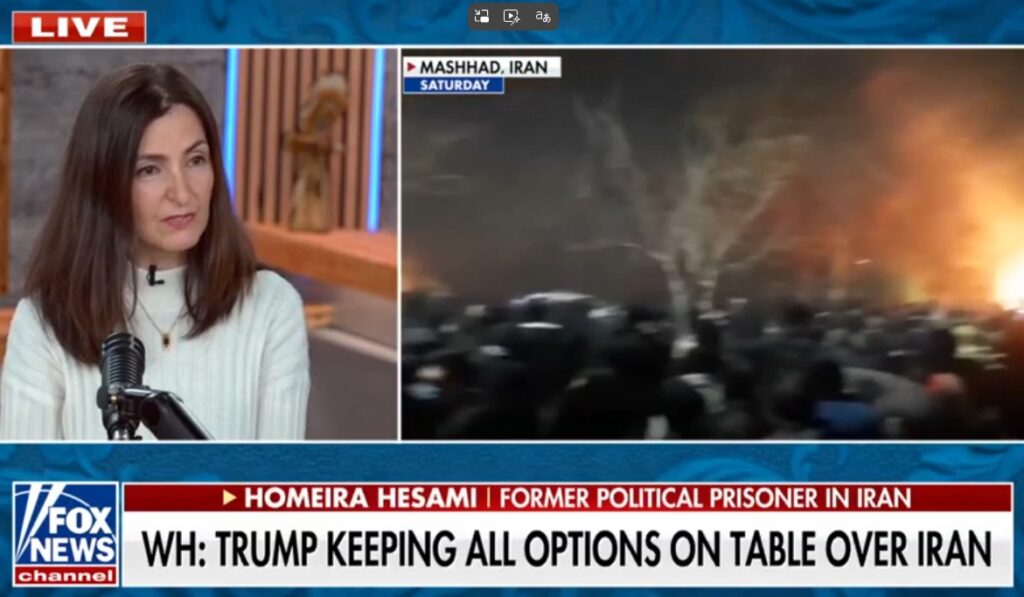
The interview between Fox News Channel host Will Cain and Iranian American activist Homeira Hesami focused on the rapidly evolving situation inside Iran and the broader implications for the Iranian people, the region, and the international community. Throughout the discussion, Hesami drew on her personal experiences, including her past imprisonment in Iran, to provide context for the current unrest and the growing calls for fundamental political change.
Hesami explained that the ongoing protests across Iran reflect years of accumulated frustration with authoritarian rule, economic hardship, social repression, and widespread human rights abuses. She emphasized that what is unfolding is not an isolated or spontaneous event, but rather the result of long-standing grievances that have intensified over time. According to Hesami, many Iranians no longer believe reform is possible within the existing system and instead seek a complete transformation of governance.
Cain guided the conversation toward the human dimension of life under the Iranian regime, prompting Hesami to describe the climate of fear and control that shapes daily existence for many citizens. She discussed how dissent is often met with imprisonment, intimidation, or worse, and noted that her own incarceration exemplified the risks faced by those who speak out. Hesami underscored that such experiences are common rather than exceptional, particularly for women, activists, journalists, and political opponents.
Cain is Able Host
A significant portion of the interview focused on the role of Iranian women in the current movement. Hesami highlighted that women have become central figures in protests, advocacy, and organizing efforts, despite facing particularly harsh penalties from authorities. She described this dynamic as both a reflection of the regime’s vulnerabilities and a sign of shifting cultural expectations within Iranian society.
The discussion then turned to the future of Iran and the question of leadership following the potential collapse of the current system. Hesami explained why she has chosen to publicly support Maryam Rajavi as a candidate for president in a post-regime Iran. She framed this support as rooted in Rajavi’s long-standing opposition to the ruling clerics, her emphasis on democratic principles, and her advocacy for equal rights, including gender equality. Hesami presented Rajavi’s leadership as symbolic of a broader break from Iran’s past and a step toward a more inclusive political framework.
Cain and Hesami also addressed the international dimension of the crisis, including how foreign governments and media outlets interpret events inside Iran. Hesami expressed concern that external observers often underestimate the resolve of the Iranian people or misunderstand the depth of opposition to the regime. She stressed the importance of international awareness and moral support, while emphasizing that meaningful change must ultimately come from within Iran itself.
The interview concluded with a focus on hope and responsibility. Hesami conveyed cautious optimism, suggesting that the scale and persistence of current protests indicate a turning point. At the same time, she acknowledged the significant risks facing protesters and the uncertainty surrounding the outcome. Cain summarized the conversation by reinforcing the importance of hearing directly from those with firsthand experience, noting that such perspectives provide valuable insight into both the human cost of authoritarian rule and the aspirations driving Iran’s opposition movement.
Overall, the interview presented a measured and informative overview of Iran’s current unrest, blending personal experience with political analysis while highlighting emerging leadership and the growing role of women in shaping Iran’s potential future.
As the conversation wrapped up, the emphasis returned to the urgency of the moment and the stakes involved for both Iran and the broader international community. Hesami reiterated that the choices made now—by Iranians inside the country and by observers abroad—will help shape whether the current unrest leads to lasting change or further repression. She stressed that sustained attention, accurate understanding, and principled support can play a meaningful role in amplifying the voices of those seeking freedom. Cain closed by underscoring that stories like Hesami’s offer a critical reminder that behind every headline are real people whose lives are shaped by the outcomes of these historic events.