
Former U.S. Congressman talks with Audie Cornish, Analyzes Vivek Ramaswamy’s Defense of Vice President J.D. Vance
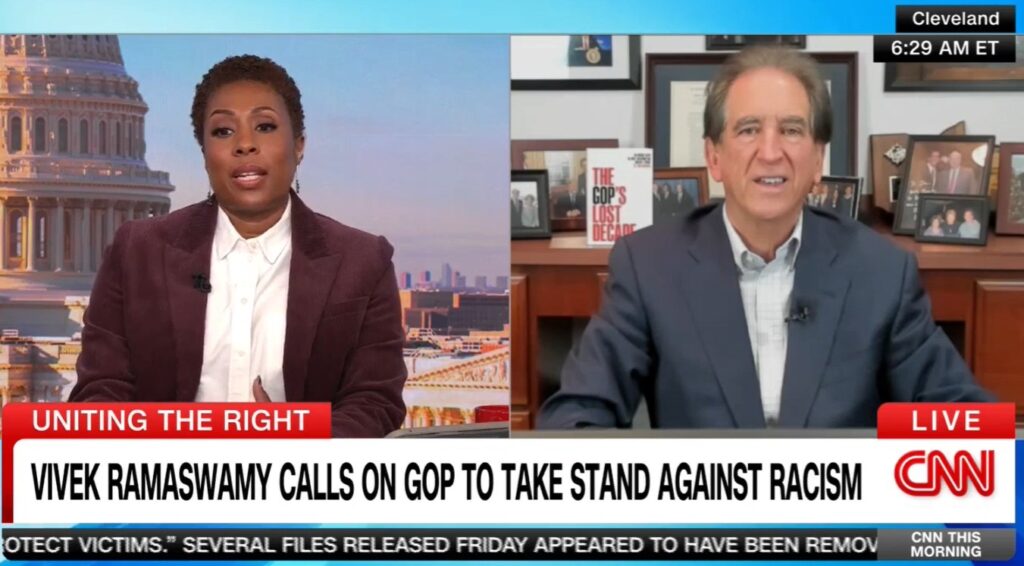
In a recent interview on CNN with Audie Cornish, former U.S. Congressman Jim Renacci offered his insights into the upcoming Ohio gubernatorial race and weighed in on the recent political commentary by entrepreneur and Republican presidential candidate Vivek Ramaswamy, particularly regarding his defense of U.S. Senator JD Vance at the AmFest event hosted by Turning Point USA. Renacci’s discussion reflected both his perspective as a former lawmaker and as a commentator closely following Ohio’s evolving political landscape.
Renacci began by framing the gubernatorial contest as one of significant importance, not only for Ohio but also for the broader political dynamics at play nationally. He emphasized that the state has historically served as a bellwether in both state and federal elections, highlighting the unique mix of urban, suburban, and rural constituencies that candidates must appeal to in order to secure victory. Renacci underscored that the next governor will face immediate challenges related to the state’s economy, infrastructure, and social services, arguing that these issues must take precedence over partisan posturing. According to Renacci, voters are increasingly focused on pragmatic leadership and tangible results, rather than symbolic gestures or ideological signaling.
All from Ohio
A significant portion of the interview centered on the remarks made by Vivek Ramaswamy at AmFest. Ramaswamy, a prominent figure within the Republican Party and a candidate for the 2024 presidential race, publicly defended JD Vance, a fellow Republican and U.S. Senator from Ohio, who has faced criticism from various corners of the political spectrum. Renacci noted that Ramaswamy’s comments were emblematic of a broader trend within the GOP, where loyalty and intra-party support are increasingly viewed as strategic imperatives.
While some observers interpreted Ramaswamy’s defense as an effort to solidify his own standing among conservative voters, Renacci suggested that it also underscored the growing importance of alliances and networking within party politics, especially in the context of Ohio, where both gubernatorial and federal races are tightly contested.
Renacci also discussed the implications of these developments for the gubernatorial race itself. He emphasized that while national political figures can influence public perception, Ohio’s electorate remains focused on local issues and leadership qualities. He argued that candidates must demonstrate a capacity to govern effectively and address everyday concerns of Ohioans, from job creation and economic growth to public safety and education. According to Renacci, the interplay between local priorities and national political narratives is shaping the strategies of gubernatorial hopefuls, who must balance ideological positioning with practical problem-solving.
The former congressman further reflected on the role of political events like AmFest in shaping public discourse. He noted that such gatherings, while often framed as celebratory or networking opportunities, can have tangible impacts on how candidates are perceived and how key issues are prioritized in the media and among voters. In the case of Ramaswamy’s defense of Vance, Renacci observed that it served to amplify both personalities, reinforcing the alignment between certain factions within the party and drawing attention to broader debates over policy and strategy.
Throughout the interview, Renacci maintained a measured tone, emphasizing the importance of informed, engaged citizenship. He encouraged voters to look beyond headlines and soundbites, urging them to examine candidates’ records, platforms, and leadership qualities carefully. He also stressed the need for civility and constructive dialogue, noting that political engagement should be grounded in the pursuit of effective governance rather than purely partisan gain.
In closing, Renacci reiterated that Ohio’s upcoming gubernatorial race represents a critical moment for the state, with significant implications for both state policy and national politics. He highlighted that candidates’ ability to address pressing issues while navigating complex political dynamics will be key to their success. The interview provided a wide-ranging discussion that combined an analysis of Ohio’s political environment, the influence of national figures like Vivek Ramaswamy, and the strategic considerations that underpin modern campaigning in one of the nation’s most politically consequential states.
Overall, the conversation between Jim Renacci and Audie Cornish offered viewers a detailed overview of the stakes involved in Ohio’s next gubernatorial election, while situating recent political developments within a broader context. Renacci’s insights underscored the interconnection between local governance, state-level elections, and national political trends, emphasizing the importance of leadership, strategy, and voter engagement in shaping the state’s future.